Real clinical case in Kokand: ingrown toenail (onychocryptosis) treatment journey — from first visit to 6-month outcome. Iroda Karimova, Radeski Skin Clinic.
Clinical case: from first visit to recovery
Author: Iroda Karimova · Clinic: Radeski Skin Clinic, Kokand branch
An ingrown toenail (onychocryptosis) often seems like a minor issue. But when the nail edge grows into the skin, pain, redness, and inflammation follow. Some patients trim the nail themselves or only seek pain relief. That does not fix the root cause. If the nail keeps growing in the wrong direction, the problem returns.
Below is a real clinical case showing the patient journey from arrival through treatment to the outcome after 6 months of follow-up.
Why did the patient come?
A male patient presented with an ingrown big toenail for about 1.5 years. Main complaints:
- persistent pain, worse when walking;
- discomfort from nail edge pressure on the skin;
- recurrence after previous treatment.
He had previously undergone surgical nail plate removal. Initial improvement was followed by recurrence as the nail regrew. This time the focus was on correcting growth direction, not removal alone.
Examination and severity
We assessed complaints, history, and toe condition:
- how the nail edge embeds in skin;
- plate shape and thickness;
- redness, swelling, inflammation;
- recurrence risk after prior surgery.
Diagnosis: grade II onychocryptosis with inflammation and pain. Stepwise growth correction was indicated.
Before treatment
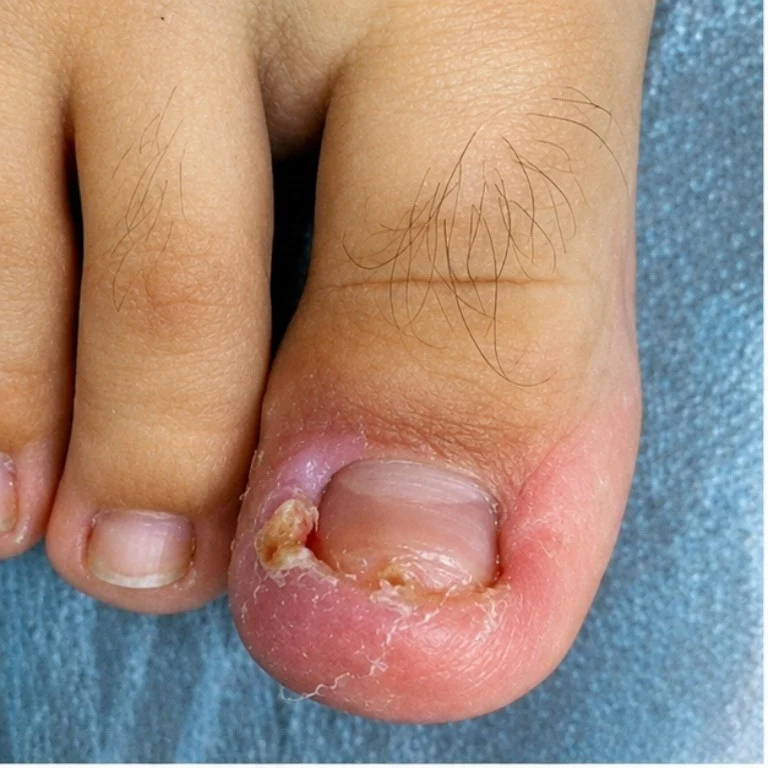
Photo: initial state — embedded nail edge with surrounding inflammation.
First stage: addressing the cause, not just pain
The ingrown fragment was carefully removed. The area was cleaned and local care prescribed to prevent secondary infection.
Home care instructions:
- do not cut nails too short;
- do not deeply trim corners;
- avoid pressure on surrounding skin;
- use prescribed topical care.
Surgical stage
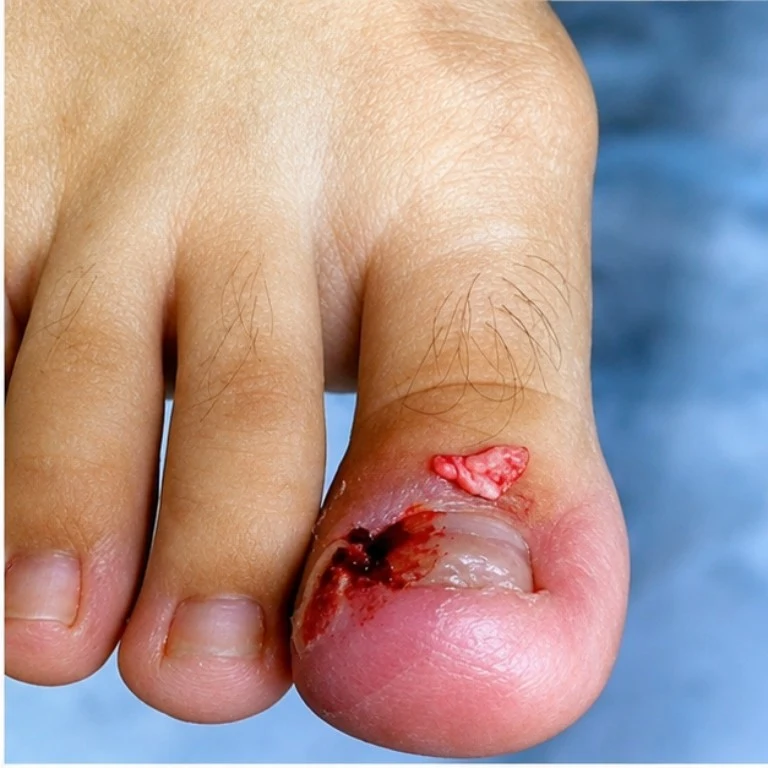
Photo: first stage — problem segment removed, area cleaned.
Why titanium wire correction?
After prior removal, the problem returned. Instead of repeat avulsion, we chose gradual growth correction:
- medical preparation of the nail plate;
- placement of a titanium wire brace.
The wire applies controlled pressure to lift edges and guide proper growth, reducing pressure on surrounding tissue.
The goal is to address the mechanical cause, not only symptoms.
Wire brace correction
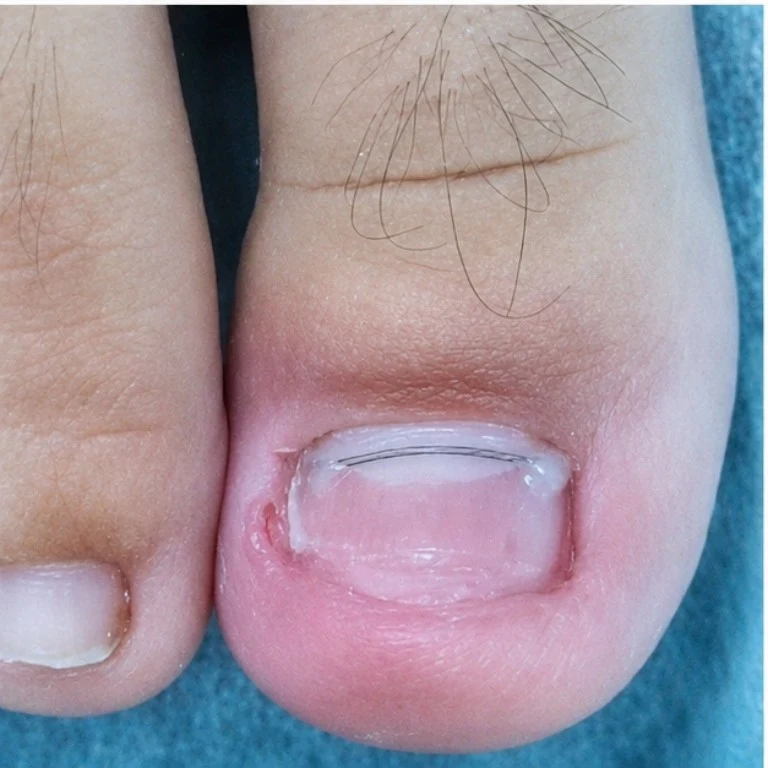
Photo: wire in place — controlled orthonyxia correction.
How treatment progressed
After wire placement, the patient returned for monthly follow-up. Each visit assessed:
- nail growth;
- wire condition;
- surrounding skin.
Additional device-based preparation when needed.
At home: topical care and taping to gently retract skin from the nail edge.
Correction is gradual — regular visits and adherence to home care are essential.
How long does treatment take?
In this case: 6 months of regular follow-up. Growth direction improved, tissue pressure decreased, pain and walking discomfort reduced significantly.
Total duration is individual — often 9–12 months, depending on growth rate, surgical history, and home care compliance.
Outcome after 6 months
Growth direction improved, pressure on tissues decreased, inflammation resolved. Pain and walking discomfort were markedly reduced.
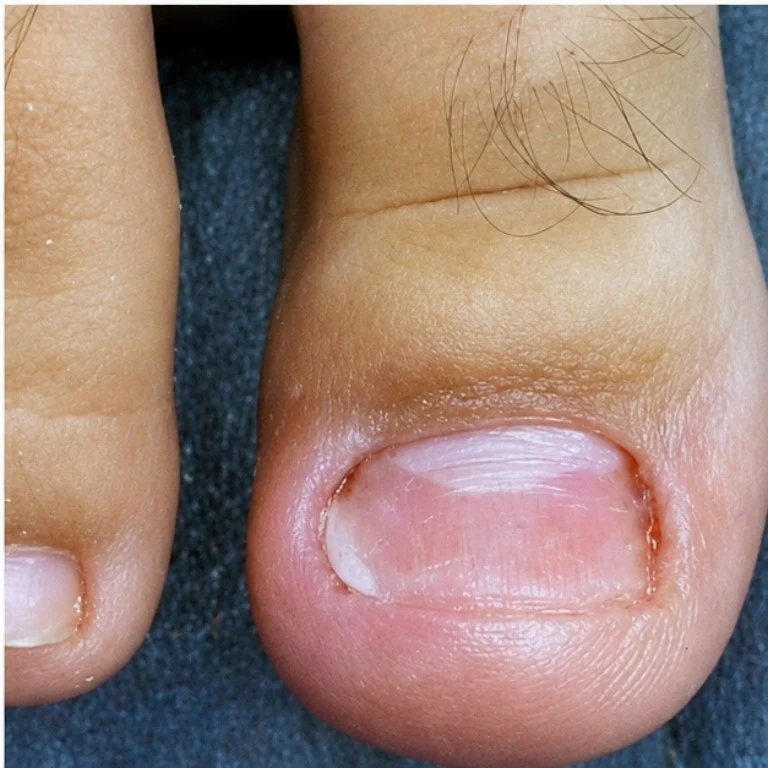
Photo: outcome — proper plate shape, healthy surrounding skin.
Full journey at a glance
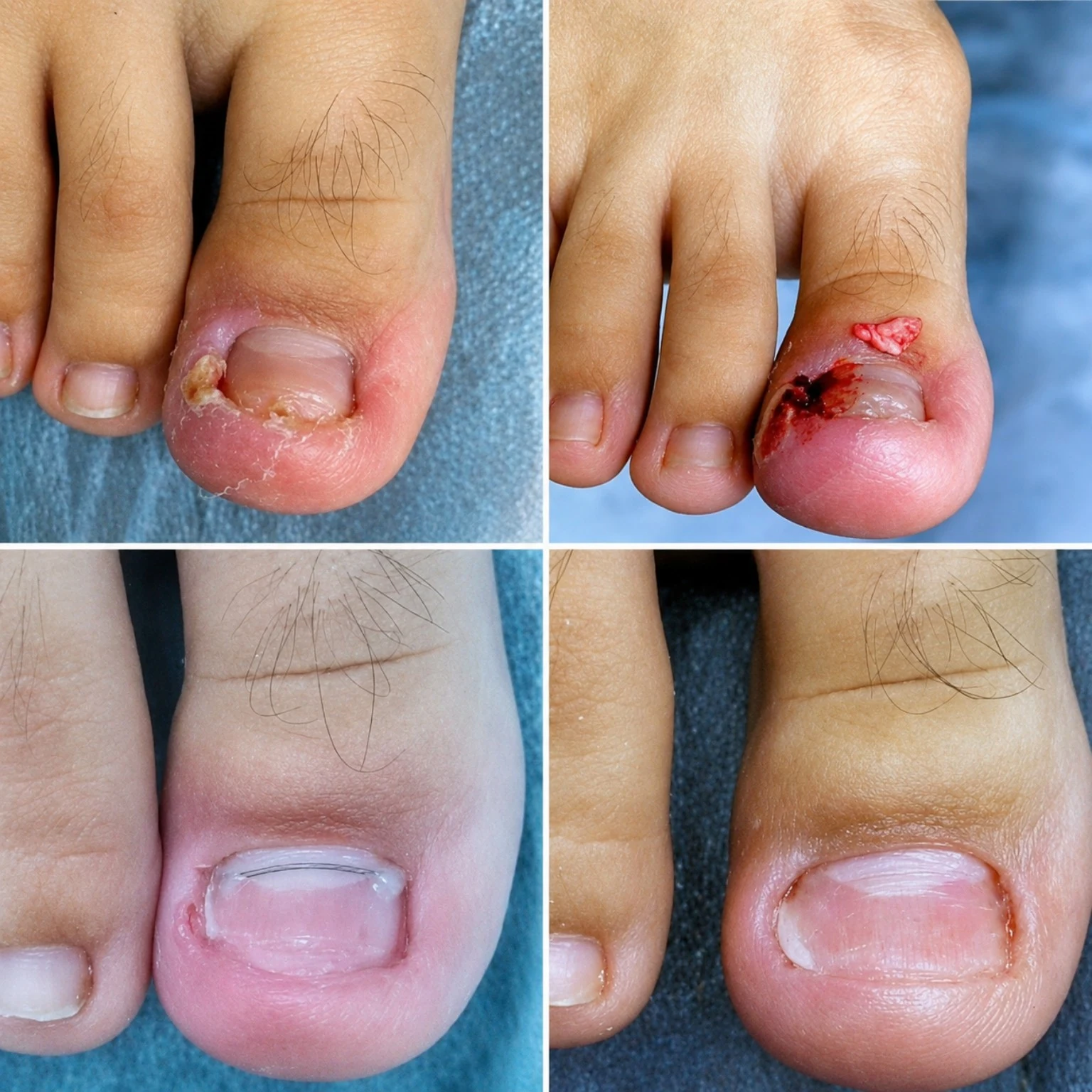
Top-left to bottom-right: initial state, surgical stage, wire correction, 6-month outcome.
Preventing recurrence
- avoid cutting too short or deeply trimming corners;
- wear comfortable shoes without toe compression;
- avoid tight socks;
- maintain foot hygiene;
- continue prescribed home care;
- if pain or redness returns — see a specialist, do not self-trim deeply.
When to see a specialist
- nail edge embeds with pain, redness, swelling;
- do not attempt deep self-trimming;
- if problem returns after prior removal — professional assessment is required.
Timely care helps choose the right method and reduce recurrence risk.
Radeski Skin Clinic, Kokand
The Kokand branch nail pathology center treats ingrown nails, fungal infection, and other foot conditions with medical methods. Consultation, correction, and follow-up are provided by a podiatrist-dermatologist.
If you have an ingrown or painful nail, book a consultation instead of self-treatment.
What is onychocryptosis?
Growth of the nail plate or its edge into surrounding skin. It may cause pain, redness, and inflammation.
Why use a titanium wire brace?
To gradually correct growth direction and reduce pressure on edges, lowering recurrence risk.
How long does treatment take?
Individual. Improvement is often seen by 6 months; a full course may last 9–12 months.
Is nail removal necessary?
Not always. When problems recur, growth correction often provides a longer-lasting solution.