Is daily hair shedding normal? Signs of pathological loss, telogen effluvium, and when trichologist + trichoscopy help — Radeski Skin Clinic.
How to tell normal hair shedding from pathological hair loss
Hair falls out every day — for most people that is a normal part of the hair cycle. On average we lose about 50–100 hairs per day while new hairs keep growing. Hair on your brush or after washing does not automatically mean disease.
If you notice more shedding, a thinner ponytail, a wider part, or clumps of hair, it matters to separate physiological shedding from pathological hair loss.
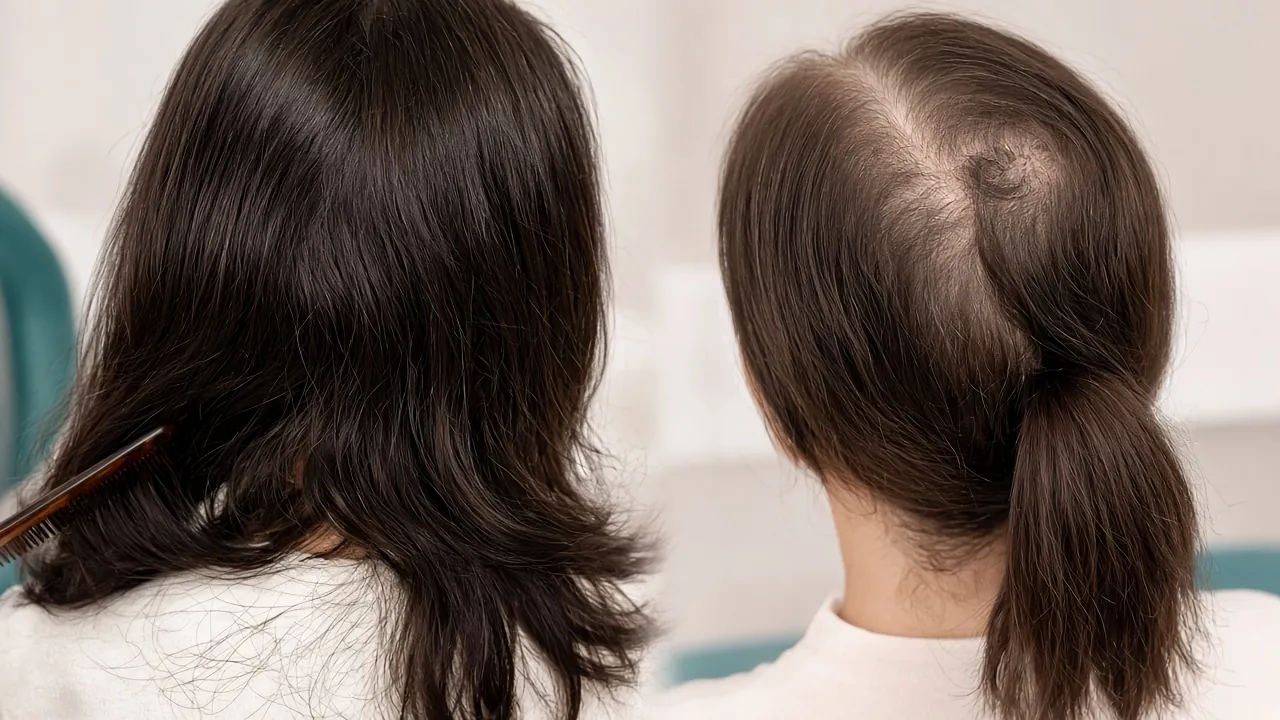
Normal shedding: when not to worry
Each hair goes through growth, transition, and resting phases, then sheds so a new hair can grow.
With a healthy scalp, shedding is gradual and density stays fairly stable.
You usually do not need to worry if:
- hair mostly comes out when washing or brushing;
- overall thickness has not clearly dropped;
- your part has not widened;
- your ponytail is not much thinner;
- there are no bald patches;
- hair continues to grow normally.
Do not rely on hair count alone — long or thick hair looks like more shedding than a short cut.
When shedding becomes pathological
The key is not hairs on the brush but changing density and how hair is lost.
See a dermatologist-trichologist if you notice:
1. Much heavier shedding
Sudden large clumps in the shower, on the brush, or on clothing may signal increased shedding.
A common cause is telogen effluvium — often months after stress, fever, illness, surgery, rapid weight loss, strict dieting, or nutrient deficiency. New growth can push out resting hairs, so shedding and regrowth can overlap.
2. A wider part
In women, a slowly widening central part and less voluminous ponytail can be an early sign of some alopecia types.
3. A thinner ponytail
If you tie your hair the same way and the ponytail diameter shrinks over time — especially if scalp shows through — density may be falling.
4. Bald patches
A round or oval hairless area is not routine daily shedding. Alopecia areata and inflammatory scalp conditions can damage follicles. Fast onset (days to weeks) needs prompt care.
5. Thinner hair strands
Sometimes the issue is hair quality: terminal hairs miniaturize — overall density drops.
6. Scalp symptoms
Itching, flaking, redness, pain, crusting, or inflammation are reasons to see a specialist.
Why does shedding increase?
Many factors — treating blindly is often wrong:
- stress;
- infections and fever;
- rapid weight loss and diets;
- iron and other deficiencies;
- thyroid disease;
- hormonal shifts;
- medications;
- genetics;
- scalp disorders;
- tight hairstyles;
- harsh care.
Several causes can coexist — e.g. telogen effluvium after stress on top of androgenetic thinning. The mechanism must be clarified.
Why the brush count is not enough
Hairs on a comb do not show follicle activity. Your doctor assesses shedding pattern, density, scalp, hair thickness, new growth, follicular openings, zone distribution, and inflammation.
Trichoscopy — magnified scalp and hair exam; helps distinguish alopecia types including early androgenetic and telogen shedding. Blood tests (CBC, iron stores, thyroid, etc.) may be added after consultation.
Read more: Trichologist and trichoscopy, Hair loss diagnosis.
Can you monitor at home?
Photograph your part and hairline in the same light and angle over time.
Normal: shedding without clear loss of overall density.
See a doctor: clearly heavier shedding plus thinner ponytail, wider part, or thinning areas.
There is no universal hair count that defines pathology.
When to see a trichologist
Do not wait for severe loss. Book if:
- shedding persists and worries you;
- hair looks sparser;
- the part is widening;
- ponytail volume is down;
- patches appear;
- strands are much finer;
- itch, scale, redness, or pain;
- shedding followed illness, stress, or major weight loss.
Earlier diagnosis means earlier hair loss treatment — plans differ by alopecia type. PRP for hair may be used when indicated.
Trichologist consultation + trichoscopy — Radeski Skin & Aesthetic Clinic, Fergana and Kokand.
Related: Trichology center, Trichoscopy, Plasma therapy for hair, Prices.
How many hairs per day is normal?
Roughly 50–100; long hair can look like more — focus on whether density is stable.
What is telogen effluvium?
Temporary increased shedding after stress, illness, or weight loss; your trichologist confirms the cause.
Do I need trichoscopy?
Often yes — it assesses follicles and guides the right treatment plan.