Daavlin M series phototherapy in Fergana and Kokand
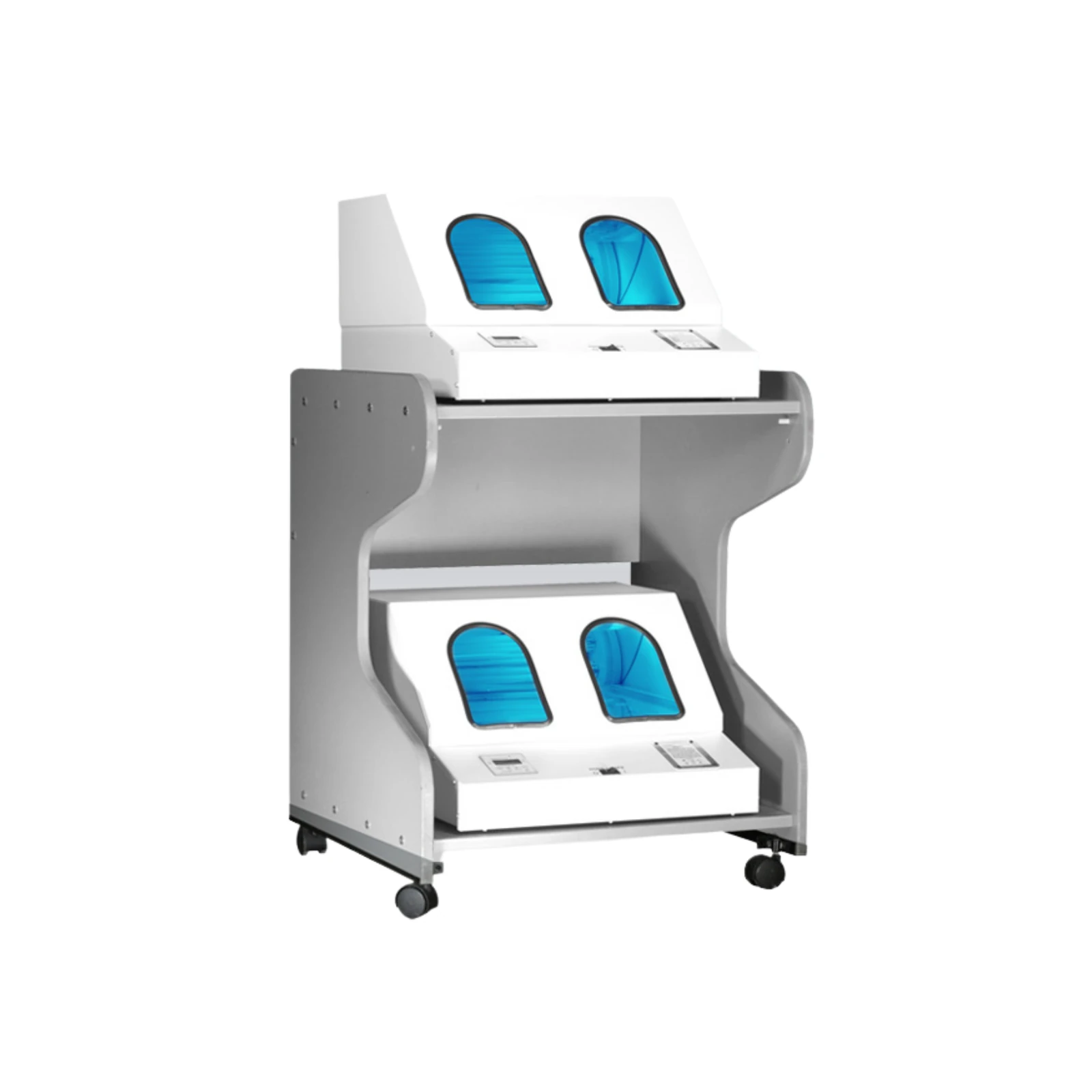
Daavlin M series — modular phototherapy cabinet for broad treatment areas.
Daavlin M series is Daavlin's modular phototherapy system for body, limbs and large areas. At Radeski Clinic it supports effective course treatment for psoriasis, vitiligo and other photosensitive conditions.
Daavlin M series is a modular phototherapy system made by Daavlin (USA). It is designed for course-based UVB treatment of the body, arms and legs and other large areas. Phototherapy exposes the skin to a controlled dose of ultraviolet light and helps reduce inflammation in chronic skin conditions.
In many patients the rash is mainly on the arms and legs: the elbows, knees, shins, forearms, palms or soles. In such cases there is no need to treat the whole body; treating only the affected area reduces unnecessary exposure of healthy skin. At Radeski, sessions are given by zone: arms, legs, or arms and legs together.
Phototherapy is not a one-off session; results build gradually over a course. Before the course begins, a dermatologist examines you, confirms the diagnosis and chooses the area to treat. The doctor sets the dose, how often you come in and how long the course lasts on an individual basis.
Manufacturer: Daavlin (USA)
How does it work?
UVB light reduces the activity of immune cells that drive inflammation in the upper layers of the skin and, in psoriasis, slows the overly fast turnover of skin cells. In vitiligo, the light may stimulate the cells that make pigment. The modular design allows the light to be directed to the area that needs it.
The skin of the hands and feet, especially the palms and soles, is thicker than elsewhere on the body, so it may respond differently to the light. The doctor raises the dose gradually according to the area and how the skin reacts. Your eyes and any areas not being treated are protected during the session.
- Less inflammation and redness in plaques on the limbs
- Less scaling and skin thickening
- Relief from itching and the discomfort of cracked skin
- Stimulation of repigmentation in vitiligo patches
- Less unnecessary exposure of healthy skin
Indications
Psoriasis on the body and limbs
If psoriasis plaques on the elbows, knees, shins and elsewhere are not responding well enough to topical treatment, the doctor may suggest adding a course of phototherapy. It is combined with topical medicines.
Psoriasis of the palms and soles
Psoriasis on the palms and soles gets in the way of daily life: the skin cracks, and walking or working with your hands becomes painful. Because the skin there is thick, treatment often takes longer. Phototherapy may be considered as part of comprehensive treatment.
Vitiligo over large areas
When vitiligo patches are on the arms, legs or a large part of the body, phototherapy is used to encourage colour to return. Results come slowly: patches on the fingers and feet usually respond less well than those elsewhere.
Hand eczema and chronic dermatitis
For chronic hand eczema and patches of atopic dermatitis on the limbs, phototherapy can help reduce inflammation and itching. At the same time, contact with triggers such as detergents should be reduced.
Other chronic skin conditions
Phototherapy may also be considered for some other chronic skin conditions that respond to light. In such cases the dermatologist assesses individually whether the method makes sense and what result to expect.
Who is it for?
M series phototherapy may suit patients whose rash is mainly on the arms and legs or in clearly defined areas and who can attend sessions regularly. Before treatment begins, the doctor assesses:
- The diagnosis and the location and extent of the rash
- Skin phototype and tendency to sunburn
- Any history of skin cancer or suspicious lesions
- Medications that increase light sensitivity and other current treatment
- Previous phototherapy courses and how the skin responded
Contraindications
Whether phototherapy is possible is decided for each patient individually. The main reasons to postpone or avoid a course are:
- Current or past melanoma or other skin cancer
- Conditions involving light sensitivity, such as lupus or porphyria
- Taking medicines that make the skin more sensitive to light
- Treatment that significantly suppresses the immune system
- Unexamined suspicious lesions in the treatment area
- A fresh sunburn, open wounds or infection in the treatment area
- Other individual circumstances in which the doctor considers phototherapy unsafe
In pregnancy, in children, in people with many moles and after previous radiation treatment, the balance of benefit and risk is assessed separately. Even with localised phototherapy, the ultraviolet dose can build up over the years, so regular skin checks are recommended for repeated courses.
How we use it at Radeski Clinic
Price list: arms — 50,000 UZS, legs — 50,000 UZS, arms+legs — 90,000 UZS. Course planned by physician.
Procedure steps
- Consultation and choice of area: The dermatologist confirms the diagnosis, assesses where the rash is and decides which area to treat: arms, legs or both. The aim of the course and the expected result are discussed.
- Setting the dose: A starting dose is chosen based on your skin phototype, the area and the condition. In later sessions it is raised gradually according to how your skin responds.
- The phototherapy session: You position the area being treated at the device and your eyes are protected with goggles. The exposure is short and usually painless; sometimes you may feel slight warmth.
- Follow-up during the course: Before each session you are asked how your skin reacted: if there is strong redness or burning, the dose is lowered or the session is moved. The doctor reviews the result from time to time and adjusts the plan.
- Care at home: During the course, moisturise the skin of your hands and feet regularly, look after any cracks and avoid extra sun on treatment days. The doctor will tell you which topical products to continue.
Results: what to expect
Results build gradually over the course and depend on the diagnosis, the area and regular attendance. On areas of thick skin, such as the palms and soles, changes usually come more slowly. Results are not guaranteed, but you may see:
- Smaller and thinner plaques
- Less scaling and fewer cracks
- Less itching
- Colour gradually returning to vitiligo patches
- Everyday tasks with your hands and feet becoming easier
Frequently asked questions
Can I have sessions on just my hands or just my feet?
Yes. At Radeski, M series sessions are given by zone: arms, legs, or arms and legs together. The dermatologist decides which area to treat based on where the rash is.
Is phototherapy painful?
The session itself is usually painless; you may only feel slight warmth. Afterwards there may be mild redness or dryness. If the redness is strong or burning lasts a long time, tell the doctor before your next session.
How many sessions are needed?
It depends on the diagnosis, the area and how your skin responds. Sessions are usually held several times a week and a course lasts several weeks; for the palms, soles and vitiligo it is often longer. The doctor draws up the exact plan.
Is it safe for children?
Phototherapy is used in children in some cases, but the decision is made carefully, weighing benefit against risk. The child needs to keep the hand or leg still during the session and wear protective goggles. The dermatologist makes the final decision.
Will phototherapy cure psoriasis completely?
Psoriasis is a chronic condition, and phototherapy does not get rid of it for good. Its aim is to reduce the rash and help achieve remission. Flares can come back, so the doctor also gives advice on skincare and follow-up after the course ends.
Conclusion
Daavlin M series is a modular system for course-based UVB treatment of chronic skin conditions on the body and limbs. For psoriasis, vitiligo and other chronic skin conditions, it lets treatment be directed at the affected area while reducing unnecessary exposure of healthy skin.
At Radeski, the course starts with a dermatologist examination and the choice of treatment area. The doctor will explain whether phototherapy suits you, what the session plan will be and how progress will be checked.