Daavlin NeoLux phototherapy in Fergana and Kokand
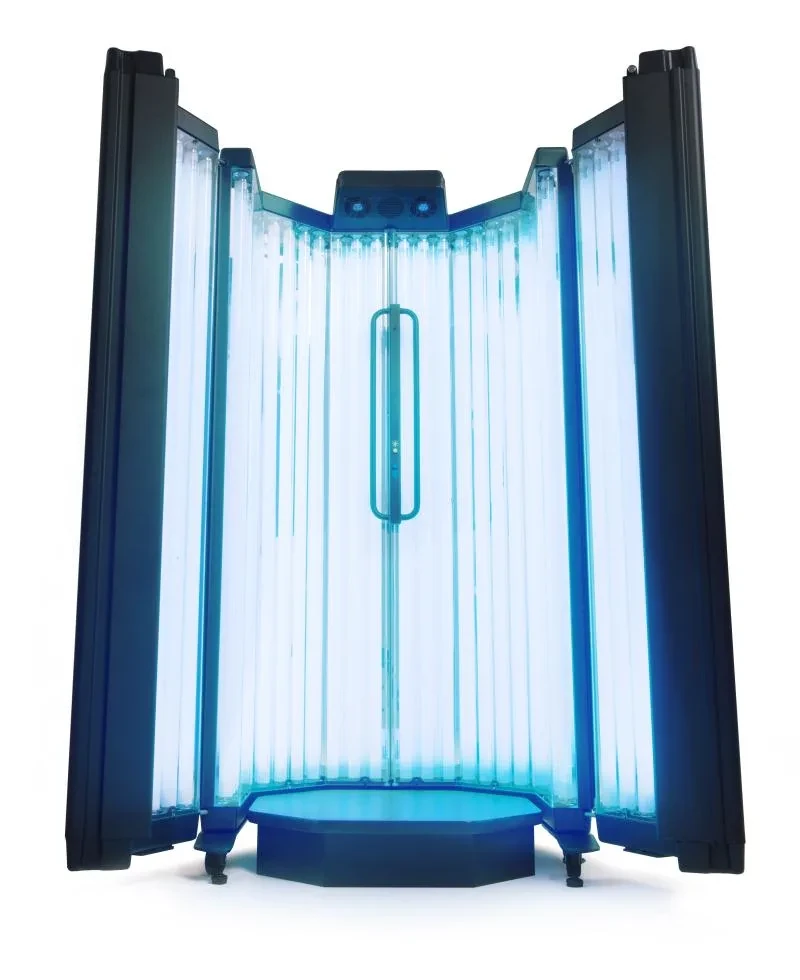
Daavlin NeoLux — narrow-band UVB phototherapy device.
Daavlin NeoLux is a professional phototherapy system. Narrow-band UVB treats psoriasis, vitiligo, eczema and other chronic skin conditions. At Radeski Clinic, dosing, courses and remission monitoring are supervised by a dermatologist.
Phototherapy treats chronic skin conditions with carefully measured doses of ultraviolet light in a specific range. Daavlin NeoLux is a narrow-band UVB (NB-UVB) phototherapy device made by Daavlin and used in dermatology for exactly this purpose.
Narrow-band UVB is one of the most widely used forms of phototherapy in dermatology. It may be recommended for psoriasis, vitiligo, atopic dermatitis, eczema and some other chronic skin conditions, especially when the rash covers a large area or topical treatment alone is not enough. It is usually done without tablets that make the skin more sensitive to light.
Phototherapy is given as a course: results build gradually over regular sessions rather than after a single one. At Radeski, the course starts with a dermatologist examination, and the dose, how often you come in and how long the course lasts are set individually based on the diagnosis, your skin phototype and how your skin responds to the light.
Manufacturer: Daavlin (USA)
How does it work?
Narrow-band UVB acts on the upper layers of the skin. It calms the immune cells involved in inflammation and, in psoriasis, slows down the overly fast division of skin cells. In vitiligo, the light may stimulate pigment cells (melanocytes) and help colour return to the patches.
The first sessions use a low dose, which is then raised step by step depending on how the skin reacts. This balances the treatment effect against the risk of burning. During the session your eyes are protected with special goggles, and areas that do not need treatment are covered when necessary.
- Less inflammation and redness
- Thinner psoriasis plaques and less scaling
- Less itching
- Stimulation of repigmentation in vitiligo patches
- Support for remission in some patients
Indications
Psoriasis
For plaque psoriasis, especially when it covers a large part of the body, narrow-band UVB is one of the widely used treatments. The light can help reduce plaque thickness, redness and scaling. Topical treatment usually continues during the course.
Vitiligo
In vitiligo, phototherapy is used to encourage colour to return to the patches. Results come slowly and depend on where the patches are and how long and how actively the disease has been present: patches on the face and neck often respond better than those on the fingers. A long course may be needed.
Atopic dermatitis and eczema
If the condition is chronic and emollients and topical treatment are not keeping it under control, the doctor may suggest adding phototherapy. It helps reduce inflammation and itching. During an acute flare, phototherapy is usually postponed.
Chronic itching
In some cases narrow-band UVB is also used for long-lasting itching. It is important to find the cause first, because itching can be linked not only to the skin but also to conditions of the internal organs.
Other chronic skin conditions
Phototherapy may also be considered for some other chronic skin conditions, for example certain forms of lichen planus. In such cases the dermatologist assesses individually whether the method makes sense.
Who is it for?
NeoLux phototherapy may suit patients with a confirmed chronic skin condition who are able to attend sessions regularly. Before the course begins, the doctor assesses:
- The diagnosis and how active the disease is
- Skin phototype and tendency to sunburn
- Any history of skin cancer or atypical moles
- Medications that may make the skin more sensitive to light
- Previous phototherapy courses and their results
Contraindications
Whether phototherapy is possible is decided individually. The main reasons to postpone or avoid a course are:
- Current or past melanoma or other skin cancer
- Conditions involving light sensitivity, such as lupus or porphyria
- Taking medicines that increase the skin's sensitivity to light
- Treatment that significantly suppresses the immune system
- Suspicious skin lesions that have not yet been examined
- A fresh sunburn or marked inflammation in the treatment area
- Certain eye conditions, including cataracts, which need a separate assessment
- Other individual circumstances in which the doctor considers phototherapy unsafe
In pregnancy, in children, in people with many moles and after previous radiation treatment, the balance of benefit and risk is assessed separately. The total ultraviolet dose can build up over the years, so regular skin checks are recommended for long or repeated courses.
How we use it at Radeski Clinic
Price list: Neo Lux session — 70,000 UZS. Course length and frequency are individualized.
Procedure steps
- Dermatologist examination: The doctor confirms the diagnosis, assesses the affected areas and asks about your medical history and medications. Together you discuss whether phototherapy suits you and what the course is meant to achieve.
- Setting the dose: A starting dose is chosen based on your skin phototype and the condition being treated. In later sessions the dose is adjusted gradually according to how your skin responds.
- The phototherapy session: You put on protective goggles, and areas that do not need treatment are covered if necessary. The exposure is short and usually painless; sometimes you may feel slight warmth.
- Monitoring during the course: Before each session you are asked how your skin reacted to the previous one. If there is marked redness, burning or more itching, the doctor lowers the dose or moves the session. The result is reviewed regularly and the plan adjusted.
- Care at home: During the course it is advisable to use moisturisers and to avoid extra sun exposure on treatment days. The doctor will explain which topical products you can keep using.
Results: what to expect
Results from phototherapy develop gradually over several weeks and depend on the condition, how active it is and how regularly you attend. Results are not guaranteed, but during the course you may see:
- Smaller and thinner patches of rash
- Less itching and discomfort
- Colour gradually returning to vitiligo patches
- Less need for topical treatment
- Longer remission in some patients
Frequently asked questions
Is phototherapy painful?
No, the session itself is usually painless; you may only feel slight warmth. Afterwards there may sometimes be redness like a mild sunburn, or dryness. If there is strong redness or burning, tell the doctor before your next session.
How many sessions are needed?
It depends on the diagnosis and how your skin responds. Sessions are usually held several times a week and a course lasts several weeks; for vitiligo it is often longer. The dermatologist sets the exact frequency and course length.
Is phototherapy safe for children?
Narrow-band UVB is used in children in some cases, but the decision is made with particular care. The child needs to wear protective goggles and stay still during the session. Only a dermatologist can decide after an examination whether phototherapy is suitable for a child.
How is phototherapy different from a sunbed or sunbathing?
Yes. Phototherapy uses a narrow range of light chosen for treatment, and the dose is controlled by the doctor at every session. Sunbeds and sunlight have a different spectrum and are not controlled, so they cannot replace phototherapy.
Does phototherapy increase the risk of skin cancer?
As with any ultraviolet exposure, the long-term risk of phototherapy is linked to the total dose. That is why the doctor controls the dose, keeps track of the number of courses and recommends regular skin checks. The method is generally not used in people who have had skin cancer.
Conclusion
Narrow-band UVB phototherapy with the Daavlin NeoLux is a dermatological treatment for psoriasis, vitiligo, atopic dermatitis and other chronic skin conditions. It is a course-based treatment with a controlled dose, and the result depends on regular attendance and following the doctor's advice.
At Radeski, phototherapy starts with a dermatologist examination. The doctor will explain whether the method suits you, what result you can realistically expect and how you will be monitored during the course.