DEKA Alexandrite Laser 755 nm in Fergana and Kokand
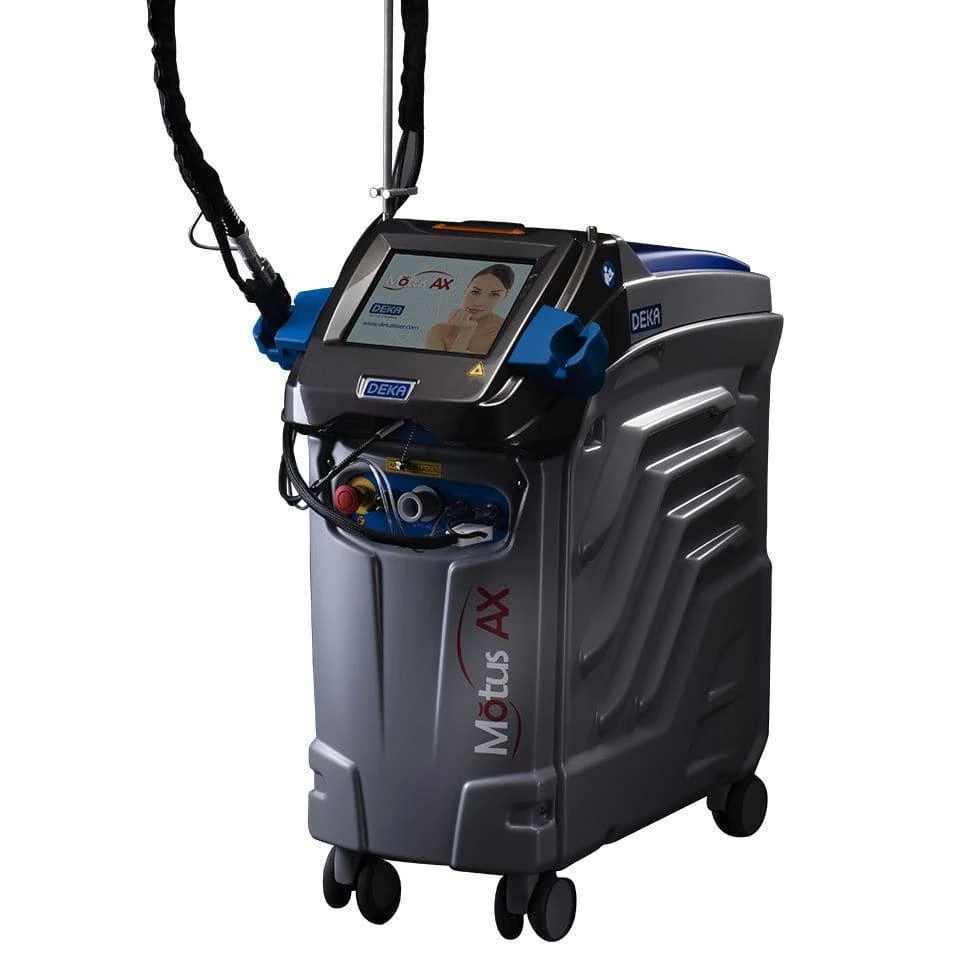
755 nm alexandrite laser — laser hair removal and pigment care.
DEKA alexandrite laser at 755 nm selectively targets melanin and hair follicles. At Radeski Skin Clinic it supports laser hair removal, pigmented spots and selected vascular signs under medical protocol. Hair type, phototype and zone are assessed; intervals and energy follow an individual plan.
The alexandrite laser takes its name from the alexandrite crystal that generates its beam. It works at a wavelength of 755 nm, which is well absorbed by the pigment melanin. That is why 755 nm is regarded as one of the classic wavelengths for laser hair removal. At Radeski, an alexandrite laser made by the Italian company DEKA is used.
The laser works on the principle of selective photothermolysis: the energy is absorbed mainly by a pigmented target, the hair shaft and follicle, and turns into heat. That heat acts on the parts of the follicle responsible for hair growth. Well-chosen settings and skin cooling help protect the surrounding skin from overheating.
Because the alexandrite laser works through melanin, it gives the best results on dark hair on lighter skin. White, grey, light blond and red hair contain little pigment, so the effect is much weaker, and darker skin needs extra caution. Besides hair removal, after a doctor's assessment the device can also be used for some pigment spots and selected vascular concerns.
Manufacturer: DEKA (Italy)
How does it work?
Hair grows in cycles: there is an active growth phase (anagen), a transition phase (catagen) and a resting phase (telogen). The laser works best on follicles in the active growth phase, when the hair is rich in pigment and still attached to the follicle. Since only some of the hairs are in this phase at any time, a course of sessions spaced several weeks apart is needed for a lasting result.
When treating pigment spots, the light is absorbed by the melanin in the spot. After treatment the spot usually darkens temporarily and then flakes off gradually as fine crusts over the following days. The settings here differ from those used for hair removal, and the doctor chooses them based on the type of spot and your skin phototype.
- Gradual reduction in hair density
- Regrowing hair becoming finer and lighter
- Fewer ingrown hairs
- Less need for shaving or other hair removal methods
- Some superficial pigment spots fading
Indications
Unwanted hair on the face and body
Laser hair removal can be done on the face, underarms, bikini area, legs, arms and back. Dark and coarser hair usually responds better. Settings and the interval between sessions are chosen separately for each area.
Excess hair growth linked to hormones
In women, excess hair on the chin, upper lip or body is sometimes linked to hormonal changes. The laser reduces hair but does not treat the cause, so the doctor may recommend seeing an endocrinologist or gynaecologist. In such cases maintenance sessions may be needed to keep the result.
Ingrown hairs and irritation after shaving
Regular shaving often leads to ingrown hairs, red bumps and the dark marks they leave behind. As the number of hairs goes down, these problems usually ease as well. If there are actively inflamed bumps, they may need to be calmed first.
Pigment spots
The alexandrite laser can be used to treat sun spots and some superficial age-related pigment spots. Not every dark spot is simple pigmentation: before treatment the dermatologist examines the spot with a dermatoscope, and suspicious lesions are not treated with a laser until a diagnosis has been made. Melasma can worsen after laser treatment, so it needs a different approach.
Selected vascular concerns
At the doctor's discretion, the alexandrite laser may also be used for some vascular concerns. However, it does not suit every vascular problem, and in some cases another device or treatment is preferable. The doctor decides this at the consultation.
Who is it for?
The alexandrite laser may suit adults who want a long-term reduction in unwanted hair or to treat certain pigment spots. At the consultation the doctor assesses:
- Skin phototype and any current tan
- Hair colour, thickness and density
- Possible causes of excess hair growth, including hormonal factors
- Current medications and any history of herpes
- Moles and tattoos in the area and hair removal methods used before
Contraindications
Whether treatment is possible is decided individually. The main reasons to postpone or avoid laser treatment are:
- A fresh tan, tanning bed use or self-tanner
- An active infection in the treatment area, including a herpes flare-up
- Inflammation, wounds or marked irritation in the area
- Unexamined moles and suspicious pigmented lesions in the area
- A tattoo or permanent make-up in the treatment area
- Medications that increase light sensitivity, and taking isotretinoin
- Pregnancy and breastfeeding, when elective aesthetic procedures are usually postponed
- Other individual circumstances in which the doctor considers laser treatment unsafe
Because 755 nm light is strongly absorbed by melanin, people with darker skin phototypes have a higher risk of burns and pigment changes. In such cases the doctor may choose cautious settings, test a small area first or recommend a different method. A tendency to keloid scarring and chronic skin conditions are also assessed separately.
How we use it at Radeski Clinic
Price list includes laser hair removal positions; zone and session count are set by the physician. Test spot or full course is chosen individually.
Procedure steps
- Consultation: The dermatologist assesses your skin phototype and hair colour and thickness, and asks about your medical history and current medications. Moles and spots in the area are checked with a dermatoscope. If needed, a small test area is treated and the skin reaction is observed.
- Preparing for the session: In the weeks before treatment you should not sunbathe or use self-tanner. Methods that pull hair out by the root, such as waxing, sugaring, tweezing or epilators, are stopped several weeks beforehand, because the laser needs the hair to be in the follicle. The area is usually shaved the day before the session; your doctor will give you exact instructions.
- Laser treatment: Your eyes and the staff's eyes are protected with special goggles. The doctor treats the area section by section while the skin is cooled. Each pulse may feel like warmth or a rubber band snapping against the skin. How long the session takes depends on the size of the area.
- After the procedure: Redness and small bumps of swelling around the hair follicles may appear and usually settle within a few hours or a day or two. For the first few days avoid hot baths, saunas and rubbing the area, and use SPF every day. The treated hairs gradually fall out over the following weeks.
- Course and intervals: The next session is done when new hairs enter the active growth phase. The interval depends on the area: on the face it is usually shorter than on the body. The doctor sets the number of sessions and the gaps between them based on how your hair responds.
Results: what to expect
Laser hair removal does not guarantee that 100% of hair will be gone for ever, but over a course it can reduce hair noticeably and for a long time. Results build up gradually and may include:
- Fewer hairs in the treated area
- Regrowing hair that is finer and lighter
- Longer gaps between hair removal
- Fewer ingrown hairs and less irritation
- Some pigment spots becoming less visible
Frequently asked questions
Is laser hair removal painful?
Most people feel each pulse as warmth or a rubber band snapping against the skin. The skin is cooled during treatment, which reduces discomfort. How it feels depends on the area, the thickness of the hair and your own sensitivity; delicate areas are usually more sensitive.
How many sessions will I need?
Because hair grows in cycles, one session is not enough; a course spaced several weeks apart is usually needed. The number of sessions depends on the area, hair type, skin phototype and hormonal factors. The doctor sets the exact plan, and maintenance sessions are sometimes needed after the course.
Can the laser remove blond or grey hair?
The alexandrite laser works through the melanin in the hair. White, grey, very light blond and red hair contain little pigment, so the effect is much weaker or may be absent. In such cases the doctor will discuss other methods.
When can I go in the sun after treatment?
During the course you should avoid sunbathing and tanning beds and use a high-SPF product on exposed areas every day. A tan absorbs part of the laser energy and raises the risk of burns and pigment spots. Your doctor will tell you how long to stay out of the sun after each session.
Can I shave between sessions?
Yes, shaving between sessions is usually allowed because it leaves the hair in the follicle. Pulling hair out by the root with wax, sugaring, tweezers or an epilator is not recommended, because it removes the very hair the laser needs to act on.
Conclusion
The DEKA 755 nm alexandrite laser is a well-studied technology used for laser hair removal and for treating some pigment concerns. It works best on dark hair on lighter skin, and results build up gradually over a course.
At Radeski, laser treatment starts with a dermatologist's consultation. The doctor will assess whether your skin and hair suit the alexandrite laser, estimate how many sessions may be needed and give you advice on safe preparation and aftercare.