Derma V (Lutronic) in Fergana and Kokand
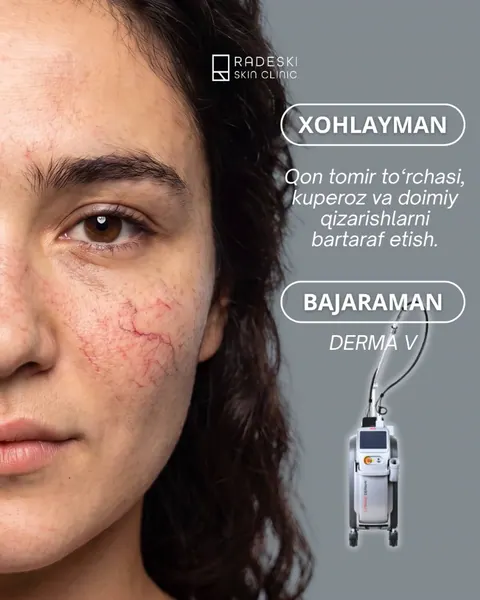
Lutronic Derma V — laser treatment for vessels and pigmentation.
Derma V is Lutronic's laser system for vascular and pigment concerns. It precisely treats couperose, rosacea, spider veins and pigment spots. At Radeski Clinic it is used on face and body under dermatologist supervision.
Derma V is a laser system by Lutronic designed for vascular and pigment changes. Unlike IPL devices, which produce broad-spectrum light, a laser emits light of a strictly defined wavelength. This allows the energy to be aimed precisely at the target — an individual vessel or pigment spot — while reducing the effect on the surrounding skin.
At Radeski, Derma V is used on the face and body under a dermatologist's supervision: for couperose, rosacea-related redness, spider veins (telangiectasias) and pigment spots. The doctor may treat visible vessels point by point or work across the whole area of redness — depending on the type of problem.
Not every kind of redness is a vascular problem: it can be a sign of allergic or seborrheic dermatitis, rosacea, a reaction to medication and other conditions. That is why, before any laser treatment, the dermatologist identifies the cause of the redness and checks pigment spots with dermatoscopy. The treatment plan is based on the results of this examination.
Manufacturer: Lutronic
How does it work?
Derma V works on the principle of selective photothermolysis. The laser light is absorbed by hemoglobin in blood vessels or by melanin in pigment spots. The absorbed energy turns into heat: the vessel wall heats up and closes, and the body then gradually clears it; clusters of pigment break down and are removed naturally or flake off.
The doctor chooses the treatment settings based on the diameter and depth of the vessels, the type of pigment, the skin phototype and the treatment area. Large or varicose veins on the legs are not treated with a surface laser — in such cases a phlebologist or vascular surgeon should be consulted first.
- Fewer visible small vessels
- Less persistent redness
- Some pigment spots fading
- A more even skin tone
- A calmer, healthier-looking complexion
Indications
Spider veins (telangiectasias)
Fine red or bluish vessels on the sides of the nose, the cheeks and the chin are one of the most common reasons to see a laser specialist. Because the laser acts precisely, the doctor can treat each visible vessel separately. Some vessels fade noticeably after one session; others need repeat treatment.
Couperose
In couperose, a network of small vessels and persistent redness appears on the cheeks and around the nose. Derma V can help reduce visible vessels and even out the complexion. To keep the result, it is important to avoid overheating, sun and products that irritate the skin.
Redness in rosacea
The vascular component of rosacea — persistent redness and visible vessels — can respond to laser treatment. However, the laser does not cure rosacea: it is one part of a combined treatment plan prescribed by a dermatologist, together with controlling triggers and proper skincare. If there is active inflammation, it may need to be calmed first.
Pigment spots and facial pigmentation
Derma V can be used to correct some superficial sun and age spots, as well as uneven pigmentation across the face. Every spot is checked with dermatoscopy first: suspicious lesions are not treated with the laser and need a separate examination. In melasma, laser treatment is considered only at the doctor's discretion and with particular caution.
Small superficial vessels on the body
Small superficial vascular changes on the neck, décolleté and other parts of the body can also be treated with the laser after a doctor's examination. Leg vessels are assessed separately: the laser does not help with deeper venous problems, and the vascular system needs to be examined first.
Who is it for?
Derma V may suit adults who are bothered by visible small vessels, persistent redness or pigment spots on the face or body. Before choosing laser treatment, the doctor assesses:
- The cause of the redness — vascular, inflammatory or something else
- The size, depth and location of the vessels
- The nature of pigment spots, based on dermatoscopy
- Skin phototype and any recent tan
- Current medications and general health
Contraindications
Whether laser treatment is possible is decided individually. The main reasons to postpone or avoid Derma V treatment are:
- A fresh tan, tanning beds or self-tanner
- Active infections in the treatment area, including a herpes flare-up
- Marked inflammation or damaged skin in the treatment area
- Suspicious spots and lesions that have not yet been examined
- Medications and conditions that increase sensitivity to light
- Conditions that impair tissue healing
- Pregnancy and breastfeeding, when elective aesthetic procedures are usually postponed
- Other individual circumstances in which the doctor considers laser treatment unsafe
Medications that affect blood clotting, a tendency to keloid scarring, systemic retinoid use, dark skin phototypes and active skin diseases all require a separate risk assessment. Never stop a medication on your own — discuss it with your doctor.
How we use it at Radeski Clinic
Price list includes couperose/rosacea treatment, facial vessel removal and full-face pigmentation. Exact cost depends on zone and condition.
Procedure steps
- Dermatologist examination: The doctor examines the skin, identifies the cause of the redness and vessels, and checks pigment spots with a dermatoscope. You will be asked about your medical history, medications and previous procedures. The doctor then explains whether laser treatment is suitable.
- Marking the area and preparation: The skin is cleansed of makeup and creams, and the vessels and spots to be treated are identified. The doctor sets the laser parameters based on the area, phototype and goal. Both patient and doctor wear special protective eyewear.
- Laser treatment: The doctor treats the selected vessels and spots with a series of pulses. During the procedure you may feel warmth and a brief snap, like a rubber band. The skin may be cooled to reduce discomfort; how strong it feels depends on the settings and your sensitivity.
- Right after the procedure: Redness and slight swelling may appear in the treated area, and some vessels fade immediately. Pigment spots temporarily darken and flake off over the following days. Occasionally small crusts or bruises appear — they usually resolve on their own.
- Aftercare and follow-up: For a few days you should avoid hot baths, saunas, intense exercise and alcohol, and use SPF every day. Whether a repeat session is needed, and when, is decided by the doctor after assessing how the skin has responded.
Results: what to expect
Some vessels fade during the procedure itself, but the final result develops over several weeks as the body clears the closed vessels. Over the course of treatment you may see:
- Visible vessels reducing or disappearing
- Less persistent redness
- Some pigment spots fading
- A more even complexion
- Calmer, healthier-looking skin
Frequently asked questions
Is laser vein removal painful?
Most patients describe it as warmth and a brief snap, like a rubber band flicked against the skin. In sensitive areas such as the sides of the nose, it may feel stronger. Cooling the skin reduces discomfort; the procedure is usually well tolerated.
How many sessions are needed?
It is individual. Some single vessels fade noticeably after one session, while couperose, rosacea and widespread redness usually need several sessions. The doctor sets the number of sessions and the interval between them based on how the skin responds.
Can I have vascular laser treatment in summer?
The main condition is that you do not have a fresh tan, because tanned skin absorbs more light and the risk of complications rises. If your skin is not tanned and you are ready to protect it strictly from the sun, the doctor may allow treatment in summer too. The final decision is the doctor's.
Will the vessels come back?
A vessel that has been closed usually does not reopen, but the tendency to couperose and rosacea remains, so new vessels may appear over time. Sun protection, avoiding overheating and controlling triggers help the result last longer. If needed, the doctor will recommend a maintenance session.
What will I look like after the procedure?
Redness and mild swelling usually last from a few hours to a few days; if the doctor allows, they can be covered with light makeup. Pigment spots temporarily darken. Small bruises occasionally appear. Most patients return to their usual activities quickly.
Conclusion
Derma V (Lutronic) is a laser system for precise, targeted treatment of spider veins, couperose, rosacea-related redness and some pigment spots. Results depend on the type of vessels and pigment, the skin's condition and individual response; the tendency to form new vessels may remain, so no method can guarantee a permanent result.
At Radeski, treatment with Derma V starts with a dermatologist consultation: the doctor identifies the cause of the redness, checks spots with dermatoscopy, assesses whether the laser suits you and draws up a treatment plan. The number of sessions and the protocol are set by the doctor.