Plasmapheresis in Fergana and Kokand
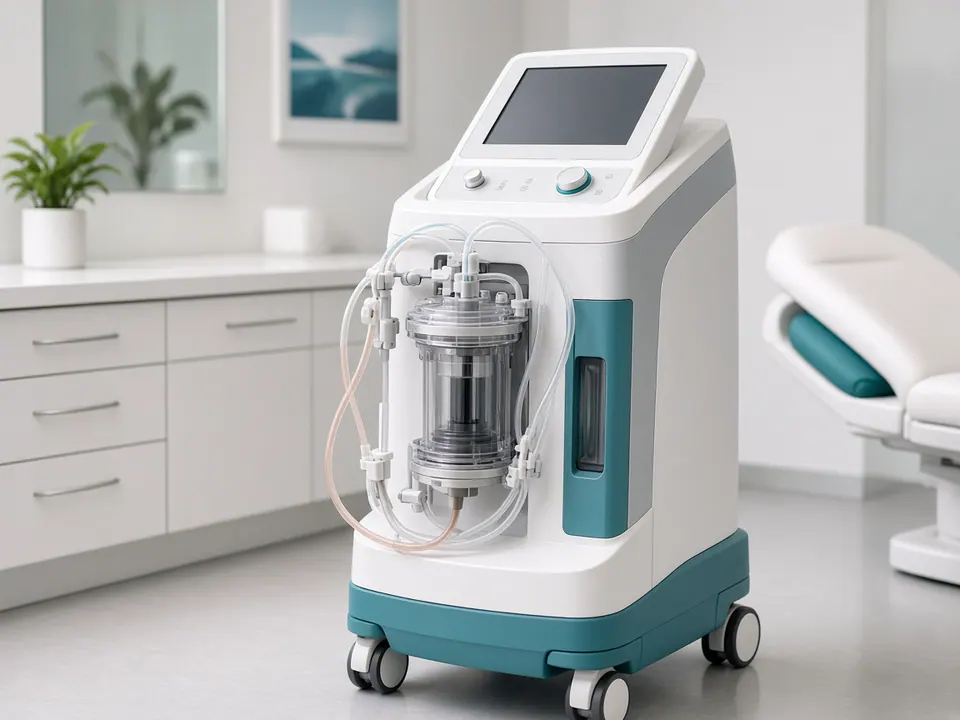
Plasma separation and cleansing — a comprehensive regenerative protocol for skin and the body.
Plasmapheresis separates blood plasma and reinfuses purified plasma. At Radeski Clinic it supports skin renewal, immune balance, and complex dermatology protocols. Treatment is planned after physician consultation and lab assessment.
Plasmapheresis is an extracorporeal procedure, meaning it takes place outside the body: the patient's blood passes through a sterile single-use circuit into a dedicated device, where the liquid part of the blood, the plasma, is separated from the blood cells. The plasma is processed according to the protocol chosen by the doctor, and the blood cells and purified plasma are then returned to the body.
In dermatology, plasmapheresis is not a stand-alone treatment. It is considered as part of a comprehensive plan: for chronic, frequently relapsing or severe skin conditions where the main therapy has not worked well enough, the doctor may suggest it as an additional method. At Radeski, plasmapheresis is also used in protocols aimed at skin renewal and recovery.
Because plasmapheresis is an invasive, blood-related procedure, preparing for it is more involved than for ordinary cosmetic treatments. First, a dermatologist examines the patient, reviews the medical history and assesses the laboratory results. Only the doctor decides whether the procedure is appropriate, how many sessions are needed and how far apart they should be.
Manufacturer: Professional plasmapheresis system
How does it work?
During the procedure a sterile single-use circuit is connected to a vein. The blood passes through the device, where the plasma is separated from the blood cells. The plasma is processed according to the protocol, and any loss of volume is replaced with solutions prescribed by the doctor. An anticoagulant solution keeps the blood from clotting in the circuit, and the whole process is monitored by medical staff.
Along with the plasma, the levels of some substances it carries may be temporarily reduced, for example certain proteins and immune complexes involved in inflammatory and immune reactions. That is why plasmapheresis is used as an addition to comprehensive therapy for some chronic inflammatory skin conditions. How strong the effect is varies from patient to patient and cannot be guaranteed in advance.
- A temporary reduction in some inflammatory factors in the plasma
- Support for the main dermatological treatment
- Less active rashes in some patients
- Relief of troublesome symptoms such as itching
- Support for the skin's recovery processes
Indications
Psoriasis and atopic dermatitis
When the disease is severe, flares often or does not respond well enough to standard treatment, the doctor may consider adding plasmapheresis to comprehensive therapy. It does not replace topical or systemic treatment but is used alongside them. The outcome depends on the form and activity of the disease.
Chronic urticaria and allergic skin conditions
For long-lasting urticaria and some allergic skin reactions, plasmapheresis may be used as an additional method. The key steps remain finding the cause and reducing contact with triggers. Plasmapheresis does not replace these measures.
Inflammatory acne
In some cases, when breakouts are numerous, deep and keep coming back, plasmapheresis may be discussed as part of a comprehensive treatment plan. The foundation of treatment is still the topical and systemic medicines prescribed by the dermatologist and proper skincare.
Skin renewal and recovery protocols
At Radeski, plasmapheresis is also used as part of comprehensive protocols aimed at improving skin condition. In these cases it is planned together with other procedures and home skincare. Results are individual and depend on the starting condition of the skin.
Complex and combined cases
If a skin condition is linked to the health of other organs or is influenced by several factors, the doctor assesses whether adding plasmapheresis to the overall plan is justified. A consultation with other specialists is recommended when needed.
Who is it for?
Plasmapheresis may be considered for adults with a chronic skin condition whose general health is stable and whose laboratory results do not rule out the procedure. Before deciding, the doctor assesses:
- Complete blood count and clotting tests
- Blood pressure and cardiovascular health
- The condition of the veins and safe venous access
- Chronic illnesses and current medications, especially blood thinners
- The type and activity of the skin condition and the results of previous treatment
Contraindications
Because plasmapheresis is invasive, the list of restrictions is longer than for aesthetic procedures. The main reasons to postpone or avoid it are:
- Bleeding or clotting disorders
- Severe anaemia or a markedly low blood protein level
- Low or unstable blood pressure
- Serious heart disease or heart rhythm disorders
- Acute infections and fever
- Veins that do not allow the procedure to be done safely
- Allergy to the anticoagulant or the solutions used during the procedure
- Pregnancy and breastfeeding, when a decision is made only for strict medical reasons after a separate assessment
Risks are assessed separately for people taking blood thinners, people with diabetes, kidney or liver disease, and anyone who has fainted during medical procedures in the past. Not all of these circumstances mean the procedure is ruled out; the doctor makes the final decision.
How we use it at Radeski Clinic
Price list: Plasmapheresis — 1,500,000 UZS. Protocol, session count and preparation are set at physician consultation.
Procedure steps
- Consultation: The dermatologist examines your skin and asks about your complaints, medical history, current medications and previous treatment, then decides whether plasmapheresis is justified in your case.
- Laboratory tests: The doctor orders the necessary tests, such as a complete blood count and clotting tests. Depending on the results, the procedure is scheduled or postponed.
- Preparing on the day: A light meal, enough fluids and a good rest beforehand are usually recommended; the doctor gives the exact instructions. Blood pressure and pulse are checked before the session.
- The plasmapheresis session: You are made comfortable and a sterile single-use circuit is connected to a vein. Staff monitor how you feel throughout. If you notice weakness, dizziness or tingling around the lips, tell the staff straight away.
- Observation and aftercare: After the session you stay under observation for a short time. The doctor advises you on drinking fluids, limiting physical activity that day, caring for the puncture site and the next session.
Results: what to expect
The outcome of plasmapheresis depends on the type and activity of the disease and on the rest of the treatment plan. The effect differs between patients and is not guaranteed. Together with the main therapy, you may see:
- Fewer rashes and less active inflammation
- Less itching
- A better response to the main treatment
- Longer periods of remission in some patients
- Better overall skin condition and appearance
Frequently asked questions
What is plasmapheresis and why is it done?
Plasmapheresis separates plasma from the blood with a dedicated device, processes it and returns it to the body together with the blood cells. In dermatology it is used as an additional method in the comprehensive treatment of chronic skin conditions and in skin recovery protocols.
Is plasmapheresis painful?
It usually feels like having blood taken: there is brief discomfort when the needle goes in, and the session itself is usually painless. Some people feel mild weakness, chills or tingling around the lips, and should tell the staff if they do.
How many sessions are needed?
The number of sessions is individual and depends on the diagnosis, disease activity, laboratory results and how well you tolerate the procedure. The doctor sets the length of the course and the interval between sessions and adjusts them during treatment if needed.
What side effects can occur after plasmapheresis?
The most common effects are temporary weakness, dizziness, a drop in blood pressure and a bruise where the needle went in. Reactions to the solutions are rare. That is why the procedure is done under medical supervision and you are observed afterwards.
Can children have plasmapheresis?
In children, plasmapheresis is considered only for strict medical reasons and after a separate assessment. For elective goals such as skin renewal it is generally planned for adults. Only the doctor can decide at a consultation whether the method is suitable for a child.
Conclusion
Plasmapheresis is a supporting method within comprehensive dermatological treatment. It can be used for chronic and relapsing skin conditions and in skin recovery protocols, but it does not replace the main therapy and is not suitable for every patient.
At Radeski, plasmapheresis is planned after a dermatologist consultation and a review of your laboratory results. The doctor will explain whether the procedure is likely to help you, what its risks are and which treatment approach is the most appropriate.