
Demodicosis: Facial Redness and Spots — Signs, Testing and Treatment
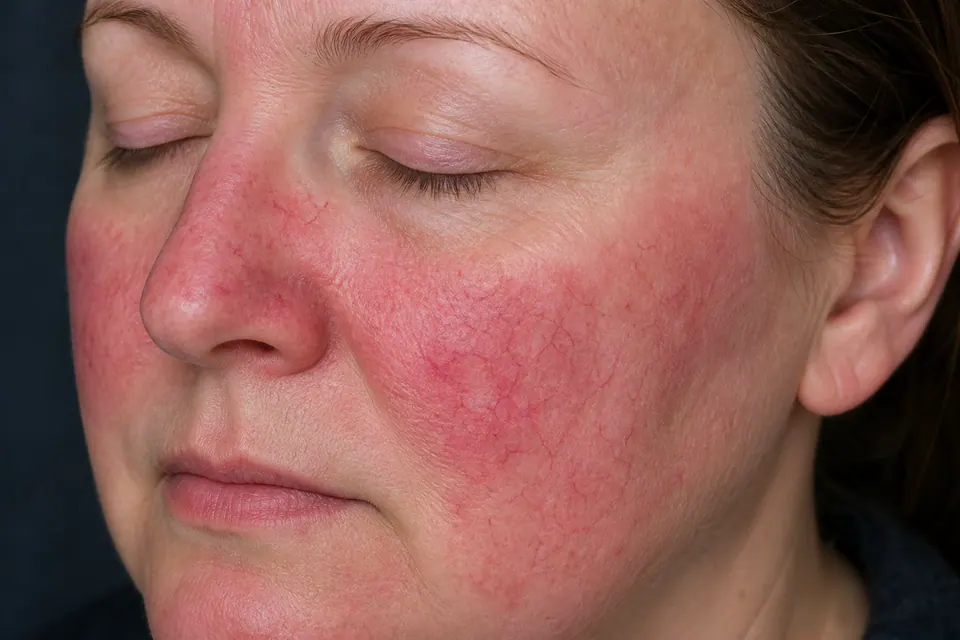
Demodicosis: facial redness, spots, itching and rough skin. What the Demodex mite is, how it differs from acne and rosacea, the scraping test, treatment and care. Dermatologists in Fergana and Kokand.
Key takeaways
- Most people carry the Demodex mite — disease starts when it overgrows
- Signs: redness, bumps, itching, rough skin, eyelid involvement
- It mimics acne and rosacea — a skin scraping confirms it
- Treatment lasts 1–3 months and is prescribed by a doctor
- Steroid creams make demodicosis worse
Demodicosis is skin inflammation linked to an overgrowth of the microscopic Demodex mite. It shows up as facial redness, small bumps and pustules, itching and rough skin. It is often mistaken for acne or allergy and treated wrongly for months. Once correctly diagnosed, it responds well to treatment.
What is the Demodex mite?
Demodex is a mite, invisible to the eye, that lives in hair follicles and oil glands. Most adults have it, and usually it causes no trouble. Disease starts when the mite multiplies too much and the skin reacts with inflammation. Contributing factors:
- oily skin and active oil glands;
- lowered immunity, stress, fatigue;
- long-term use of steroid creams;
- heavy, greasy cosmetics and make-up left on overnight;
- rosacea and digestive disorders.
Signs of demodicosis
- redness on the cheeks, nose, forehead and chin;
- small red bumps and pustules;
- itching and burning, especially in the evening;
- rough, "sandpaper" skin and flaking;
- enlarged pores and oiliness;
- when the eyelids are affected — itchy, red lid margins, crusts on the lashes, lash loss. An ophthalmologist should also see this.
Demodicosis, acne and rosacea
These conditions look alike and often occur together:
- acne — more comedones (blackheads), in teenagers and young adults;
- rosacea — persistent redness and visible vessels in the centre of the face; Demodex makes it worse;
- demodicosis — itching, rough skin, no response to acne treatment.
So the diagnosis is made by a dermatologist: an examination, dermoscopy and a skin scraping, in which the mites are counted under the microscope.
How is demodicosis treated?
- Topical anti-mite treatment — prescribed by the doctor, usually for 1–3 months;
- in severe cases, oral medicines prescribed by the doctor;
- additional treatment to calm inflammation and redness;
- when rosacea is present too, its treatment, including device procedures for vessels and redness.
Important: steroid creams calm demodicosis for a while but then make it worse. Do not use them on your own.
Home care
- Wash your face twice a day with a gentle cleanser and always remove make-up at night.
- Pause heavy, greasy creams and foundations for a while.
- Change your pillowcase 2–3 times a week and use your own towel.
- Hot drinks, spicy food, saunas and sun worsen redness — cut back on them.
- Keep up treatment for as long as the doctor said, even once the skin has cleared.
Do not over-dry facial skin in winter: our winter skin care article covers gentle care.
Demodicosis treatment in Fergana and Kokand
At Radeski Skin Clinic a dermatologist examines the facial skin with a dermatoscope, orders a scraping when needed, tells demodicosis apart from acne and rosacea and builds a treatment plan.
- Rosacea — in brief and Acne — in brief;
- Rosacea treatment in Fergana and in Kokand;
- Dermatologist in Fergana and in Kokand.
If facial redness and spots do not clear with ordinary acne treatment, get checked for demodicosis — once the cause is found, the skin clears quickly.
When to see a doctor
- Facial spots do not clear with acne treatment
- Constant redness, itching and burning
- Itchy eyelids or crusts on the lashes
- The rash got worse after a steroid cream
- The skin is rough and flaky
Frequently asked questions
Hashtags
#Demodicosis#Demodex#Facialredness#Rosacea#Dermatologist#Fergana#Kokand#RadeskiSkinClinic
Important note: This article is for general information only and does not replace a medical consultation.
Related clinic services
More helpful articles
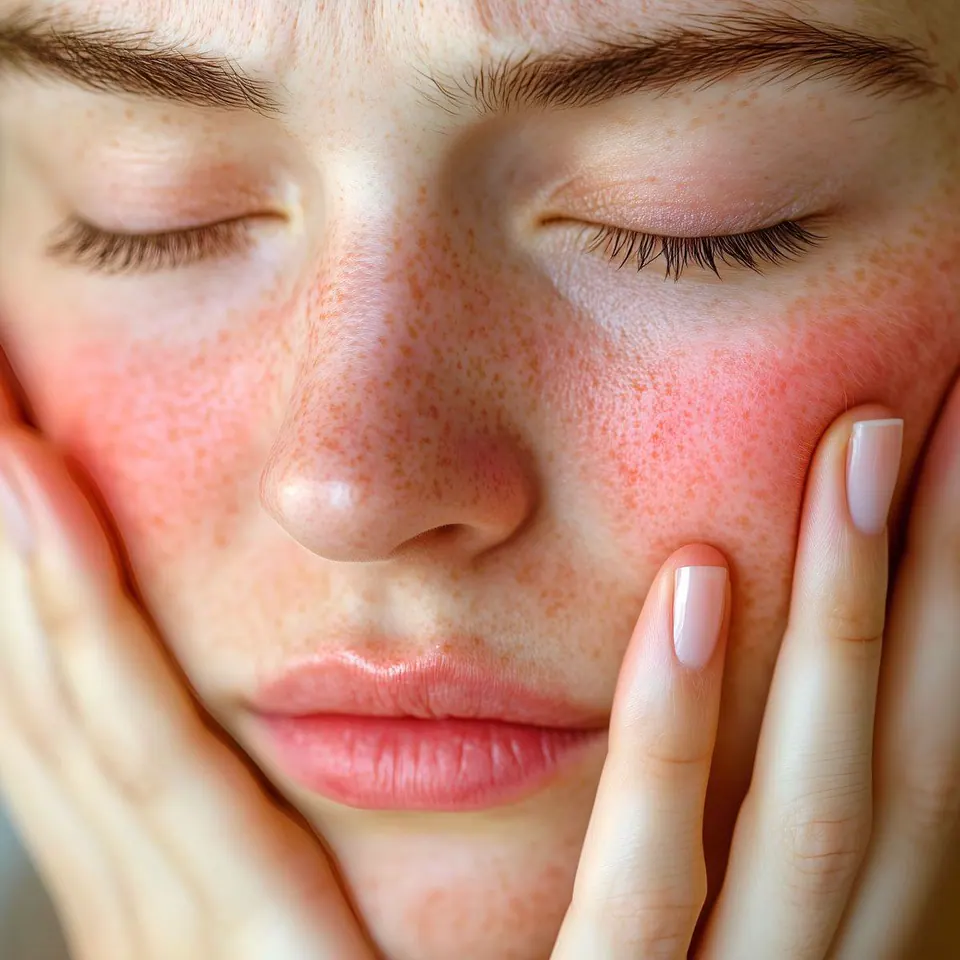
Rosacea Treatment at Radeski Skin Clinic — Facial Redness and Vessels
Rosacea care at Radeski Skin Clinic: diagnosis, medicines, IPL and vascular laser, care for sensitive skin. The aim is symptom control and a longer quiet period.
Read more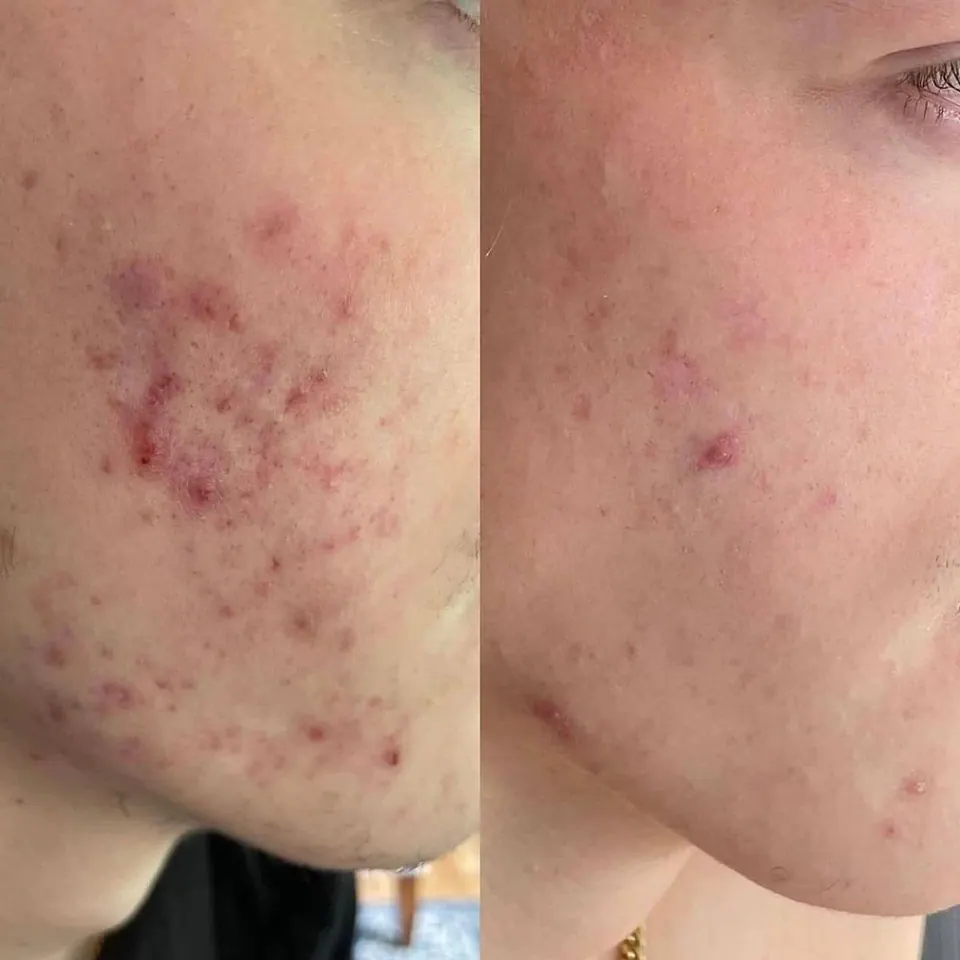
Adult Acne: Causes, Treatment and When to See a Dermatologist
Why acne appears in adults, how it is treated and when to see a dermatologist. Dermatology visits at Radeski Skin Clinic in Fergana and Kokand.
Read more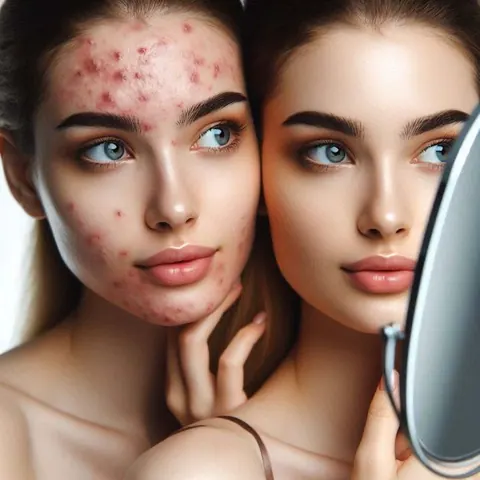
Acne: Causes, Symptoms, and Modern Treatment Options
Learn why acne develops, how to recognize symptoms, and which dermatology treatments are available in Fergana and Kokand at Radeski Skin Clinic.
Read more