
Eczema: Types, Causes and Treatment — Red, Weeping and Itchy Skin
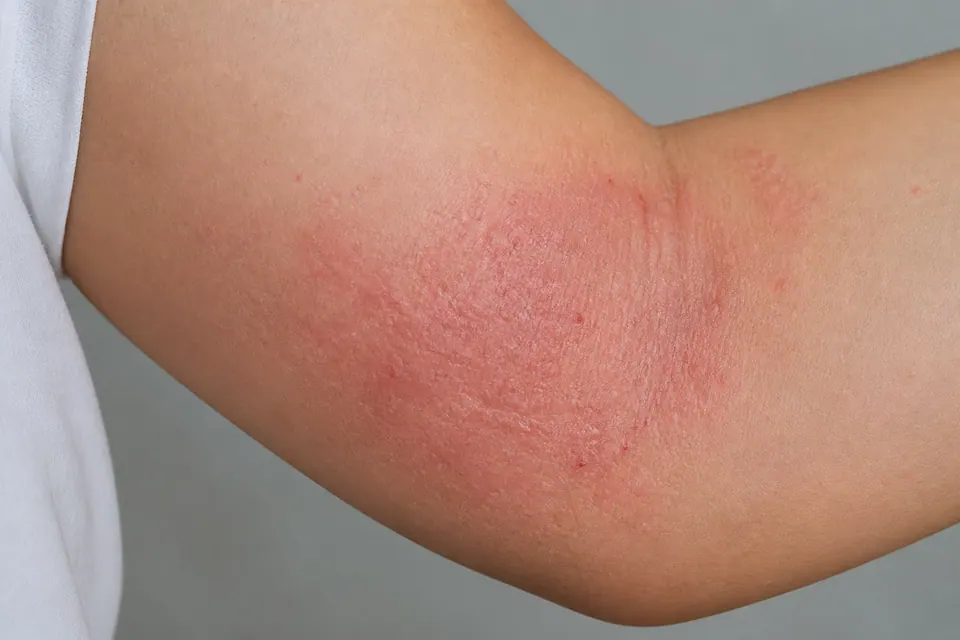
Eczema: redness, blisters, weeping and intense itching. Types, causes, how it differs from psoriasis and fungus, treatment and winter hand care. Dermatologists in Fergana and Kokand.
Key takeaways
- Eczema is chronic skin inflammation: redness, blisters, weeping, flaking and itching
- Eczema is not contagious
- There are many types: contact, hand, dyshidrotic, nummular, microbial, varicose eczema
- It resembles psoriasis, fungus, scabies and hives — a dermatologist makes the diagnosis
- Treatment: emollients, topical products, and phototherapy or immunobiological therapy when needed
- Do not use steroid creams on your own for long periods
Eczema is a chronic inflammatory skin condition: redness, tiny blisters, weeping, flaking and intense itching. It most often appears on the hands, feet, face and in the folds of the elbows and knees, and flares in winter and after stress. Eczema is not contagious — it does not pass to other people. With the right diagnosis and treatment the rash comes under control quickly and flares become much less frequent.
What does eczema look like?
The signs depend on the stage:
- acute — red, swollen skin with tiny blisters that break and weep;
- subacute — crusts and flaking, the itch continues;
- chronic — the skin thickens, becomes dry and rough, and cracks.
Itching is the main symptom: it is often worse at night and disturbs sleep. Scratching damages the skin and lets infection in.
Types of eczema
- Contact eczema — after contact with an irritant or allergen: detergents, cement, latex gloves, nickel (watches, belt buckles), cosmetics.
- Hand eczema — in people who work with water, soap and chemicals: cooks, hairdressers, health workers, homemakers.
- Dyshidrotic eczema — small, very itchy blisters on the palms and the sides of the fingers.
- Nummular (discoid) eczema — round, coin-sized patches on the arms and legs.
- Microbial eczema — around wounds, burns or fungal infection.
- Varicose (stasis) eczema — on the lower legs in people with vein disease.
Atopic dermatitis and seborrheic dermatitis are closely related conditions with their own features — there are separate articles about them.
Why does eczema appear?
In eczema the skin barrier is weakened: the skin loses moisture quickly and reacts strongly to irritants. Common triggers:
- frequent hand washing, hot water, harsh soap and household chemicals;
- allergens — nickel, cosmetic ingredients, some ointments;
- cold, dry air and indoor heating — eczema often returns in winter;
- stress, fatigue, lack of sleep;
- skin infections and fungus;
- digestive, endocrine and vein disorders.
What can be mistaken for eczema?
Many rashes look similar, and they are treated differently:
- psoriasis — sharply bordered plaques with silvery scales;
- fungal infection — ring-shaped patches, confirmed by a lab test;
- scabies — itching between the fingers, worse at night, often in several family members;
- hives — welts that appear and fade within hours.
So before using an "eczema cream" on your own, see a dermatologist. When needed, the doctor performs dermoscopy, a skin scraping and other tests.
How is eczema treated?
The dermatologist builds the plan around the type, location and severity of the eczema:
- basic care — daily emollients (moisturisers) and gentle cleansers;
- topical treatment — anti-inflammatory creams and ointments in short courses;
- itch relief — as prescribed by the doctor;
- if infection develops — antibacterial or antifungal products;
- phototherapy — for chronic and widespread eczema, narrowband UVB 311 nm phototherapy may be used;
- severe cases — immunobiological therapy and other systemic treatment, only under a doctor's supervision.
Do not use steroid creams on your own for long periods: they thin the skin, and stopping them abruptly can make the rash come back worse. All medicines are prescribed by a doctor.
Protecting your hands from eczema in winter
- Wash your hands in warm (not hot) water with a mild cleanser and apply moisturiser straight away.
- Wear cotton-lined rubber gloves for dishes and cleaning.
- Wear gloves outdoors in the cold and humidify the air at home.
- Do not scratch: a cool compress or cream eases the itch.
- Test new cosmetics and household products on a small area of skin first.
When should you see a dermatologist?
- The rash does not clear in 1–2 weeks or spreads quickly.
- The skin weeps, oozes pus, hurts, or you have a fever.
- Itching keeps you awake.
- Eczema appears on the face, around the eyes or on the genitals.
- A child shows signs of eczema.
- A cream that used to help no longer works.
Eczema treatment in Fergana and Kokand
At Radeski Skin Clinic a dermatologist examines the rash, performs dermoscopy and tests when needed, identifies the type of eczema and builds a treatment and home-care plan. The clinic also offers phototherapy and immunobiological therapy.
- Eczema — the condition in brief;
- Dermatologist in Fergana — visits, prices and doctors;
- Dermatologist in Kokand — visits at the Kokand branch;
- similar conditions: Atopic dermatitis, Seborrheic dermatitis, Psoriasis: diagnosis and treatment.
The earlier eczema is treated, the faster it comes under control — and the lower the risk that the skin thickens and the condition becomes chronic.
When to see a doctor
- The rash does not clear in 1–2 weeks or spreads quickly
- The skin weeps, oozes pus, hurts, or you have a fever
- Itching keeps you awake
- Eczema on the face, around the eyes or on the genitals
- A child shows signs of eczema
Frequently asked questions
Hashtags
#Eczema#Dermatitis#Handeczema#Itchyskin#Dermatologist#Fergana#Kokand#RadeskiSkinClinic
Important note: This article is for general information only and does not replace a medical consultation.
Related clinic services
More helpful articles
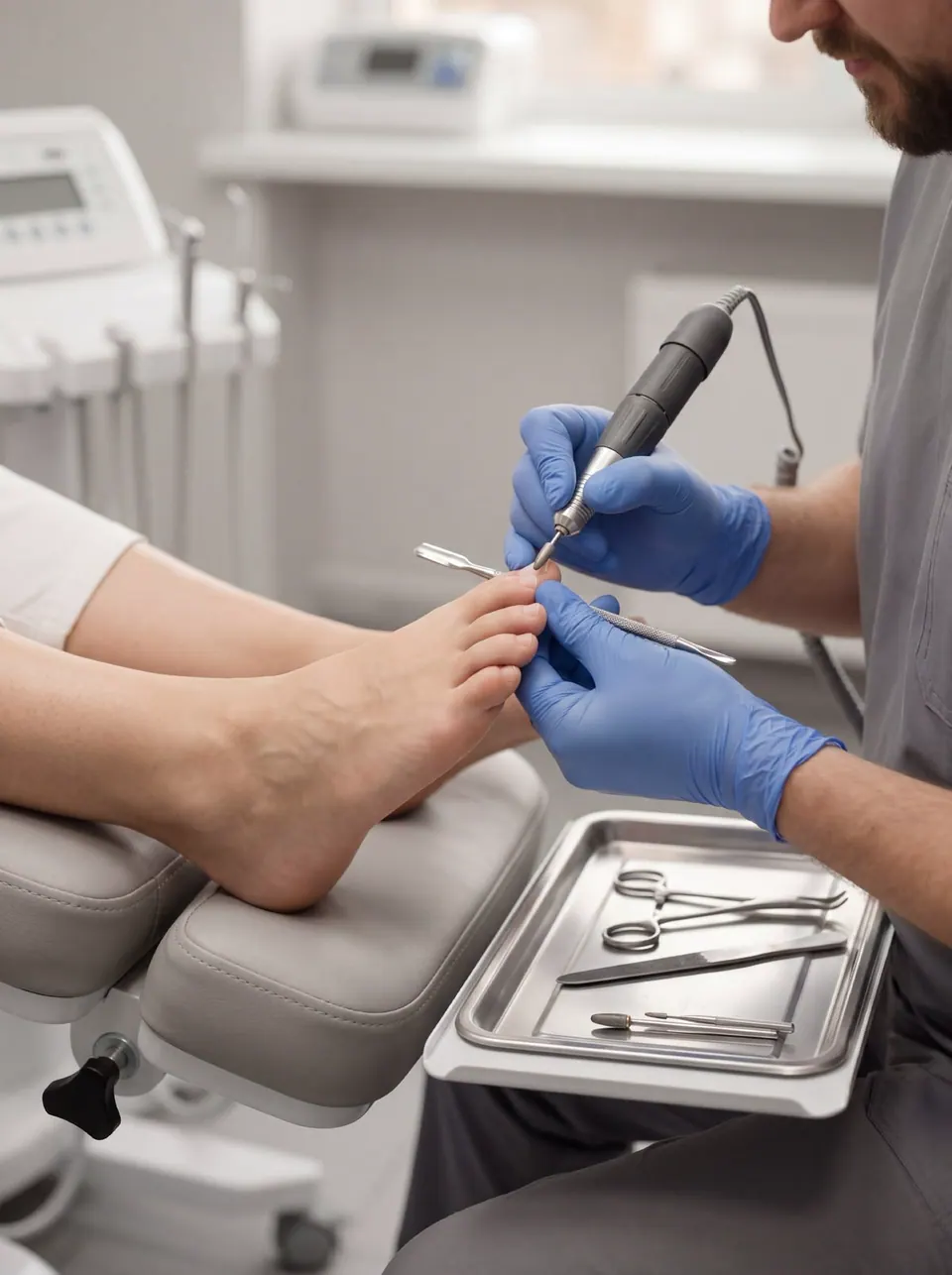
Nail Fungus (Onychomycosis): Signs, Causes and Treatment — Podiatrist Advice
Nail fungus (onychomycosis): yellow, thick, crumbling nails. Signs, lab confirmation, podiatric nail care and how long treatment takes. Podiatrists and dermatologists in Fergana and Kokand.
Read more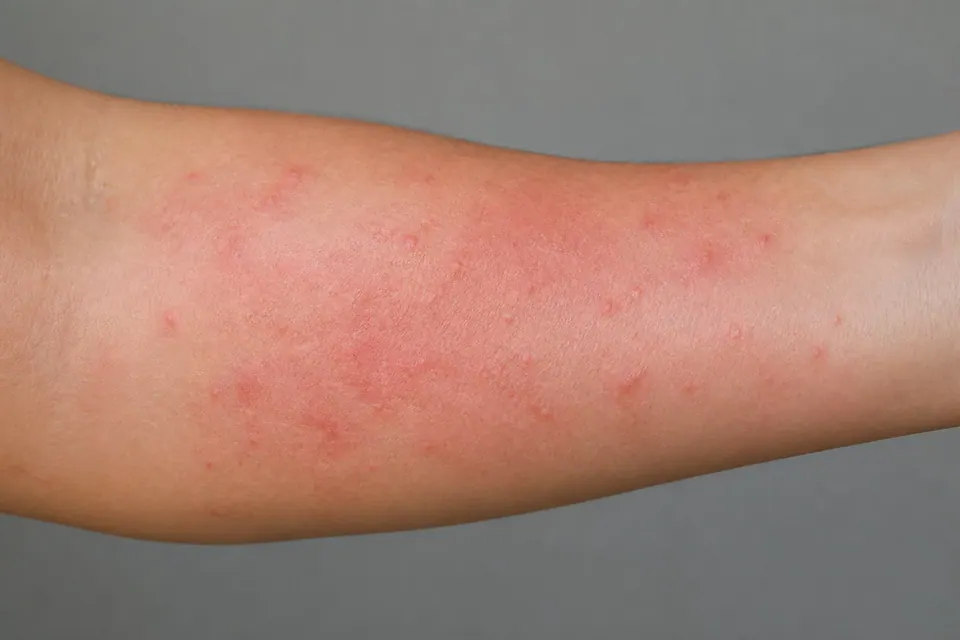
Skin Allergy and Hives: Symptoms, Causes and Treatment — When to Seek Urgent Help
Skin allergy and hives: itchy welts, redness and swelling. Causes, acute and chronic hives, when to call an ambulance and how it is treated. Dermatologists in Fergana and Kokand.
Read more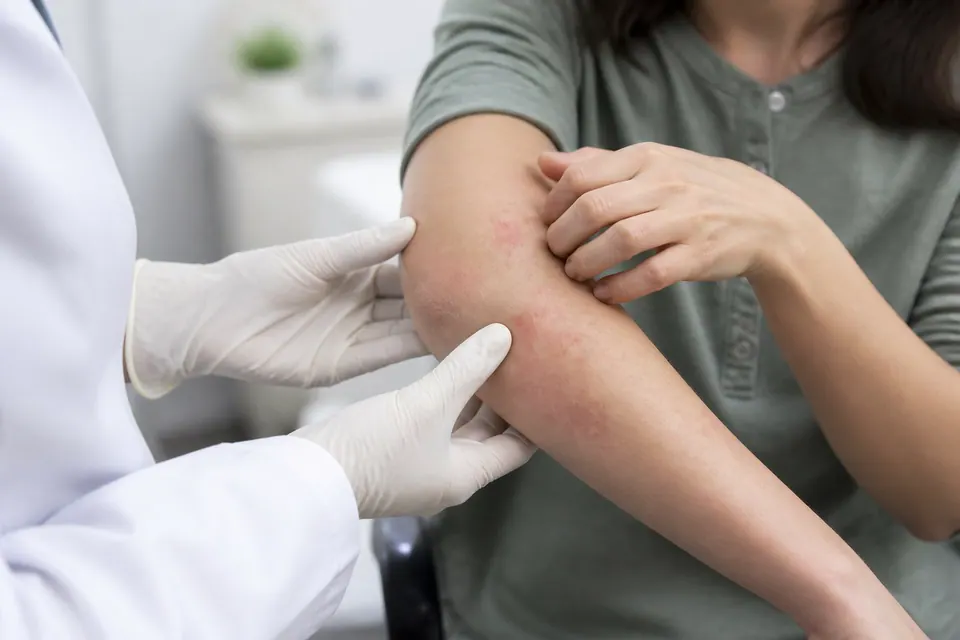
Itchy Skin: Causes, Warning Signs and Treatment — Why Your Skin Itches
Why skin itches: dryness, eczema, hives, scabies, fungus and internal causes. Warning signs, what a dermatologist checks and home care. Dermatologists in Fergana and Kokand.
Read more