
Nail Fungus (Onychomycosis): Signs, Causes and Treatment — Podiatrist Advice
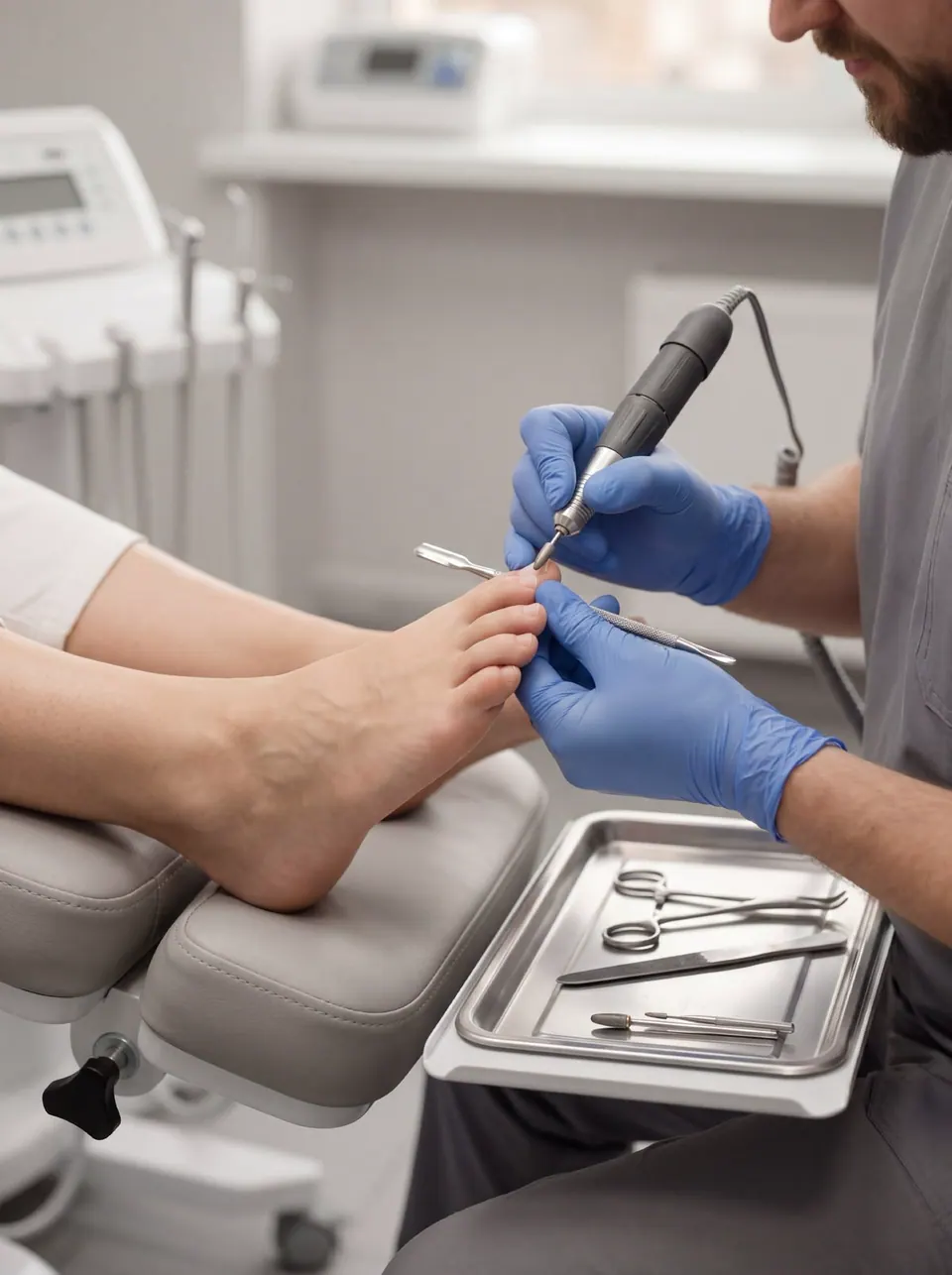
Nail fungus (onychomycosis): yellow, thick, crumbling nails. Signs, lab confirmation, podiatric nail care and how long treatment takes. Podiatrists and dermatologists in Fergana and Kokand.
Key takeaways
- Nail fungus does not go away on its own and spreads to other nails
- Not every changed nail is fungus — a lab test comes before treatment
- A podiatrist painlessly removes the thickened infected part of the nail
- A toenail takes 12–18 months to grow out — finish the treatment
- To prevent re-infection, the skin of the feet, shoes and socks are treated too
Nail fungus (onychomycosis) is a fungal infection of the nail plate and the tissue beneath it. It most often starts on the toenails, especially the big toe: the nail changes colour, thickens and crumbles. It does not go away on its own; over time it spreads to other nails and to the skin of the feet, and it can pass to family members. The good news: with the right diagnosis and consistent treatment a healthy nail grows back.
Signs of nail fungus
- yellow, white or brown spots and streaks on the nail;
- a thickened, rough nail;
- a crumbling, brittle nail edge;
- the nail lifting off the nail bed (onycholysis);
- grey debris under the nail and an unpleasant smell;
- discomfort or pain in shoes and when walking.
Nail fungus often comes with athlete's foot: itching between the toes, cracks and flaking.
Not every changed nail is fungus
Nails also change colour and shape for other reasons: nail psoriasis, injury and tight shoes, an ingrown nail, poor circulation, and sometimes more serious conditions. That is why fungus should be confirmed by a lab test before treatment: a nail sample is examined under the microscope. Months of treating an unconfirmed "fungus" waste time and money.
Who gets it more often?
- people whose feet sweat a lot and who wear tight shoes that do not breathe;
- people who walk barefoot in pools, saunas, bathhouses and gyms;
- people who share slippers, towels and nail scissors;
- people with diabetes, poor circulation or weakened immunity;
- older people — their nails grow more slowly;
- athletes, whose nails are injured often;
- anyone with a family member who has fungus.
How is nail fungus treated?
The doctor builds the plan around how many nails are affected, how deep the infection goes and your general health:
- Podiatric nail care — a dermatological podiatrist painlessly removes the thickened infected part of the nail with a device. The nail becomes thinner, discomfort eases and medicines work better.
- Topical treatment — antifungal lacquers and solutions, in mild cases.
- Systemic treatment — antifungal tablets when many nails are affected or the infection is deep. They are taken only on a doctor's prescription, with liver tests when needed.
- Treating the skin of the feet — fungus on the skin around the nails is treated at the same time, otherwise the infection returns.
- Treating shoes and socks — with an antifungal product, to avoid re-infection.
Why does treatment take so long?
Once the fungus is gone, the old nail does not change — a healthy nail has to grow out. A fingernail is fully renewed in about 4–6 months, a toenail in 12–18 months. So the result shows gradually, starting from the base of the nail. Stopping treatment too early is the main reason it comes back.
How to avoid re-infection
- Wash your feet every day and dry carefully between the toes.
- Change cotton socks daily; alternate and dry your shoes.
- Wear your own slippers in pools, saunas and gyms.
- Use only your own nail scissors, towel and slippers.
- Cut nails straight across without cutting deep into the corners.
- If family members have signs too, have them checked.
People with diabetes should not cut and clean their nails and feet themselves — it is safer to leave this to a podiatrist.
Nail fungus treatment in Fergana and Kokand
At the Radeski Skin Clinic nail and foot clinic a dermatologist and podiatrist examine the nails, take a sample when needed, carry out podiatric nail care and build a treatment plan.
- Nail fungus treatment in Fergana;
- Nail fungus treatment in Kokand;
- Podiatrist in Fergana and Podiatrist in Kokand;
- other nail problems: Ingrown nail: a clinical case, Nail and foot clinic.
The earlier nail fungus is treated, the fewer nails it reaches and the shorter the treatment.
When to see a doctor
- A nail changes colour, thickens or crumbles
- The nail starts lifting off the nail bed
- It hurts to walk or wear shoes
- You have diabetes and notice any change on your feet
- Home remedies have not helped in 2–3 months
Frequently asked questions
Hashtags
#Nailfungus#Onychomycosis#Podiatrist#Athletesfoot#Dermatologist#Fergana#Kokand#RadeskiSkinClinic
Important note: This article is for general information only and does not replace a medical consultation.
Related clinic services
More helpful articles
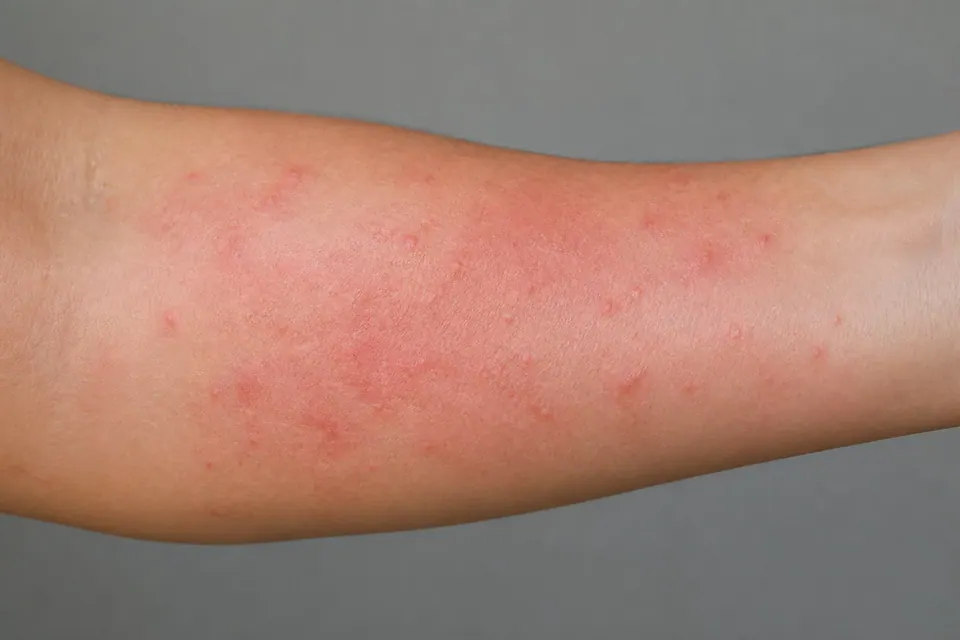
Skin Allergy and Hives: Symptoms, Causes and Treatment — When to Seek Urgent Help
Skin allergy and hives: itchy welts, redness and swelling. Causes, acute and chronic hives, when to call an ambulance and how it is treated. Dermatologists in Fergana and Kokand.
Read more
Itchy Skin: Causes, Warning Signs and Treatment — Why Your Skin Itches
Why skin itches: dryness, eczema, hives, scabies, fungus and internal causes. Warning signs, what a dermatologist checks and home care. Dermatologists in Fergana and Kokand.
Read more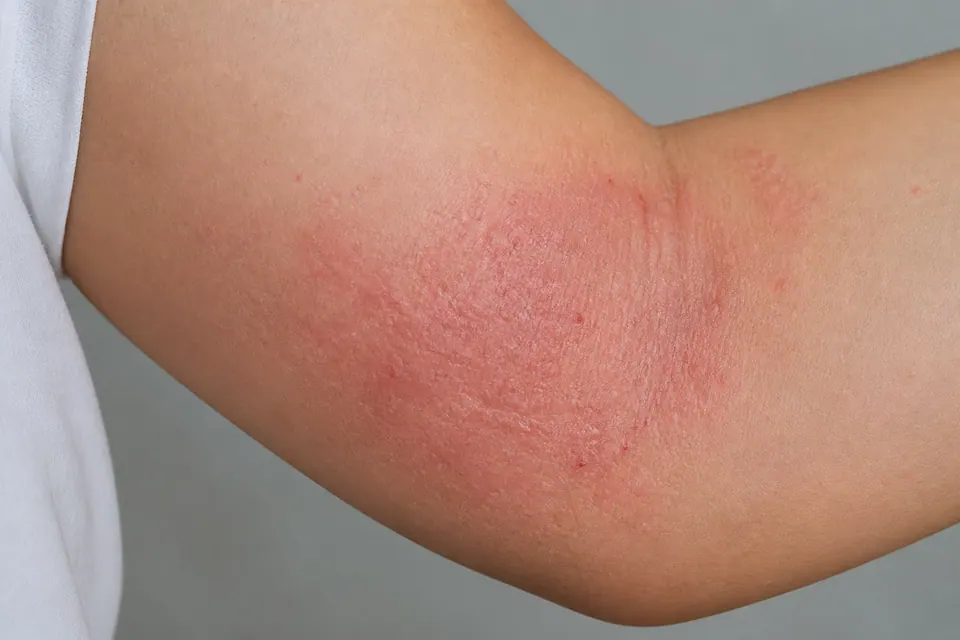
Eczema: Types, Causes and Treatment — Red, Weeping and Itchy Skin
Eczema: redness, blisters, weeping and intense itching. Types, causes, how it differs from psoriasis and fungus, treatment and winter hand care. Dermatologists in Fergana and Kokand.
Read more