
Skin Allergy and Hives: Symptoms, Causes and Treatment — When to Seek Urgent Help
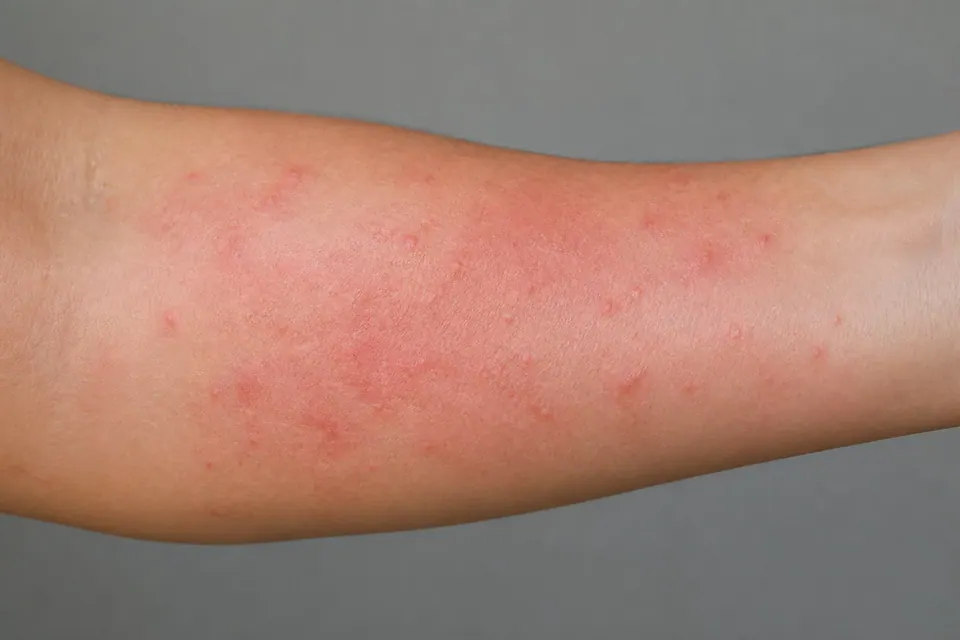
Skin allergy and hives: itchy welts, redness and swelling. Causes, acute and chronic hives, when to call an ambulance and how it is treated. Dermatologists in Fergana and Kokand.
Key takeaways
- Hives are itchy welts that fade without a trace within 24 hours
- Swollen lips or tongue or trouble breathing — call an ambulance (103) at once
- Acute hives often follow food, medicines or infection; chronic hives often have no clear cause
- Treatment rests on avoiding the cause and antihistamines chosen by a doctor
- Severe chronic hives may be treated with immunobiological therapy
A skin allergy is an exaggerated immune response to a substance that shows up as redness, rash, welts and itching. Its most common form is hives (urticaria): itchy raised welts, like nettle stings, that fade without a trace within hours. Most hives settle without consequences, but sometimes they signal a condition that needs urgent help.
Call an ambulance right away (103)
Do not wait — call emergency services if:
- the lips, tongue, eyelids or face swell quickly;
- breathing becomes difficult, with wheezing or tightness in the throat;
- swallowing is hard or your voice changes;
- you feel dizzy, very weak or faint;
- the rash spreads fast after a wasp or other insect sting, a new medicine or a food.
These can be signs of angioedema or anaphylaxis.
Types of skin allergy
- Hives (urticaria) — itchy pink or white welts that move around the body and fade within 24 hours.
- Allergic contact dermatitis — redness, blisters and itching where the skin touched an allergen: nickel, hair dye, cosmetics, latex, some ointments.
- Drug allergy — a rash over the body after starting a new medicine.
- Atopic dermatitis — a chronic itchy rash in people prone to allergy; there is a separate article about it.
What causes hives?
Acute hives (up to 6 weeks) are often linked to a specific cause:
- foods — nuts, seafood, eggs, citrus fruit, chocolate;
- medicines — some antibiotics, painkillers and anti-inflammatory drugs;
- viral and bacterial infections — especially in children;
- insect stings.
Chronic hives (longer than 6 weeks) often have no clear external cause — it is a feature of how the immune system works. Sometimes physical factors set off the welts: cold, heat, pressure (a belt or bag strap), sun, sweat, rubbing. Stress and infections can make it worse.
How is it diagnosed?
Welts often fade before the doctor's visit, so take a photo of the rash on your phone. The dermatologist will ask:
- when and after what the rash appears, and how long it lasts;
- which medicines, foods and cosmetics you used;
- whether there was swelling or other symptoms.
For chronic hives the doctor may order tests. A food and allergen diary helps find the cause. Testing for "all allergens" is usually unnecessary: the doctor chooses the tests.
How is it treated?
- Removing the cause — avoiding the identified allergen, medicine or trigger.
- Antihistamines — the mainstay of hives treatment; the doctor chooses modern non-drowsy medicines and the dose.
- Contact dermatitis — avoiding the allergen and anti-inflammatory topical treatment.
- Severe chronic hives — if antihistamines do not help, immunobiological therapy may be used. This modern treatment is given only under a doctor's supervision.
Do not take steroid medicines on your own: they are prescribed only as short courses when indicated.
What to do at home
- When a rash appears, think back to any new medicine, food or cosmetic and tell your doctor.
- Avoid hot baths, saunas and tight clothing — they make welts worse.
- A cool compress eases the itch.
- Do not use folk remedies that promise to "cleanse" allergy, or scented creams.
- Write down the name of any medicine you are allergic to and tell every doctor.
Skin allergy treatment in Fergana and Kokand
At Radeski Skin Clinic a dermatologist examines the rash, tells hives apart from contact dermatitis and other conditions, orders tests when needed and builds a treatment plan. For severe chronic forms the clinic offers immunobiological therapy.
- Skin allergy — in brief;
- Dermatologist in Fergana — visits, prices and doctors;
- Dermatologist in Kokand — visits at the Kokand branch;
- similar complaints: Itchy skin: causes, Eczema, Atopic dermatitis.
If hives keep coming back or last longer than 6 weeks, do not just put up with them: with the right treatment most patients get the rash fully under control.
When to see a doctor
- Hives last longer than 6 weeks or keep coming back
- A rash appeared after starting a new medicine
- Itching disturbs sleep and work
- Redness and blisters where skin touched cosmetics or metal
- Swelling of the face and lips — urgently
Frequently asked questions
Hashtags
#Hives#Urticaria#Skinallergy#Contactdermatitis#Dermatologist#Fergana#Kokand#RadeskiSkinClinic
Important note: This article is for general information only and does not replace a medical consultation.
Related clinic services
More helpful articles

Nail Fungus (Onychomycosis): Signs, Causes and Treatment — Podiatrist Advice
Nail fungus (onychomycosis): yellow, thick, crumbling nails. Signs, lab confirmation, podiatric nail care and how long treatment takes. Podiatrists and dermatologists in Fergana and Kokand.
Read more
Itchy Skin: Causes, Warning Signs and Treatment — Why Your Skin Itches
Why skin itches: dryness, eczema, hives, scabies, fungus and internal causes. Warning signs, what a dermatologist checks and home care. Dermatologists in Fergana and Kokand.
Read more
Eczema: Types, Causes and Treatment — Red, Weeping and Itchy Skin
Eczema: redness, blisters, weeping and intense itching. Types, causes, how it differs from psoriasis and fungus, treatment and winter hand care. Dermatologists in Fergana and Kokand.
Read more