
Hair Loss in Men: How to Stop Male Pattern Baldness
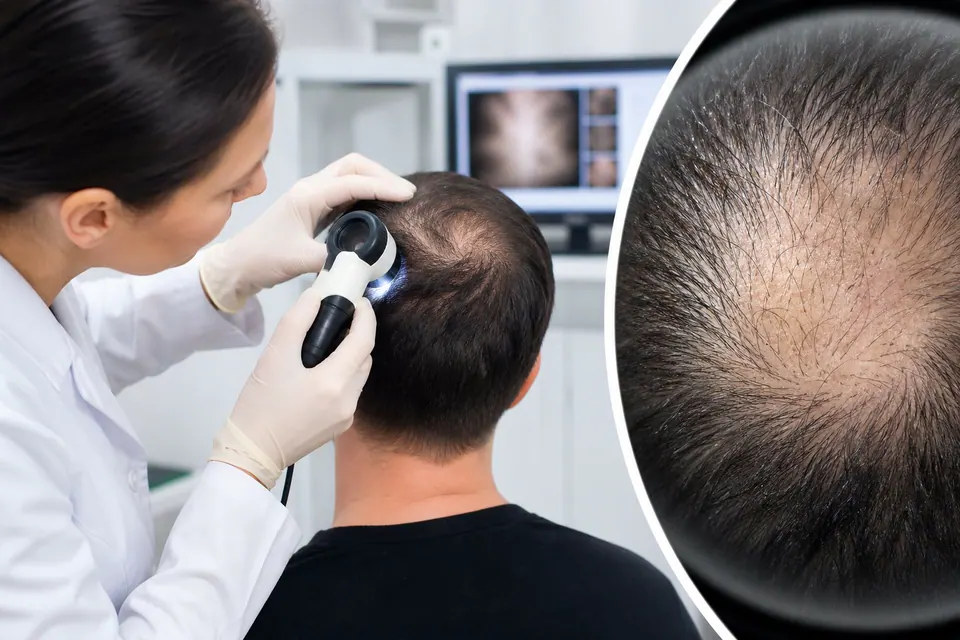
Hair loss in men: signs of male pattern baldness, other causes, trichoscopy, medicines, PRP, thulium laser and transplant. Trichologists in Fergana and Kokand.
Key takeaways
- The main cause of hair loss in men is androgenetic alopecia
- A closed follicle does not recover — the earlier the treatment, the more hair is kept
- Trichoscopy detects thinning before it becomes visible
- Treatment: medicines prescribed by a trichologist, PRP, thulium laser, and transplant if needed
- Shampoos and vitamins without tests do not stop male pattern hair loss
Hair loss in men is very common: by 50, more than half of men have noticeable thinning. Many accept it as "genetics, nothing to be done". In fact, treatment started early slows or stops the process and keeps the hair you have. The key is not to lose time.
Androgenetic alopecia — the main cause
About 90% of hair loss in men is androgenetic alopecia (male pattern baldness). Because of an inherited sensitivity, hair follicles react to the active form of the male hormone: hairs get thinner and shorter, and over the years the follicle "closes".
Signs:
- the hairline recedes at the temples;
- thinning on the crown;
- hairs become finer and shorter;
- the process builds up slowly over years.
Key point: a follicle that has closed does not recover. So the earlier treatment starts, the more hair is saved.
Other causes
Not all hair loss is androgenetic:
- telogen effluvium — heavy shedding all over the scalp 2–3 months after severe stress, an illness with high fever, surgery or a crash diet;
- alopecia areata — round bald patches, which can also affect the beard and eyebrows; more: alopecia areata;
- scalp ringworm — flaky patches with broken hairs;
- thyroid disease, iron deficiency, some medicines;
- seborrheic dermatitis — dandruff and itching can make shedding worse.
How does a trichologist investigate?
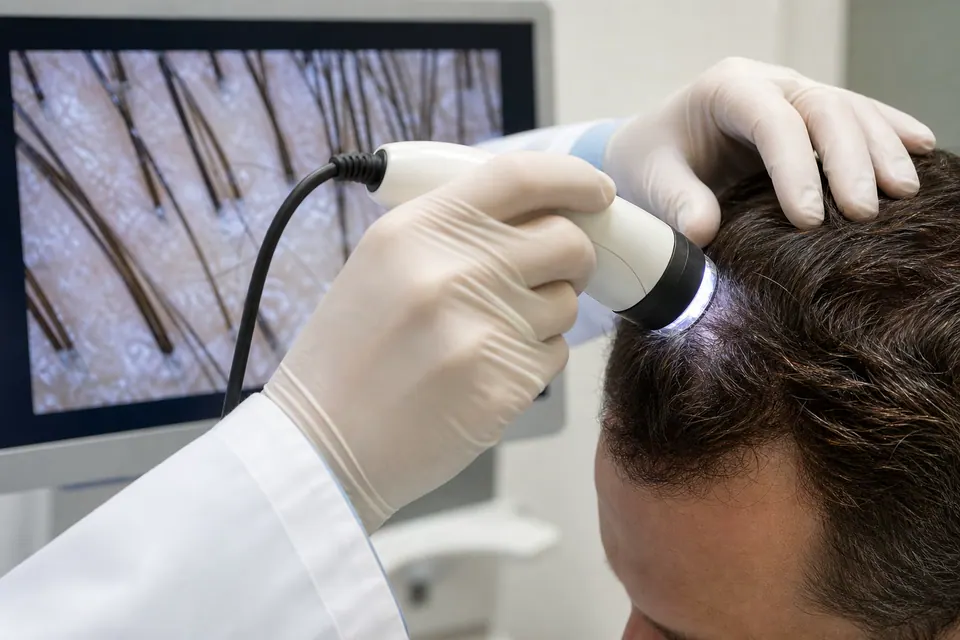
- Trichoscopy — examining the hair and scalp under digital magnification; it detects androgenetic thinning early, before it is visible to the eye;
- blood tests — when needed; more: which tests to take for hair loss;
- photos for follow-up — to judge the effect of treatment objectively.
How is it treated?
- Medicines — topical and oral treatments reduce the hormonal effect on follicles and support growth. Only a trichologist should prescribe them: choice and monitoring matter.
- PRP (plasma therapy) — injections from your own blood plasma stimulate the follicles.
- Thulium laser — a device treatment to stimulate hair growth.
- Hair transplant — for areas where follicles have already closed; know the contraindications first.
Results come gradually: the first changes are assessed after 3–6 months, and treatment is usually long-term.
What does not help?
"Anti-hair-loss" shampoos, folk remedies and vitamins taken without tests do not stop androgenetic thinning. They only use up time — while the follicles keep closing.
Hair loss in women works differently — see hair loss in women.
Trichologist visits in Fergana and Kokand
At the Radeski Skin Clinic trichology centre a trichologist performs trichoscopy, identifies the type of hair loss and builds a treatment plan.
If you notice thinning, do not put off seeing a trichologist: keeping hair is always easier than restoring it.
When to see a doctor
- The hairline is receding at the temples
- Thinning on the crown
- Hair is falling out fast
- Round bald patches appear
- Hair loss comes with itching and flaking
Frequently asked questions
Hashtags
#Hairloss#Hairlossinmen#Malepatternbaldness#Trichologist#Trichoscopy#Fergana#Kokand#RadeskiSkinClinic
Important note: This article is for general information only and does not replace a medical consultation.
Related clinic services
Videos on this topic
More helpful articles
Hair Loss in Women: Causes, Tests and Treatment — Trichologist Advice
Hair loss in women: after childbirth and telogen effluvium, iron deficiency, thyroid, female pattern thinning. Trichoscopy, tests and treatment. Trichologists in Fergana and Kokand.
Read more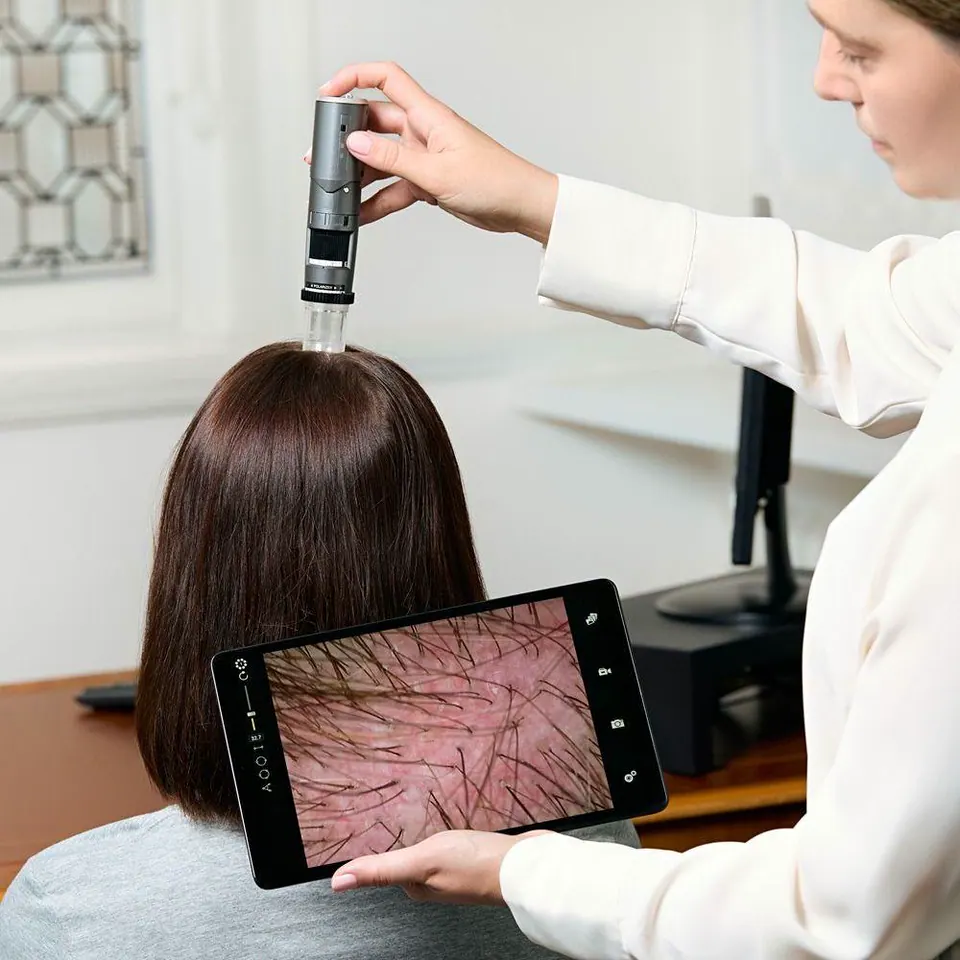
Trichologist and Trichoscopy: Modern Diagnosis of Hair-Loss Causes
Trichologist and trichoscopy: how modern scalp imaging finds the cause of hair loss and guides treatment at Radeski Skin Clinic in Fergana and Kokand.
Read more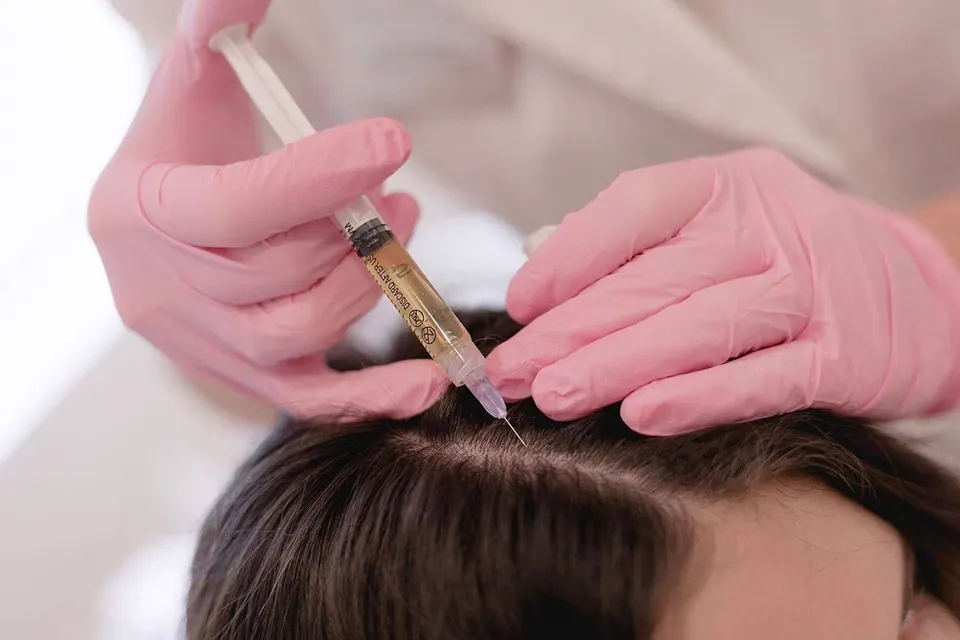
PRP Therapy for Hair: Who It Suits and What Results to Expect
PRP hair therapy in Fergana and Kokand: who it may suit, how it works, and how Radeski Skin Clinic builds an individual plan with a trichologist.
Read more