Physiotherapy in dermatovenereology: low-intensity laser, magneto-laser, magnetotherapy, Darsonval, UHF. Indications, benefits, and Radeski Skin Clinic approach.
Physiotherapy in dermatovenereology
In dermatovenereology, physiotherapy applies therapeutic physical factors — natural and medical — to support healing across the skin and the body as a whole.
Modern dermatology uses a wide range of device-based methods that can complement medication when treating chronic and inflammatory skin conditions.
Why local physiotherapy matters for skin disease
The skin is uniquely responsive to topical and local treatment. Physiotherapeutic procedures help reduce inflammation, speed recovery, and extend remission in chronic conditions.
They are used not only to shorten treatment time but also for rehabilitation after severe illness — restoring function in the affected area and overall resilience.
Radeski Skin Clinic approach
At Radeski Skin & Aesthetic Clinic, we recognize that not every dermatologic condition responds to drugs alone. For psoriasis, herpes virus infections, vitiligo, lichen planus, and many other skin diseases, physiotherapy is often recommended alongside medical therapy.
Benefits of physiotherapy
- may significantly shorten treatment duration;
- low risk of allergic reaction;
- can enhance the effect of prescribed medicines;
- does not cause dependency;
- generally fewer systemic side effects;
- gentle, often painless procedures;
- non-destructive, restorative methods;
- longer remission in chronic disease.
Procedures are usually painless, rarely cause serious complications, and combine well with other therapies.
Physiotherapy methods
1. Low-intensity laser therapy (LILT)
Uses low-power laser light in visible and near-infrared ranges — without destructive damage to the skin.
Indications include: trophic ulcers, vasculitis, balanoposthitis, herpes, granuloma annulare, chronic eczema, alopecia areata, atopic dermatitis, localized scleroderma, lichen sclerosus, necrobiosis lipoidica, lichen planus, skin ulcer defects, herpes simplex and zoster, fissures, erosions.
2. Low-intensity magneto-laser therapy
Combines magnetic field and low-intensity laser exposure for a cumulative effect on affected skin.
Indications: psoriatic arthritis, granuloma annulare, limited scleroderma, necrobiosis lipoidica, lichen planus.
3. Magnetotherapy
Low-frequency pulsed or alternating magnetic field applied to the affected area.
- single inductor: depth ~3–4 cm;
- two inductors transversely: ~7–8 cm.
Indications: dermatoses, eczema, neurodermatitis.
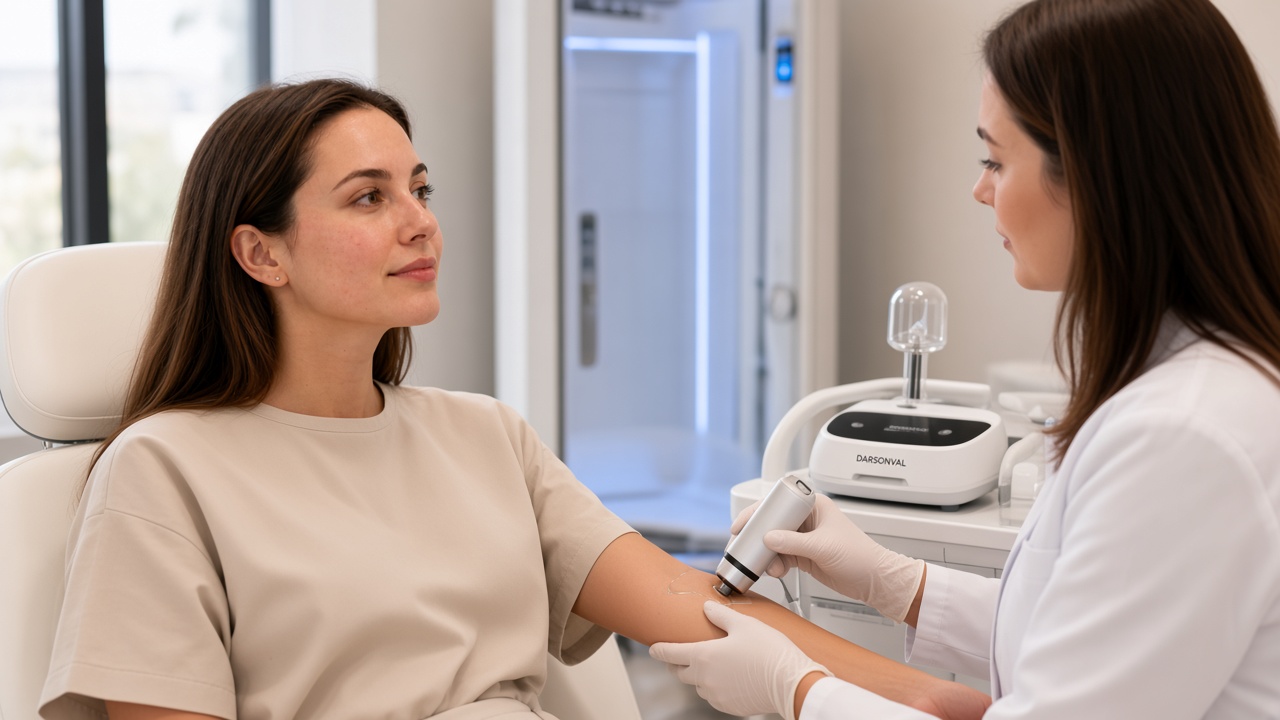
4. Electrotherapy and Darsonval device
Electrotherapy delivers controlled electrical currents to tissues where natural electrical processes are disrupted.
The Darsonval device uses high-frequency current (110 kHz). A discharge between the electrode and skin:
- improves microcirculation;
- relieves vascular spasm and dilates capillaries;
- reduces ischemia and improves oxygen supply;
- enhances tissue nutrition;
- spark discharge produces ozone with a local disinfecting effect.
Indications: eczema, lichen, neurodermatitis, atopic dermatitis, trophic ulcers, pruritus.
5. UHF therapy (ultra-high frequency)
Electromagnetic field applied to the pathological focus. Patients often feel warmth. Absorbed energy improves local microcirculation, supports phagocytosis, and helps the immune system fight infection. Regenerative processes in connective and nerve tissue may accelerate; peripheral nerve sensitivity may decrease.
Indications: psoriasis, herpes.
When to see a doctor
Physiotherapy must be prescribed by a physician based on diagnosis and history. Self-selected devices can delay proper care or worsen the condition.
At Radeski Skin Clinic, a dermatology consultation comes first, then an individualized plan.
Next steps at Radeski Skin Clinic
- Dermatologist consultation
- Assessment of medication + physiotherapy needs
- Individual treatment course
- Follow-up and adjustment
Related: Vitiligo — Daavlin, Psoriasis — Daavlin Kokand, IPL phototherapy.
Is physiotherapy enough on its own?
Usually not — it complements drug therapy. Your doctor builds a plan based on the diagnosis.
What is Darsonval used for?
High-frequency currents improve microcirculation and vascular spasm; used for eczema, pruritus, and other indications.
Is UHF therapy painful?
Generally painless; warmth is common. Dosage and sessions are set by your physician.
What physiotherapy is available at Radeski?
NB-UVB phototherapy (Daavlin), IPL, and other device methods when indicated. Exact plan after consultation.