Skin lesion diagnosis with PhotoFinder (FotoFinder): indications, body mapping, benefits, and safety — Radeski Skin Clinic.
Skin Lesion Diagnosis with PhotoFinder
Almost everyone develops skin lesions during life: vascular and epithelial growths, warts and papillomas, changes in hair follicles and sebaceous glands. Which require urgent care and which are mainly cosmetic?
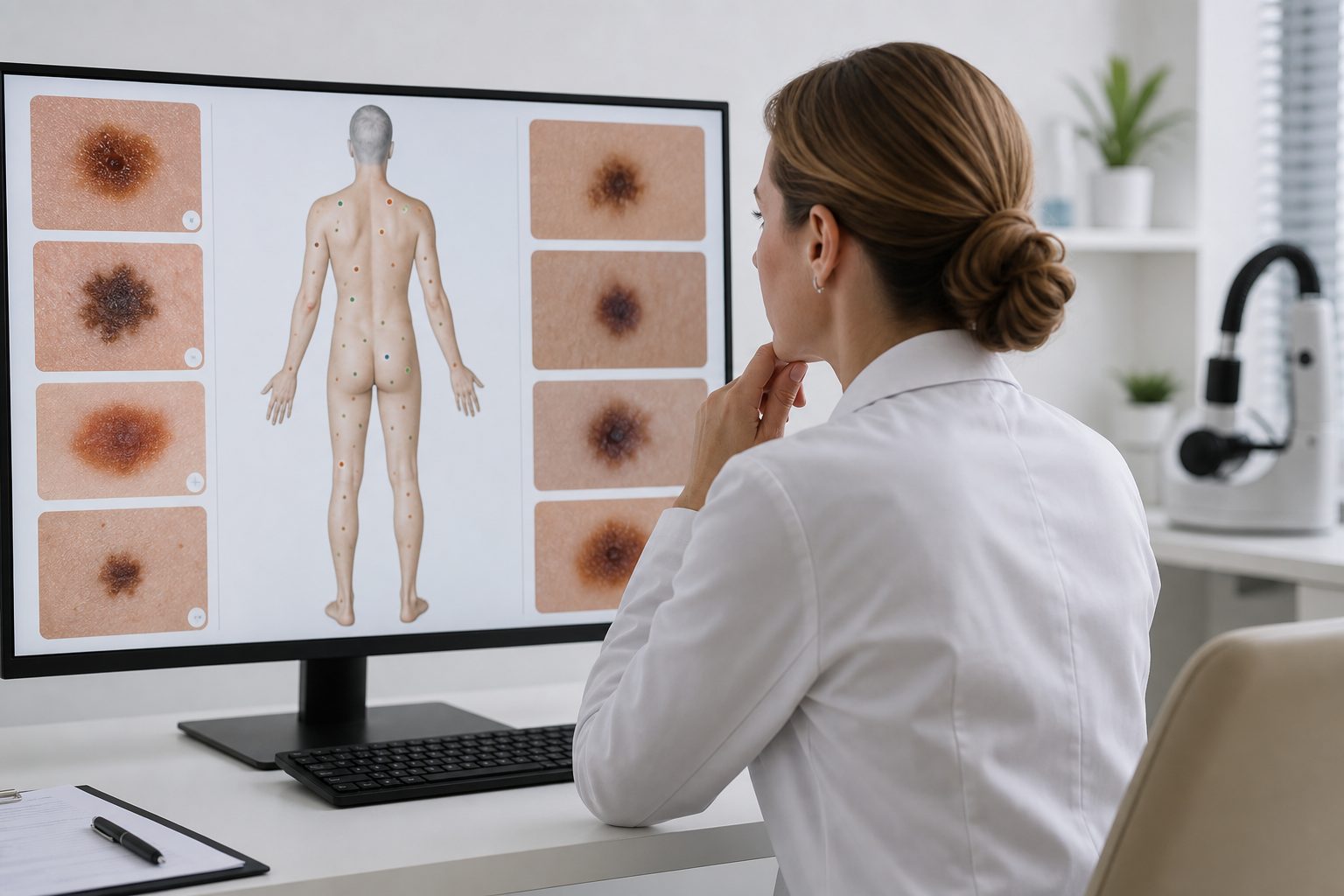
FotoFinder (PhotoFinder) at Radeski Skin & Aesthetic Clinic helps classify skin lesions with maximum accuracy and determine whether they are benign or need urgent treatment.
Indications
- any lesions including suspicious and atypical nevi, including large ones;
- congenital and giant nevi;
- warts, papillomas;
- keratomas;
- vascular lesions;
- hair cysts;
- sebaceous and sweat gland developmental anomalies;
- lymphomas, papules, and other lesions of unclear origin.
Advantages of FotoFinder
- Highly accurate assessment of lesion character, size, and parameters.
- The only dermatoscope that supports full-body mapping with highest-quality photos.
- Stored data allows lifelong comparison and monitoring of new lesions.
How the procedure works
- Targeted examination of one lesion or full-body mapping.
- High-quality photos with the FotoFinder camera.
- Computer processing and display.
- Physician dermatoscopy — risk assessment and need for removal.
Outcomes
- Treatment planning without unnecessary complications.
- Timely lesion detection.
- Prevention of malignant transformation.
Contraindications
There are no contraindications — the procedure is fully safe.
Related services: Dermoscopy, Dermato-oncology, Prices.
What is PhotoFinder?
FotoFinder is a device for assessing skin lesions with high-quality imaging and dermatoscopy. It supports full-body mapping.
Why is mapping important?
A stored lesion map helps detect new or changed lesions at follow-up visits.
Is the procedure painful?
No. It is safe, non-invasive diagnostics — examination and photography only.