About this service
Dermatopathology: when the diagnosis is confirmed under the microscope
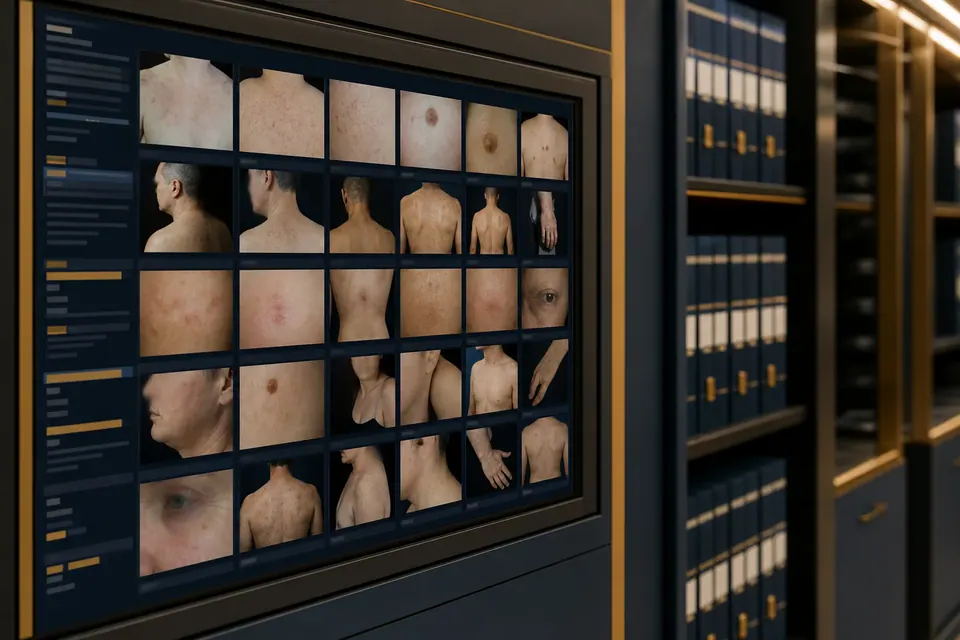
Dermatopathology sits where dermatology meets pathology: it diagnoses diseases of the skin, hair and nails from tissue samples. At Radeski it links biopsy, histological analysis and dermatologist consultation into one diagnostic pathway.
What it covers
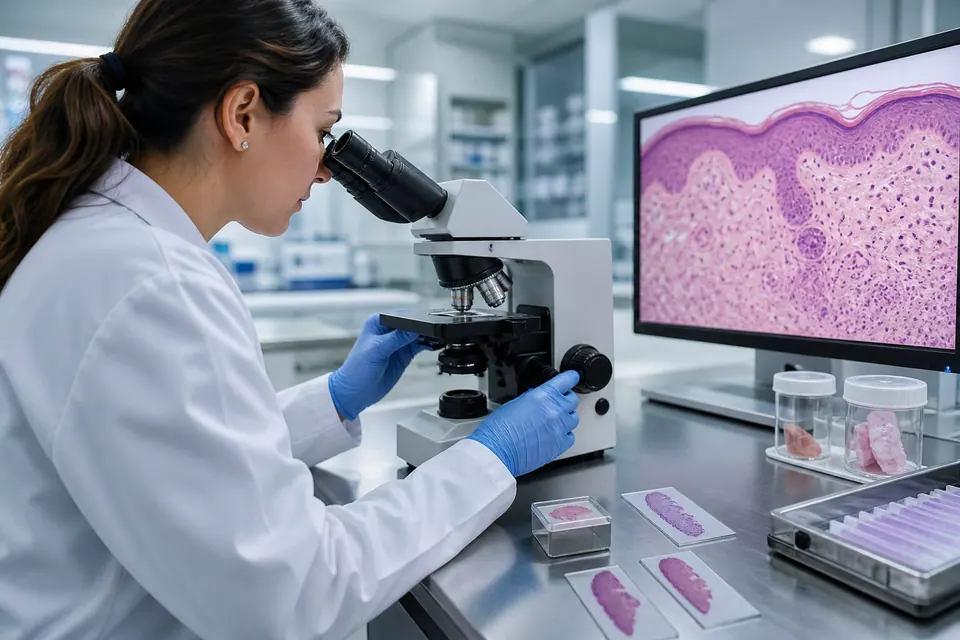
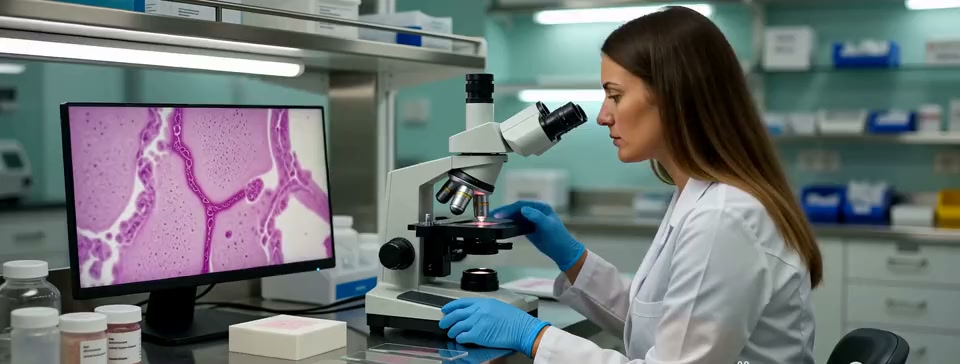
The core method is microscopic histological examination of biopsy samples, supplemented by immunohistochemistry when needed. These methods show whether a growth is benign or malignant, help assess its type and margins, and distinguish between forms of inflammatory skin disease. In this way a working diagnosis becomes a confirmed one.
Read more (3)
How the diagnostic process works
First, a dermatologist examines you, performs dermoscopy and decides whether a biopsy is needed. A small sample is then taken under local anaesthesia and sent to the laboratory along with your clinical details. A pathologist examines the sample, and your treating doctor reviews the report with you.
Clinician and pathologist working together
Many skin conditions look similar under the microscope, so the pathologist needs full clinical information. Radeski doctors send each sample with notes on its location, how long the problem has lasted and the suspected diagnosis. This collaboration makes the report more accurate and, in complex cases, helps identify early on when further tests are needed.
What happens after the result
Based on the report, the dermatologist draws up a plan: monitoring, medication, surgical removal or referral to another specialist. If the result does not fit the clinical picture, the doctor may suggest a second review of the slides or a repeat biopsy. You make each decision knowing why the step is needed.
If a skin change needs a precise diagnosis, book a Radeski dermatologist in Fergana or Kokand — the doctor will assess whether a biopsy and histology are needed.