
Skin Biopsy: When It Is Needed, How It Is Done and What the Result Shows
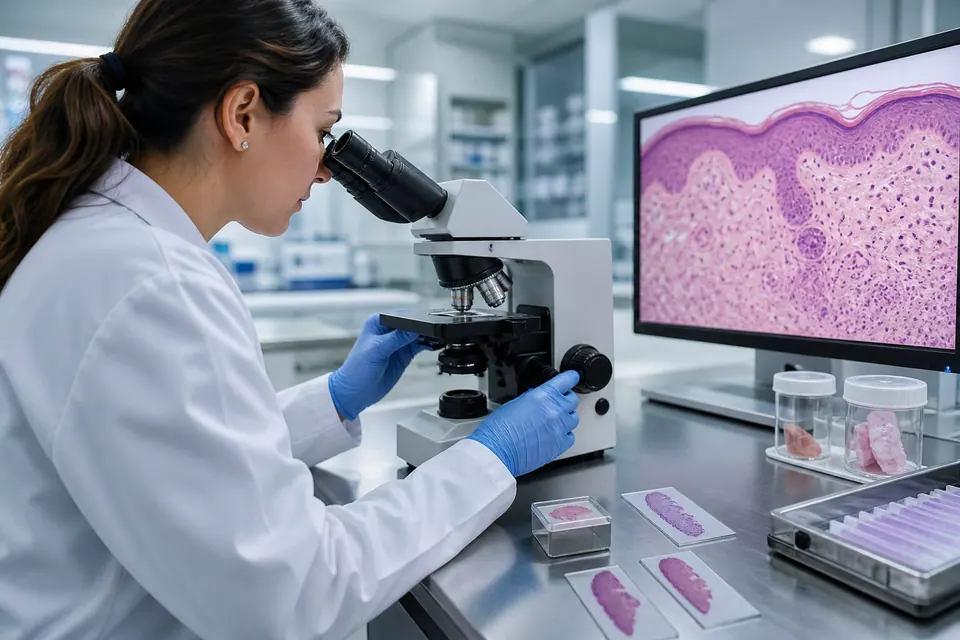
Skin biopsy: when it is needed, how it is done, whether it hurts, aftercare and when the histology result is ready. Onco-dermatologists in Fergana and Kokand.
Key takeaways
- The doctor decides whether a biopsy is needed after an examination and dermoscopy
- It takes a few minutes under local anaesthetic, sometimes with one or two stitches
- Main types: punch, shave (tangential) and excisional — the whole lesion is removed
- The result is usually ready in a few days to about two weeks; the doctor tells you the exact timing
- A properly performed biopsy does not spread cancer — delaying the check is the real risk
A skin biopsy means taking a small piece of skin, or a suspicious spot as a whole, to examine it under a microscope. Many people are frightened by the word itself: will it hurt, will it scar, does it mean I have cancer? In reality a biopsy is a quick, usually only mildly uncomfortable and safe procedure. It turns a guess into a clear answer. Here, in plain words, is when it is needed, how it is done and what the result means.
What is a skin biopsy?
The sample is sent to a laboratory. There a dermatopathologist — a specialist who studies skin tissue under the microscope — looks at how the cells are arranged and identifies the exact nature of the growth or rash. This test is called histology. Dermoscopy magnifies the skin from the outside; histology shows its inner structure. More: dermatopathology.
When is a biopsy needed?
A biopsy is not done for everyone, only when there is a reason. The doctor decides after an examination and dermoscopy. It is usually recommended for:
- a suspicious mole — one that changes shape, colour or size, or stands out from the others; more: mole check and dermoscopy;
- a sore or bump that does not heal — lasting more than a few weeks, bleeding, crusting over and opening again; this can be a sign of a tumour such as basal cell carcinoma;
- an unclear rash — one that does not respond to usual treatment or looks like several conditions at once;
- confirming a diagnosis before treatment — in some chronic skin diseases an exact diagnosis matters before long-term therapy starts;
- a removed growth — even one that looks benign may be sent to histology; for example: seborrheic keratosis.
Types of biopsy
The doctor chooses the method by the type, size and location of the lesion. Broadly, there are three main types:
- Punch biopsy — a small round instrument takes a core of skin a few millimetres wide; often used for rashes.
- Shave (tangential) biopsy — the top part of the lesion is sliced off thinly at skin level; usually no stitch is needed.
- Excisional biopsy — the whole lesion is removed with a narrow margin of healthy skin; it is often preferred for suspicious moles because it can be both diagnosis and treatment at once.
How is it done, and does it hurt?
- The doctor marks the area and disinfects the skin.
- A local anaesthetic is given — you feel only the prick of a fine needle, then the area goes numb.
- Taking the sample usually takes a few minutes; you may feel pressure, but not pain.
- If needed, one or two stitches are placed and a sterile dressing applied.
You can usually go home straight away and carry on with your day. Mild stinging once the anaesthetic wears off is normal.
Care after a biopsy
- Keep the dressing clean and dry for as long as the doctor advises.
- Care for the wound the way the doctor recommends and do not apply anything on your own.
- If there is a stitch, the doctor will tell you when it comes out.
- For the first days avoid rubbing the area, heavy exercise, saunas and steam baths.
- If the site is exposed, protect it from the sun once healed — the mark fades faster.
Do not at home: pick off the scab, pour iodine, alcohol or home remedies on the wound, or remove stitches yourself.
See a doctor urgently if: the area becomes very red, swollen or hot, there is pus, bleeding does not stop with pressure, or you develop a fever.
When is the result ready and what does it tell you?
In the histology lab the sample is specially processed, stained and examined. The result is usually ready in a few days to about two weeks; if extra tests are needed, it may take longer. Your doctor will tell you the exact timing.
The histology report shows:
- whether the lesion is benign or malignant;
- the exact diagnosis — for example, which type of dermatitis or tumour;
- after an excisional biopsy — whether the lesion was removed completely (clear margins).
Next steps
The doctor goes through the result with you. A benign lesion often needs no further treatment, only follow-up. For a rash, a treatment plan is made based on the exact diagnosis. If a tumour is found, the onco-dermatologist decides the next step — further removal, surgery or regular follow-up. Most skin tumours found early respond well to treatment.
Myth: "a biopsy spreads cancer"
This is the most common fear, and it is not true. A properly performed biopsy does not make a tumour spread. The real risk is the opposite: being afraid of a biopsy and "watching" a suspicious spot for months, losing valuable time. A biopsy gives a clear answer and lets the right treatment start on time.
Skin biopsy in Fergana and Kokand
At Radeski Skin Clinic the doctor first carries out an examination and dermoscopy, decides whether a biopsy is needed, performs it under local anaesthetic and sends the sample for histology.
- Skin biopsy in Fergana and in Kokand;
- Onco-dermatologist in Fergana and in Kokand;
- Mole check in Fergana and in Kokand;
- Skin biopsy and histology, dermatopathology.
Do not fear a biopsy: a few minutes of procedure give you a clear answer instead of guesswork.
When to see a doctor
- A mole changes shape, colour or size
- A sore or bump does not heal within a few weeks or bleeds
- A rash does not respond to usual treatment
- The biopsy site becomes very red, swollen, has pus or you get a fever
- Bleeding from the biopsy site does not stop with pressure
Frequently asked questions
Hashtags
#Skinbiopsy#Histology#Dermatopathology#Suspiciousmole#Oncodermatologist#Fergana#Kokand#RadeskiSkinClinic
Important note: This article is for general information only and does not replace a medical consultation.
Related clinic services
More helpful articles
Basal Cell Carcinoma (Basalioma): Symptoms, Causes, and Treatment
Basal cell carcinoma (basalioma): how it looks, why it develops, when to see a doctor, and how it is treated — a practical guide from Radeski Skin Clinic.
Read more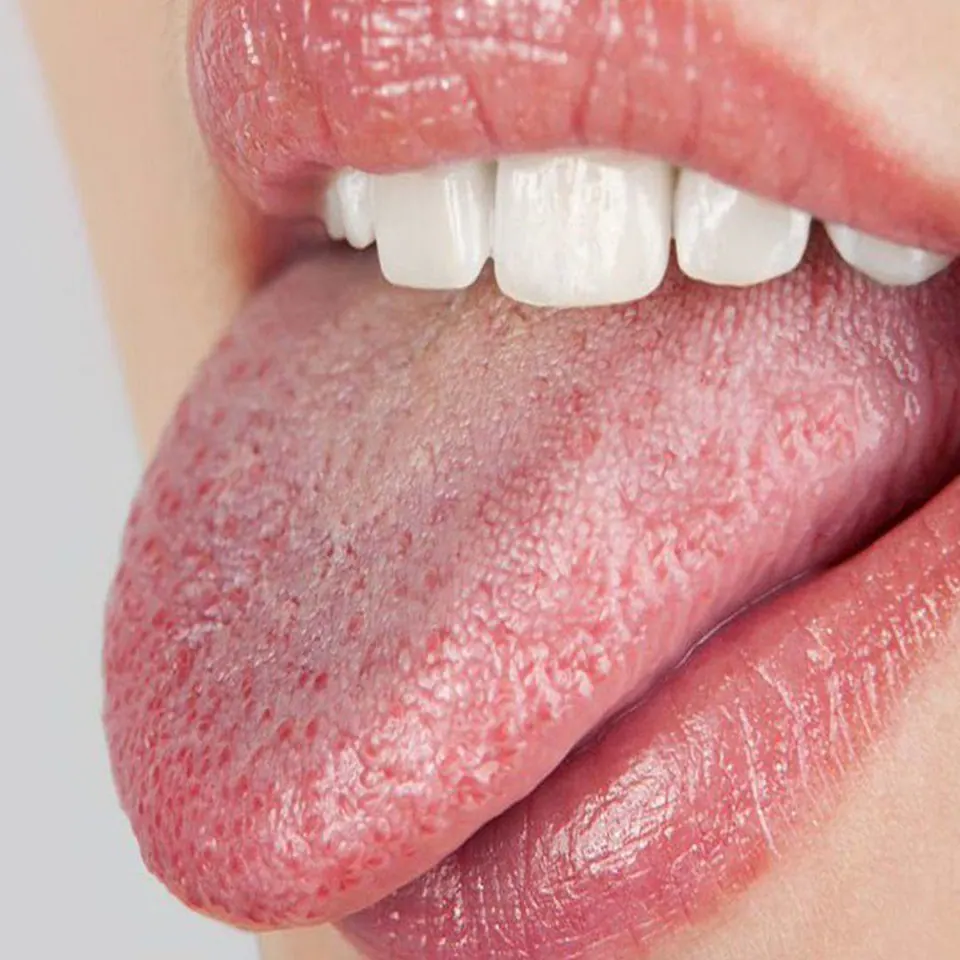
Squamous Cell Carcinoma of the Tongue: Early Signs, Causes, and Modern Treatment
Squamous cell carcinoma of the tongue: early signs, risk factors, biopsy, and modern treatment — when a non-healing ulcer needs a doctor, not home care.
Read more
Dermatopathology: Histology, Biopsy, and Tumor Diagnosis
Dermatopathology: skin biopsy, histologic and immunohistochemical analysis, melanoma and tumor diagnosis — Radeski Skin Clinic capabilities.
Read more