
Melasma: Brown Patches on the Face — Causes and Modern Treatment
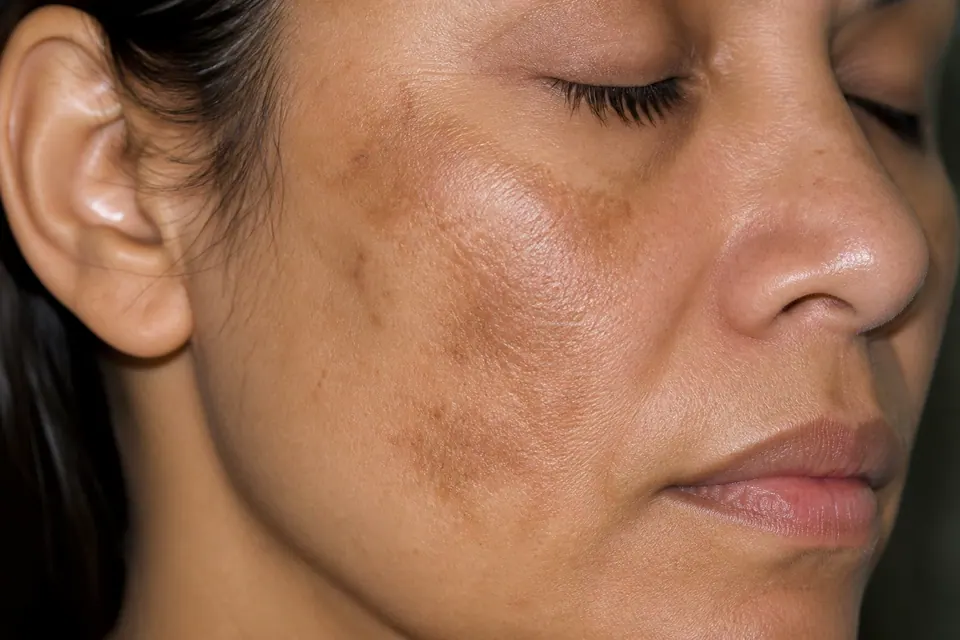
Melasma — brown patches on the face: causes (sun, hormones), how it differs from other spots, sun protection, creams, peels and laser toning. Dermatologists in Fergana and Kokand.
Key takeaways
- Melasma is not dangerous, but it is chronic and darkens in the sun
- The main factors are sunlight, hormones and genetics
- Daily SPF 50 is the first and essential part of treatment
- Strong peels, "hot" lasers and IPL can darken melasma
- Gentle laser toning and doctor-chosen creams lighten the patches
Melasma is brown or grey-brown patches on the face, usually symmetrical on the cheeks, forehead, upper lip and chin. It is not dangerous or contagious, but it is chronic, darkens after sun exposure and is a real cosmetic concern for many people. The good news: with the right treatment and protection the patches can be lightened considerably.
Why does melasma appear?
In melasma the skin's pigment cells — melanocytes — are overactive. Triggers include:
- sunlight — ultraviolet and even visible light; the main factor;
- hormones — pregnancy (hence the name "mask of pregnancy"), hormonal contraceptives;
- genetics — it is more common when relatives have it;
- heat — kitchens, saunas, hot workplaces;
- irritating cosmetics and aggressive procedures.
Melasma is most common in women aged 20–50, but men get it too.
How to tell melasma from other spots
Not every patch on the face is melasma:
- sun spots (lentigines) — sharply defined, more common with age;
- marks after acne and inflammation — left where a rash was;
- moles and other pigmented lesions — these should always be checked with dermoscopy.
An examination and dermoscopy show the type of spot and how deep the pigment lies — and that decides the treatment.
How is melasma treated?
Melasma cannot be erased for good, but it can be lightened considerably and kept under control. Treatment usually has several steps:
- Strict sun protection — every day, even in winter and on cloudy days: broad-spectrum SPF 50, ideally tinted, which also blocks visible light. Without it, no treatment works.
- Topical products — pigment-reducing creams; the product and routine are chosen by the doctor.
- Gentle peels — as a course, without irritating the skin.
- Laser toning — gentle low-energy protocols on lasers such as Hollywood Spectra break the pigment down gradually. More: Pigmentation treatment with Hollywood Spectra.
Important: strong peels, "hot" lasers and IPL can make melasma darker. That is why the method and energy should be chosen by a doctor experienced with melasma. On IPL and lasers for other types of pigmentation: Pigmentation treatment with IPL Lumecca.
Keeping melasma from coming back
- Apply sunscreen every day and reapply every 2–3 hours.
- Wear a wide-brimmed hat and sunglasses.
- Limit saunas and hot baths.
- Discuss any new hormonal medicine with your doctor.
- Do not rub patches with "whitening" home remedies — lemon, vinegar, peroxide: they burn the skin and darken the patch.
- Keep up the skin care and maintenance treatments your doctor recommends to hold the result.
Melasma treatment in Fergana and Kokand
At Radeski Skin Clinic a dermatologist-cosmetologist examines the patches with a dermatoscope, tells melasma apart from other pigmentation and builds a step-by-step plan using aesthetic device treatments.
Melasma takes patience: results start to show within weeks, and sun protection has to become a lifelong habit.
When to see a doctor
- Brown patches appear on your face and grow
- Patches appear after pregnancy or hormonal medicines
- Home remedies and creams do not help
- A spot is irregular, multicoloured or changing
- A patch darkened after a laser or peel
Frequently asked questions
Hashtags
#Melasma#Facialpigmentation#Darkspots#Lasertoning#Cosmetologist#Fergana#Kokand#RadeskiSkinClinic
Important note: This article is for general information only and does not replace a medical consultation.
Related clinic services
More helpful articles
Pigmentation Treatment with IPL Lumecca — Radeski Skin Clinic
How InMode IPL Lumecca treats pigmentation and dull skin tone: mechanism, clinic steps, session count, and the Radeski Skin Clinic approach.
Read more
LaseMD Ultra Thulium Laser in Kokand — Rejuvenation, Pigmentation, and Skin Renewal
LaseMD Ultra 1927 nm thulium laser in Kokand: pigmentation, post-acne, enlarged pores, and skin rejuvenation. Indications, contraindications, and recovery.
Read more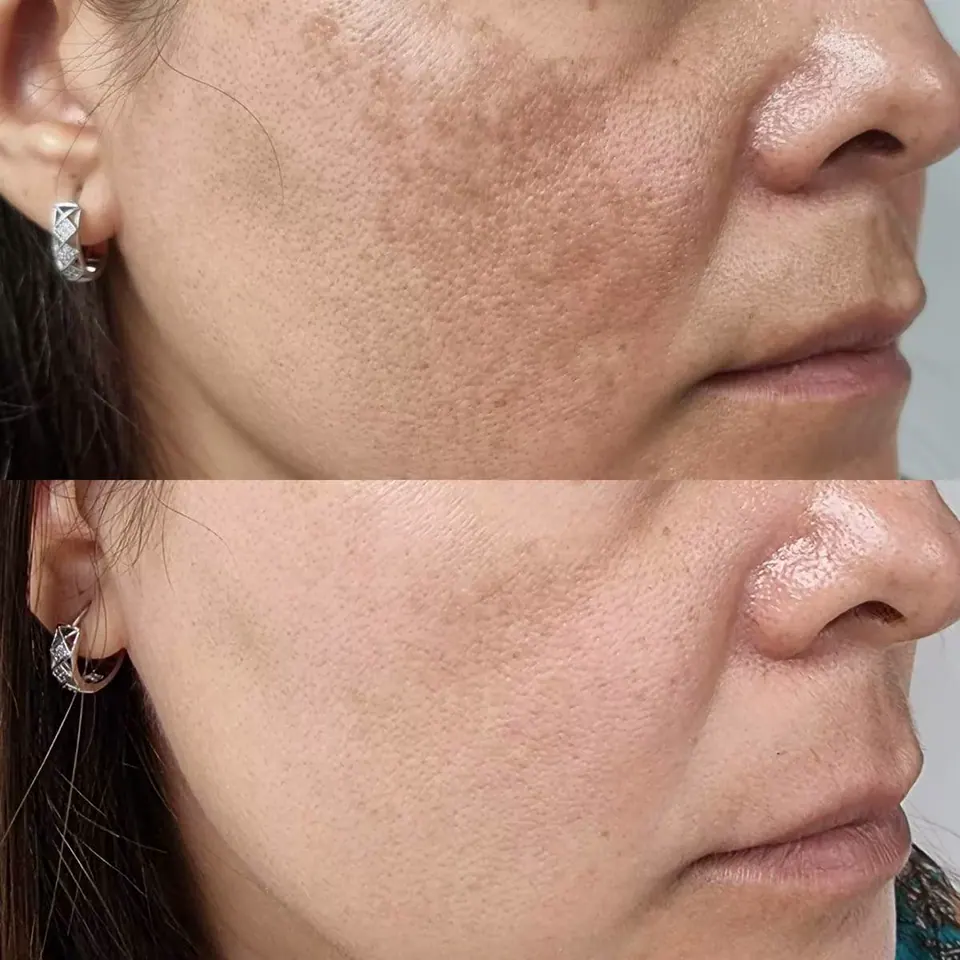
Hollywood Spectra Pigmentation Treatment — Radeski Skin Clinic
Hollywood Spectra Lutronic pigmentation treatment at Radeski Skin Clinic: melasma, sun spots, post-acne marks. 1064/532 nm laser, personal protocol, often minimal downtime.
Read more