
Itchy Scalp: 7 Causes, How to Tell Them Apart and When to See a Trichologist
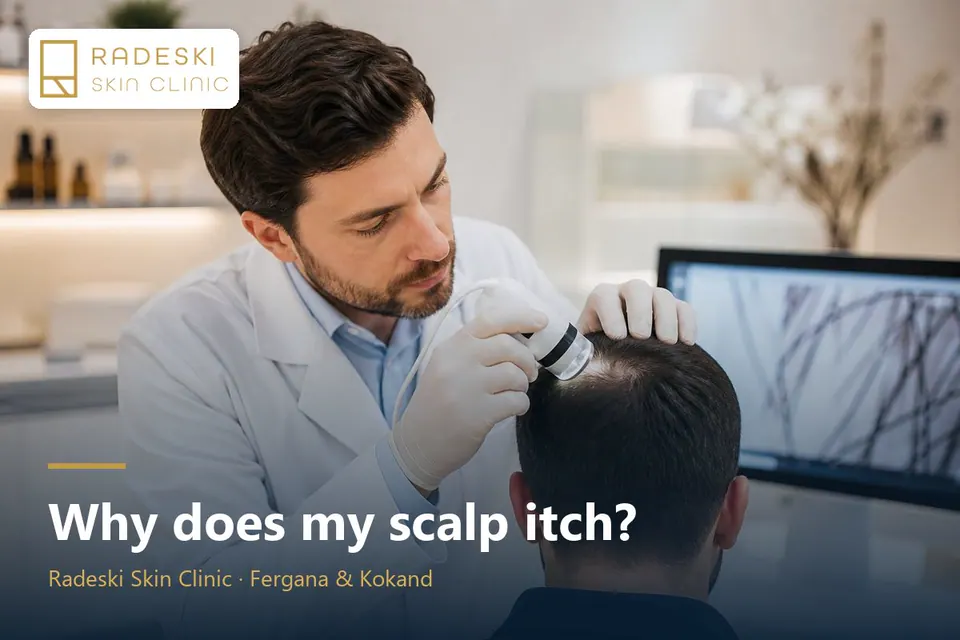
Why your scalp itches: seborrheic dermatitis and dandruff, psoriasis, hair-dye allergy, fungus, lice and dryness. How to tell the cause, what to do at home and when to see a trichologist.
Key takeaways
- The most common cause is seborrheic dermatitis (greasy dandruff)
- Thick silvery scales may point to psoriasis
- Itching 1–3 days after hair dye suggests an allergy
- Fungus and lice are not treated by ordinary shampoo
- Scratching and picking scales make hair loss worse
An itchy scalp is one of the most common reasons people see a trichologist or dermatologist. Often the cause is simple: the wrong shampoo or dry air. But when itching comes with flakes, redness, sores or hair loss, it may be a sign of a skin condition. Below are the main causes, how to tell them apart and when to see a doctor.
Main causes of an itchy scalp
1. Seborrheic dermatitis and dandruff
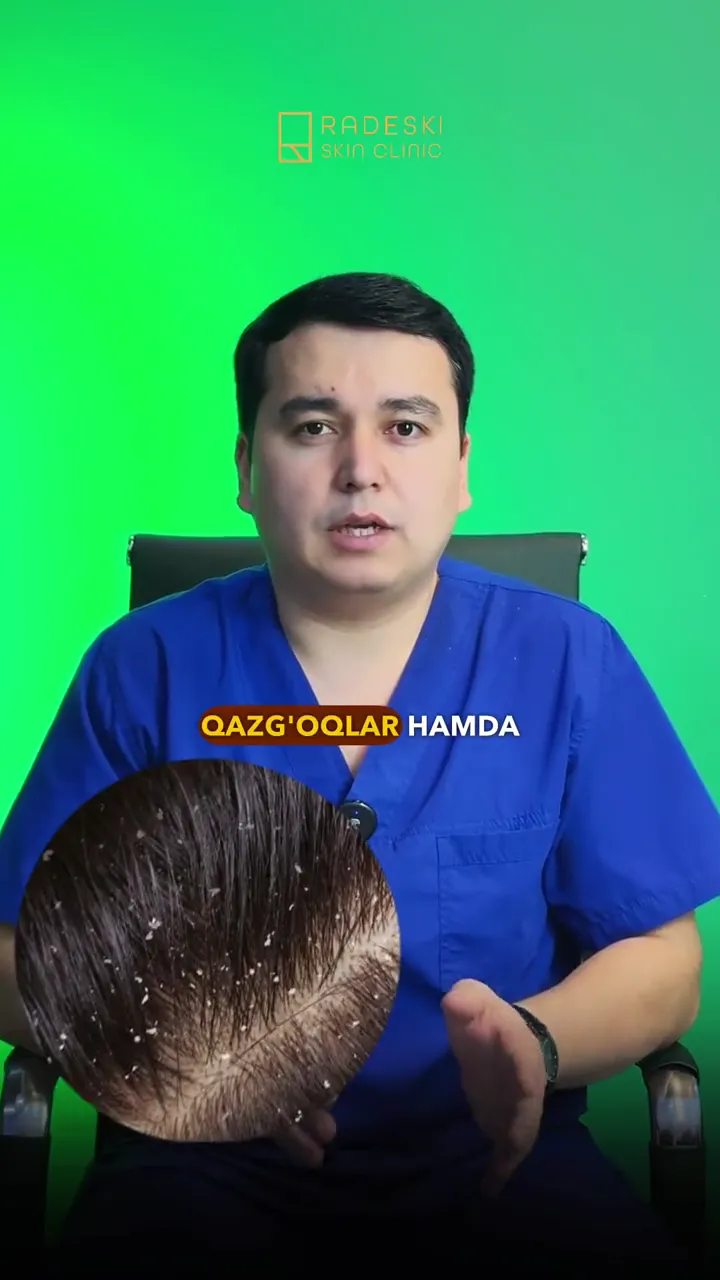
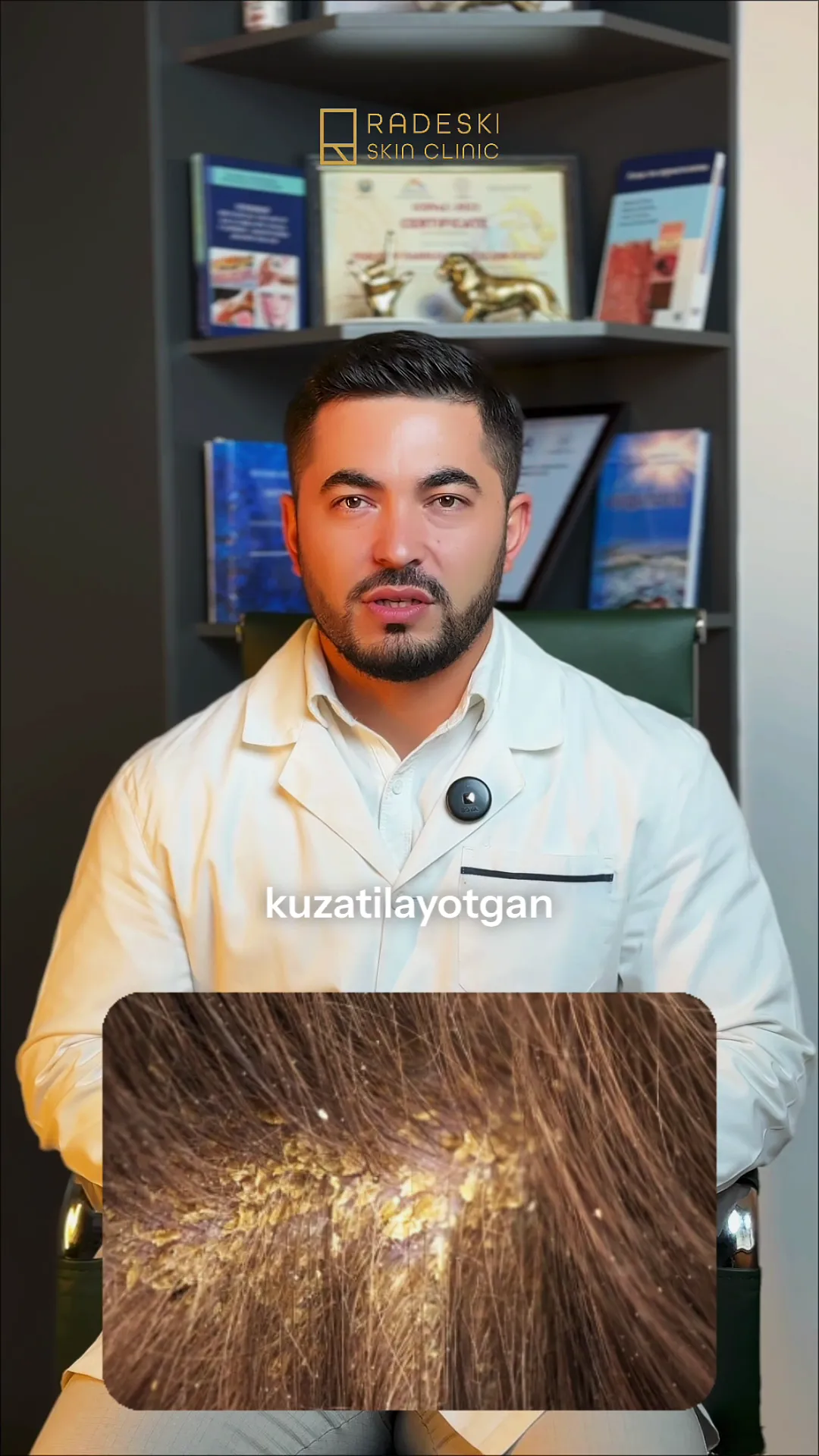
The most common cause. Where oil glands are active — the scalp, eyebrows, sides of the nose — yellowish, greasy flakes, redness and itching appear. It gets worse in autumn and winter, and after stress or poor sleep. More: Seborrheic dermatitis.
2. Scalp psoriasis
Sharply outlined plaques with thick, silvery scales, often spreading past the hairline onto the forehead and behind the ears. Itching can be intense, and scales bleed when picked off. More: Scalp psoriasis.
3. Contact dermatitis (allergy)
Itching, redness and burning 1–3 days after hair dye, a new shampoo, hairspray or mask. Para-phenylenediamine (PPD) in dark dyes is a particularly strong allergen. If the face and ears swell, see a doctor urgently.
4. Fungal infection
More common in children: round patches, hairs break off leaving short stubs, flaking. Adults get it too, especially with pets at home. It is diagnosed with a scraping; ordinary shampoo does not help. More: Skin fungus.
5. Head lice
Strong itching mainly at the back of the head and behind the ears, with tiny white nits stuck to the hair. It spreads quickly among children, so the whole family should be checked.
6. Dry scalp
In winter, heating, hot water and frequent washing dry the scalp: small white flakes, a tight feeling, but hardly any redness. A gentle shampoo and cooler water are often enough.
7. Nerves and other causes
Stress, anxiety, some medicines, diabetes, liver and thyroid disease can also cause itching. If the skin looks normal but itching lasts, a general check-up is needed.
How to tell the cause
| Signs | Likely cause |
|---|---|
| Yellowish greasy flakes, redness on eyebrows and beside the nose | Seborrheic dermatitis |
| Thick silvery scales, sharp borders, patches on elbows and knees | Psoriasis |
| Redness and burning after dye or a new product | Contact dermatitis |
| Round patch, broken hairs | Fungus |
| Itching at the back of the head, white nits on hair | Lice |
| Small white flakes, no redness, worse in winter | Dry scalp |
The table only points in a direction. Several causes can coexist; a doctor makes the diagnosis.
Itching and hair loss
Strong itching and scratching injure the hair roots, and inflammation disrupts the growth phase. So hair may shed more with seborrheic dermatitis, psoriasis and fungus. Shedding usually eases once the cause is treated. Bald patches or scarring call for trichoscopy: Trichologist and trichoscopy.
What to do at home — and what not to
Helpful:
- a gentle, fragrance-free shampoo; wash with warm, not hot, water;
- an anti-dandruff shampoo (ketoconazole, zinc pyrithione, salicylic acid) 2–3 times a week as directed, leaving the lather on for 3–5 minutes;
- a cool hairdryer setting and a soft brush;
- a 48-hour patch test behind the ear before a new dye or product.
Harmful:
- scratching with nails and picking off scales — this leads to infection and hair loss;
- long-term steroid ointments without a doctor;
- home remedies such as vinegar, kerosene or garlic — they cause chemical burns and allergy;
- relying on ordinary shampoo for fungus or lice.
How we check it at Radeski
A dermatologist or trichologist examines the scalp under magnification, performs trichoscopy if needed and takes a scraping when fungus is suspected. Depending on the diagnosis, medicated shampoos and lotions, anti-inflammatory treatment or, for psoriasis, phototherapy are chosen. Appointments in Fergana and Kokand: Trichologist in Fergana, Dermatologist in Kokand.
This article is for general information. Only a doctor can make a diagnosis and prescribe treatment.
When to see a doctor
- Itching lasts more than 2 weeks or disturbs sleep
- There are thick crusts, bleeding or pus-filled sores
- A round bald patch appears or hairs break off
- The face or ears swell after hair dye
- Itching comes with heavy hair shedding
Frequently asked questions
Hashtags
#Itchyscalp#Dandruff#Seborrheicdermatitis#Scalppsoriasis#Trichologist#Hairloss#Fergana#Kokand#RadeskiSkinClinic
Important note: This article is for general information only and does not replace a medical consultation.
Related clinic services
Videos on this topic
More helpful articles
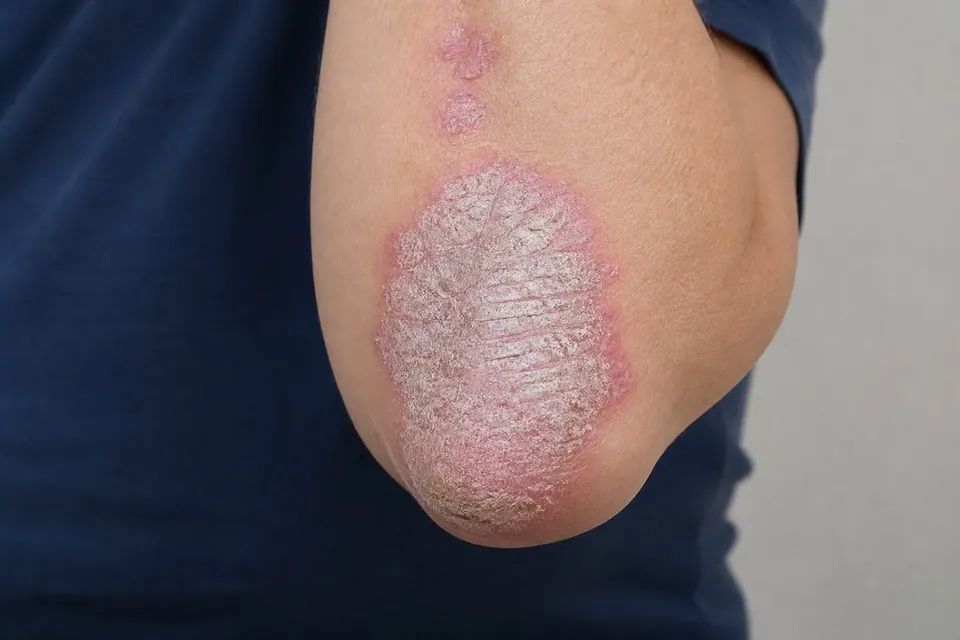
Scalp Psoriasis: Signs, How It Differs from Dandruff and Treatment — Does Hair Fall Out?
Scalp psoriasis: signs, how it differs from dandruff and seborrheic dermatitis, hair shedding, why winter makes it worse, what not to do at home and treatment. Dermatologists in Fergana and Kokand.
Read more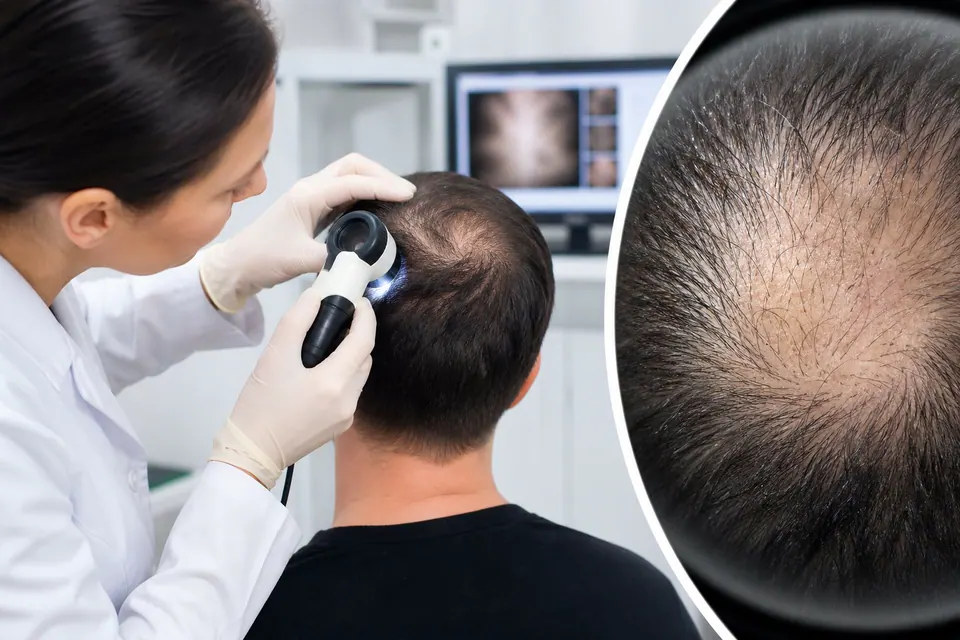
Hair Loss in Men: How to Stop Male Pattern Baldness
Hair loss in men: signs of male pattern baldness, other causes, trichoscopy, medicines, PRP, thulium laser and transplant. Trichologists in Fergana and Kokand.
Read more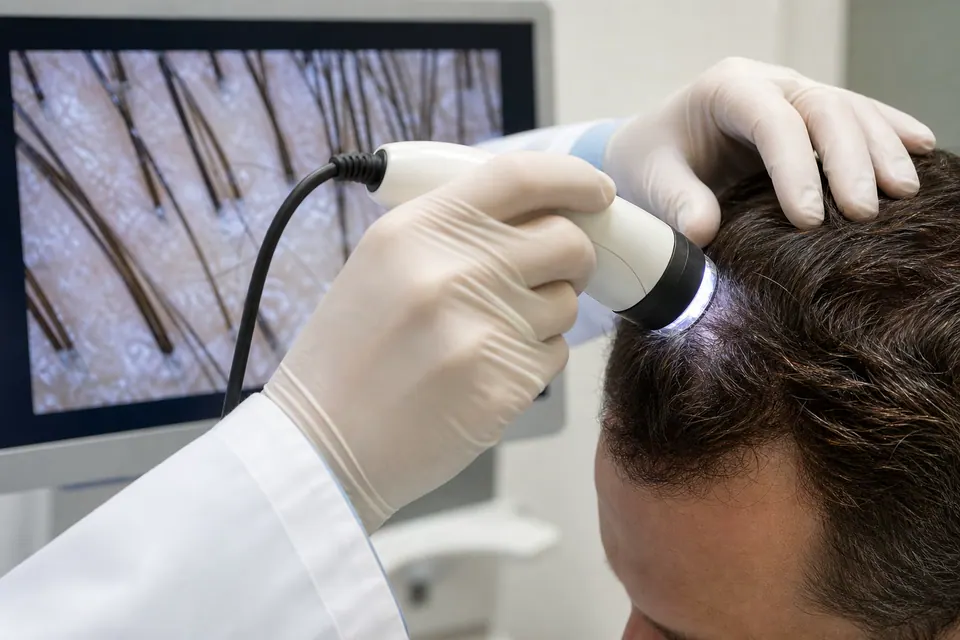
Hair Loss in Women: Causes, Tests and Treatment — Trichologist Advice
Hair loss in women: after childbirth and telogen effluvium, iron deficiency, thyroid, female pattern thinning. Trichoscopy, tests and treatment. Trichologists in Fergana and Kokand.
Read more