
What Is Couperose: Why Red Veins Appear on the Face and Laser Treatment
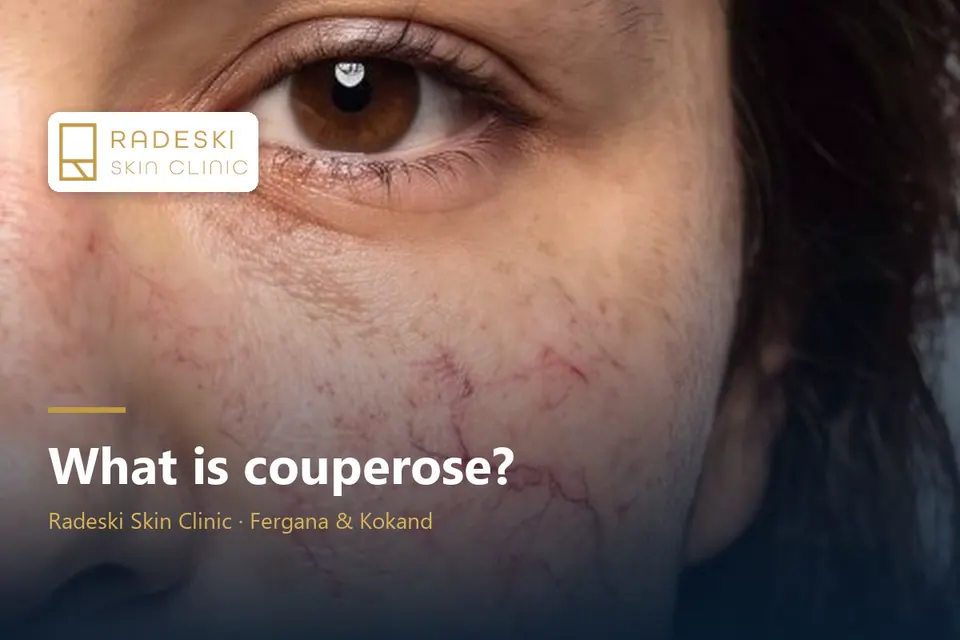
What couperose is: thread veins on the face, causes, how it differs from rosacea, why creams do not help and treatment with the Derma V laser and IPL. Radeski — Fergana.
Key takeaways
- Couperose is dilated facial capillaries (telangiectasias)
- Cold, sun, hot baths and alcohol make it worse
- Creams do not close vessels — a device treatment is needed
- The Derma V laser often closes small vessels in 1–2 sessions
- Daily SPF and gentle care slow down new veins
Couperose is the network of small red or purple thread veins on the face, usually on the cheeks, the sides of the nose and the chin. Doctors call them telangiectasias — dilated capillaries that can no longer narrow. Couperose is not dangerous, but it makes the face look constantly flushed and does not go away by itself.
Why does it appear?
- Genetics and thin skin — more common in fair, sensitive skin.
- Temperature swings — cold, wind, hot baths and saunas.
- Sun — UV light weakens vessel walls.
- Alcohol, spicy and hot food, intense exercise — they dilate vessels.
- Rosacea — couperose can be one of its signs.
- Harsh skincare — scrubs, aggressive cleansing, rubbing the skin.
Couperose vs rosacea
Couperose is mainly visible thread veins. Rosacea is a chronic condition: constant redness, flushing episodes, sometimes acne-like bumps and irritated eyes. Rosacea needs combined treatment including medicines, so a dermatologist makes the diagnosis first.
Will creams remove the veins?
No. Creams can calm redness a little and protect the skin, but they do not close a dilated vessel. Removing thread veins needs a device treatment.
How is it treated?
- Derma V (Lutronic) — a vascular laser that targets haemoglobin and closes the vessel without harming the surrounding skin. Small vessels often clear in 1–2 sessions; the result is checked after 3–4 weeks and repeated if needed.
- IPL InMode Lumecca — broad-spectrum light for overall redness and small vessels, and pigment at the same time. Almost no downtime.
- For rosacea — laser together with medicines and a skincare plan.
Mild redness or swelling may last a few days after treatment. The skin must not be tanned, and SPF is essential afterwards.
What helps at home?
- Gentle cleansing without rubbing, and moisturisers.
- Daily SPF 30–50, in winter too.
- Protecting your face from cold and wind.
- Less hot bathing, sauna, alcohol and spicy food.
- No scrubs, mechanical cleansing or steaming.
Home care slows down new veins appearing but does not remove existing ones.
Read more: Thread vein and redness treatment in Fergana, Laser vein removal, Derma V for redness, Rosacea treatment.
When to see a doctor
- Your face is always red and you have flushing episodes
- Acne-like bumps appear along with the redness
- Your eyes get red, dry or itchy
- Thread veins are multiplying quickly
- A single vessel or spot on your face is growing fast
Frequently asked questions
Hashtags
#Couperose#Threadveins#Telangiectasia#Rosacea#DermaV#IPL#Fergana#RadeskiSkinClinic
Important note: This article is for general information only and does not replace a medical consultation.
Related clinic services
More helpful articles
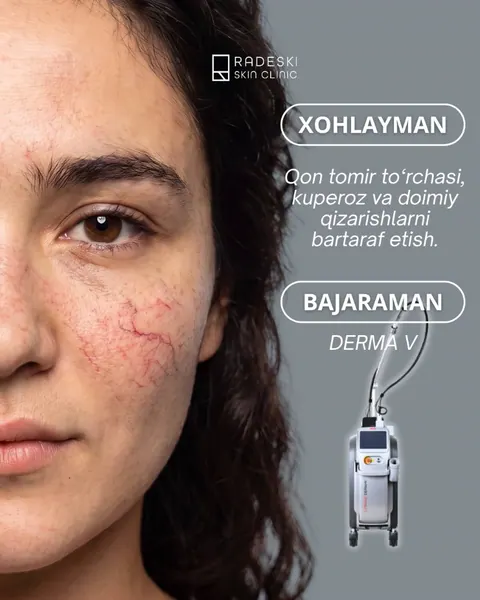
Vascular Redness Treatment with Derma V — Radeski Skin Clinic
How Lutronic Derma V treats spider veins, couperose, and persistent facial redness: steps, session count, and Radeski Skin Clinic experience.
Read more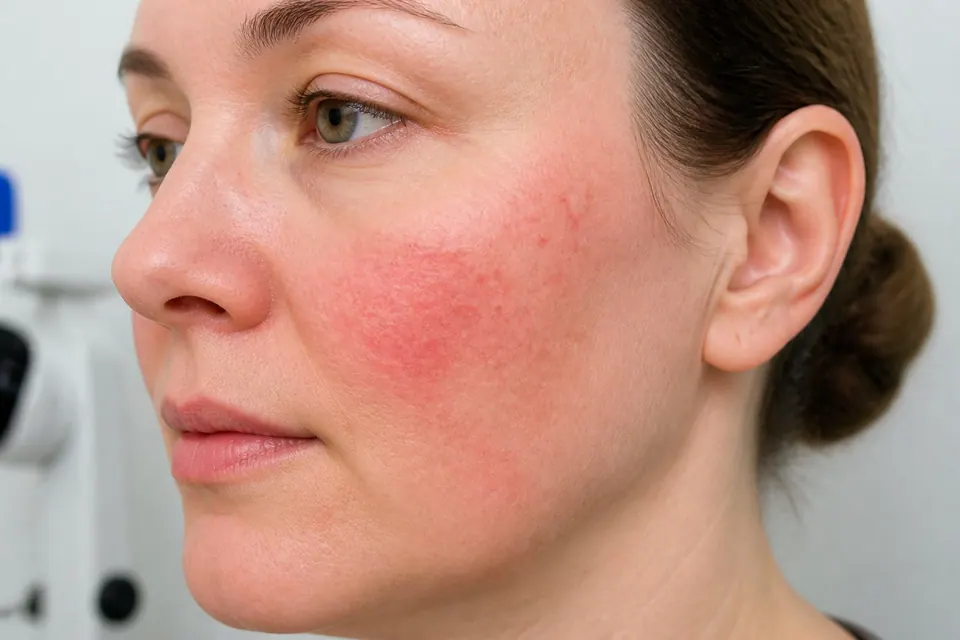
Perioral Dermatitis: The Rash Around the Mouth — Causes and the Right Treatment
Perioral dermatitis: a rash of small red bumps around the mouth. Signs, the role of steroid creams and heavy cosmetics, how it differs from acne and rosacea, "zero therapy" and treatment. Dermatologists in Fergana and Kokand.
Read more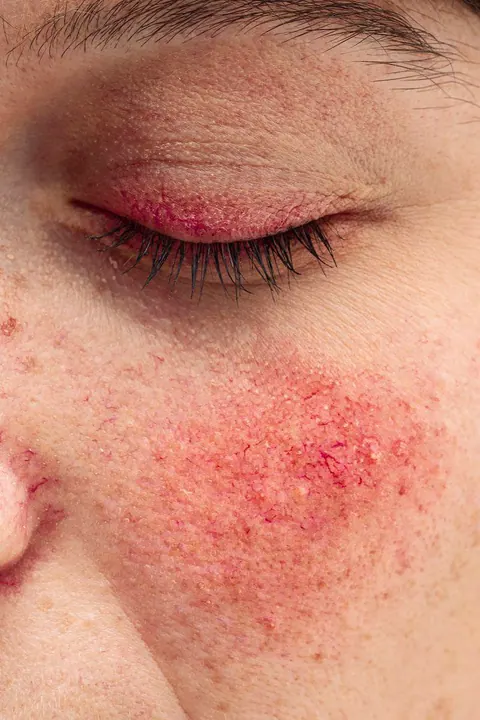
Facial Vascular Network Treatment with Lutronic Derma V — Radeski Skin Clinic
Facial spider vein and vascular network treatment with Lutronic Derma V at Radeski Skin Clinic: couperose, telangiectasias, redness. 532/1064 nm laser, cooling, personal protocol.
Read more