
Spider Veins on the Legs: How They Differ from Varicose Veins, Causes and Laser Removal
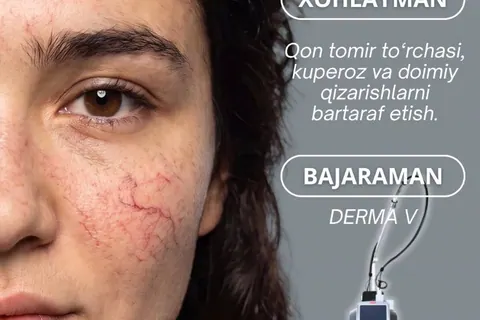
Spider veins on the legs: how they differ from varicose veins, causes, warning signs, Lutronic Derma V laser treatment and prevention. Cosmetologists in Fergana and Kokand.
Key takeaways
- Spider veins are small widened vessels in the top layer of the skin and do not bulge
- Bulging veins, heavy legs and swelling suggest varicose veins: see a phlebologist and get an ultrasound first
- One leg suddenly swollen, red and painful may be a thrombosis — seek urgent care
- Small vessels are treated with the Lutronic Derma V laser over several sessions; the doctor decides how many
- Autumn and winter suit laser treatment; movement and weight control reduce new veins
Spider veins on the legs (telangiectasias) are tiny red, purple or bluish vessels visible through the skin. They usually appear on the thighs, around the knees and on the shins as thin lines, "webs" or "stars". Mostly a cosmetic concern, they are sometimes the first sign of a problem in deeper veins — so find out what they are before treating them.
What are spider veins?
Telangiectasias are widened small vessels in the top layer of the skin. They:
- do not bulge above the skin;
- usually do not hurt or bother you;
- may briefly fade when pressed with a finger.
How they differ from varicose veins
Varicose veins are widened larger veins. Typical signs are:
- bulging, twisted bluish veins under the skin;
- heavy, tired, aching legs by evening;
- swelling of the ankles and calves, night cramps;
- over time, darker and thicker skin on the shin.
If you have these signs, or the spider veins cover a large area, you first need a vascular surgeon (phlebologist) and often a vein ultrasound. Sometimes surface veins point to poor blood flow in a deeper vein — then removing only the small vessels is not enough, and they come back quickly. Our clinic treats the small surface vessels.
Why do they appear?
- Heredity — more likely if your mother or grandmother had them.
- Long hours standing or sitting — shop, office or driving jobs.
- Pregnancy — blood volume and hormones change and the load on vessels grows; they often appear together with stretch marks — more: stretch marks.
- Hormonal changes — hormonal medicines, menopause.
- Extra weight and little movement.
- Heat — frequent hot baths, sauna, sunburn.
- Bruises — small vessels may remain at the site of an injury.
When do you need urgent help?
- One leg suddenly becomes swollen, hot, painful and red — this may be a vein thrombosis. Seek emergency care right away and do not massage the leg. If you also feel short of breath or have chest pain, call 103 immediately.
- A wound on the shin that does not heal — see a vascular surgeon; with diabetes the risk is even higher — more: foot care in diabetes.
- A vein bursts and bleeds — raise the leg, press with a clean cloth and see a doctor.
- A firm, painful red cord appears along a vein.
What not to do at home
- Do not trust creams and ointments that "remove veins" — they do not take away a widened vessel.
- Do not use hot wax or hot compresses — vessels widen further and the skin can burn.
- Do not prick the veins with a needle or inject yourself — there is a risk of bleeding, infection and scarring.
- Do not pick compression stockings without an examination, especially with pain, swelling or diabetes.
- Do not massage a swollen, painful leg.
How the clinic treats them
First the doctor examines the vessels and asks about signs of varicose veins. If in doubt, a phlebologist and an ultrasound are recommended before laser.
At Radeski Skin Clinic small surface vessels are treated with the Lutronic Derma V vascular laser — more: Derma V. The light is absorbed by the blood inside the vessel, the vessel closes and gradually becomes less visible over the following weeks.
- Several sessions are usually needed, a few weeks apart; the doctor decides how many.
- Thin red vessels usually respond better than thicker blue ones.
- For a few days afterwards there may be redness, mild swelling or small bruises.
- Laser removes the treated vessels but not the tendency: new ones can appear over the years.
Facial veins are covered in a separate article: facial spider veins and Derma V.
Why autumn and winter?
Laser on tanned skin carries more risk: pigment spots and burns are more likely. In autumn and winter the legs get little sun, and after treatment it is easier to wear covering clothes and, if needed, compression stockings. That is also why laser hair removal is started in this season — more: laser hair removal in autumn and winter.
Before and after treatment
- For a few weeks before, do not tan, use a solarium or self-tanner.
- Do not apply cream to the legs on the day of treatment.
- For a few days after, avoid sauna, steam baths, hot baths and heavy workouts.
- Apply sunscreen to exposed skin.
- Wear compression stockings if the doctor recommends them.
Prevention
- Walk more: walking works the calf muscles and helps the veins.
- If you sit or stand for long, walk for a few minutes every hour and rise onto your toes.
- Avoid sitting with your legs crossed for long periods.
- Keep your weight in check.
- Wear comfortable shoes with a low heel.
- Raise your legs a little when resting.
- Compression stockings only after a doctor's advice.
Spider vein treatment in Fergana and Kokand
At Radeski Skin Clinic a doctor assesses the veins on your legs, refers you to a phlebologist if there are signs of varicose veins, and treats small surface vessels with the Lutronic Derma V laser.
- Laser vein removal in Fergana and in Kokand;
- Vessel and redness treatment in Fergana and in Kokand;
- Cosmetologist in Fergana and in Kokand;
- Lutronic Derma V, aesthetic device treatments.
Spider veins are usually harmless, but making sure your veins are healthy is the first step to a good result.
When to see a doctor
- One leg is suddenly swollen, hot, painful and red — urgently
- Veins bulge and legs feel heavy and swell by evening
- A wound on the shin does not heal or the skin darkens
- A vein bursts and bleeds
- Spider veins spread quickly over a large area
Frequently asked questions
Hashtags
#Spiderveins#Telangiectasia#Legveins#DermaV#Laser#Fergana#Kokand#RadeskiSkinClinic
Important note: This article is for general information only and does not replace a medical consultation.
Related clinic services
Videos on this topic
More helpful articles
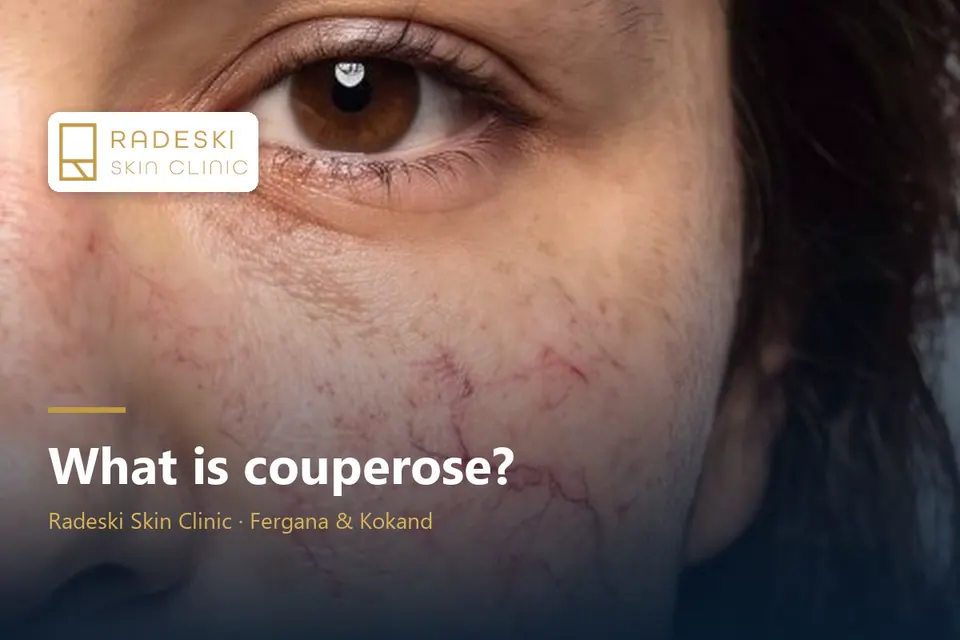
What Is Couperose: Why Red Veins Appear on the Face and Laser Treatment
What couperose is: thread veins on the face, causes, how it differs from rosacea, why creams do not help and treatment with the Derma V laser and IPL. Radeski — Fergana.
Read more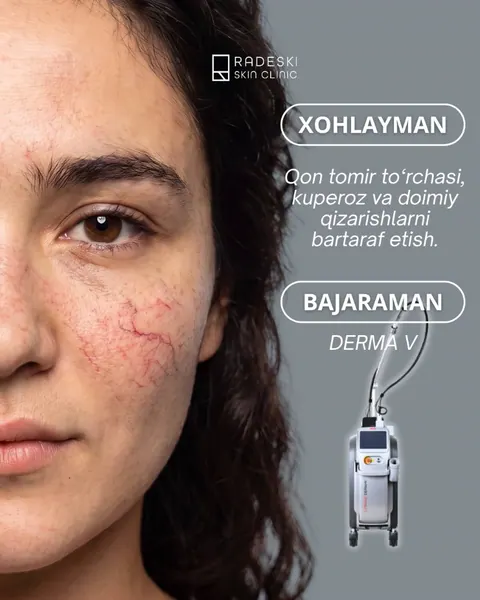
Vascular Redness Treatment with Derma V — Radeski Skin Clinic
How Lutronic Derma V treats spider veins, couperose, and persistent facial redness: steps, session count, and Radeski Skin Clinic experience.
Read more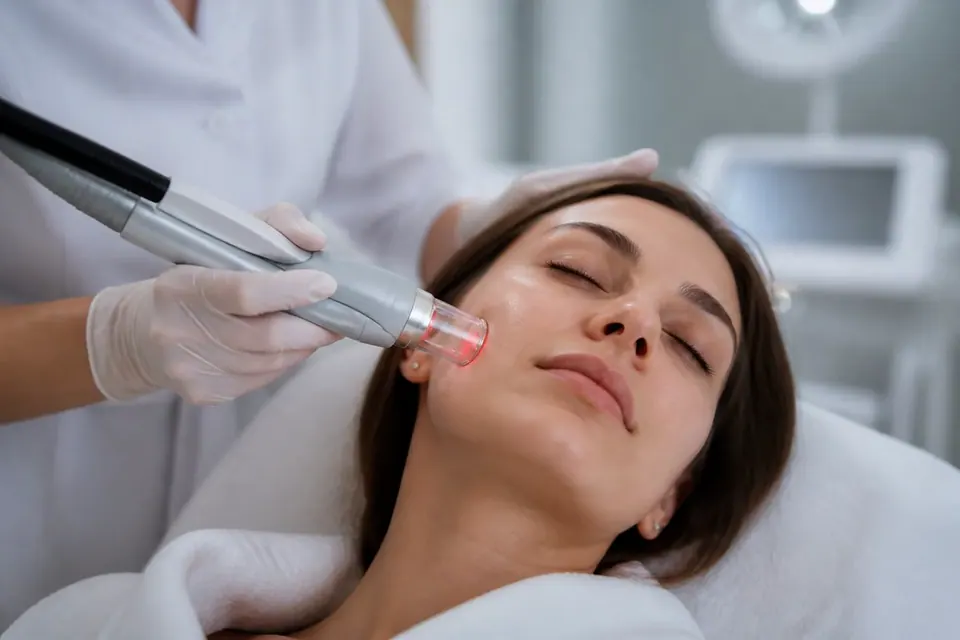
Skin Care Before New Year: Which Treatment to Do When — a Cosmetologist's Timing Plan
Skin care before New Year: how far ahead to book peels, botulinum therapy, fillers and cleansing, holiday home care and what to avoid. Cosmetologists in Fergana and Kokand.
Read more