
Foot Care with Diabetes: Warning Signs and Daily Rules
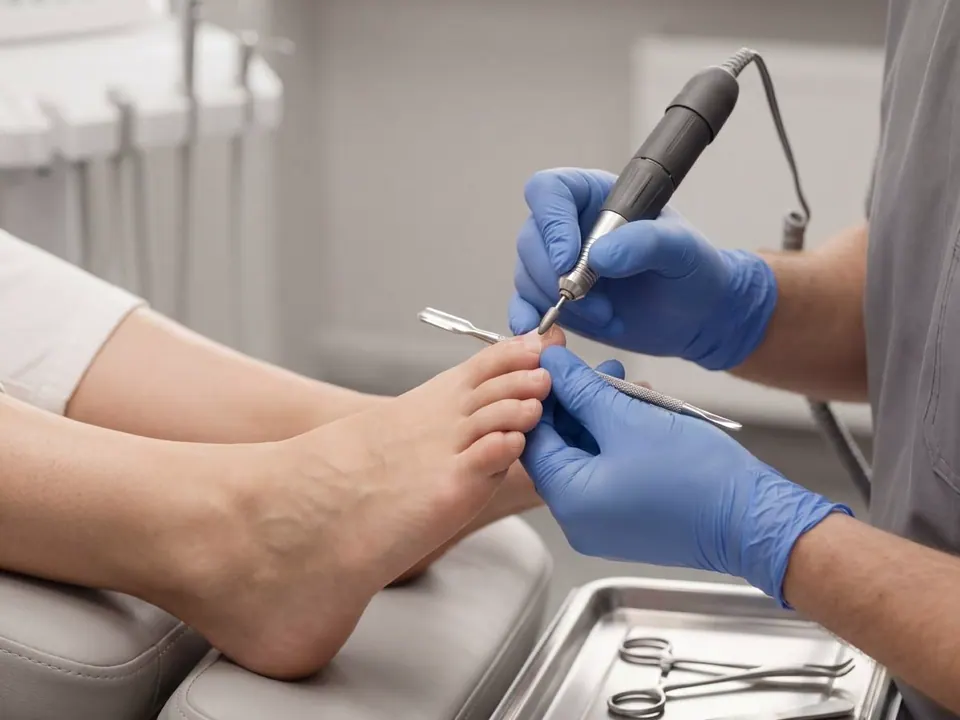
Foot care with diabetes: when to see a doctor the same day, why feet are at risk, daily care, what never to do and how a podiatrist helps. Fergana and Kokand.
Key takeaways
- With diabetes the feet feel less and wounds heal slowly — even a small callus can become an ulcer
- A wound, redness, swelling or darkening skin — see a doctor the same day
- Checking your feet every day is the most effective protection
- Do not walk barefoot, cut calluses yourself or warm your feet with a hot-water bottle
- A podiatrist safely cares for nails and calluses; an endocrinologist manages blood sugar
With diabetes, the feet need special attention. Over the years high blood sugar affects the nerves and blood vessels of the legs: the feet feel less and wounds heal slowly. As a result an ordinary callus, toenail or rubbing shoe can turn into a serious ulcer. The good news: proper daily care and regular check-ups prevent most of these complications.
See a doctor the same day if:
- a wound, crack or blister on the foot is not healing;
- the skin is red, swollen, hot or there is pus;
- the skin of a toe or heel turns dark or blue;
- there is severe pain in the foot — or, the opposite, loss of feeling;
- changes in the foot come with a fever.
Do not wait in these cases — an endocrinologist or surgeon needs to see you.
Why are the feet at risk with diabetes?
- Reduced feeling (neuropathy) — you may not notice a cut, burn or tight shoe.
- Poorer circulation — wounds heal slowly and resistance to infection drops.
- Dry skin — heels crack and infection gets in through the cracks.
- Changes in foot shape — calluses form at pressure points, and ulcers can develop beneath them.
Daily care
- Check your feet every day — including the heels and between the toes. Use a mirror or ask someone to help if needed.
- Wash in warm water — test the temperature with your hand or a thermometer, not your foot.
- Dry thoroughly — especially between the toes.
- Apply a softening cream — to the heels and soles, but not between the toes.
- Cotton socks — seamless, non-constricting, clean every day.
- Check your shoes — run your hand inside before putting them on to find stones or folds; break in new shoes gradually.
Never
- walk barefoot — even at home;
- cut calluses yourself or use acid plasters;
- warm your feet with a hot-water bottle, hot water or a heater — you may not feel a burn;
- cut deep into the corners of your nails;
- pour iodine, brilliant green or alcohol on wounds.
More on calluses and cracks: calluses and corns, cracked heels.
How does a podiatrist help?
With diabetes it is safer to leave foot care to a specialist:
- correct nail trimming and care of thickened nails;
- safe removal of calluses and hard skin — with a device, without injury;
- early detection and treatment of ingrown nails and fungus — more: ingrown nail, nail fungus;
- advice on shoes and orthotic insoles.
How often to come depends on your risk level: usually every 1–3 months. Blood sugar control remains the main treatment — managed by an endocrinologist.
Diabetic foot care in Fergana and Kokand
At the Radeski Skin Clinic nail and foot clinic a podiatrist carefully looks after the feet of patients with diabetes and spots warning signs early.
With diabetes, checking your feet every day is the simplest and most effective protection.
When to see a doctor
- A wound, crack or blister on the foot that will not heal
- Redness, swelling, heat or pus
- A toe or heel turning dark
- Severe foot pain or loss of feeling
- An ingrown nail or callus — for careful treatment
Frequently asked questions
Hashtags
#Diabetes#Diabeticfoot#Footcare#Podiatrist#Footclinic#Fergana#Kokand#RadeskiSkinClinic
Important note: This article is for general information only and does not replace a medical consultation.
Related clinic services
Videos on this topic



More helpful articles
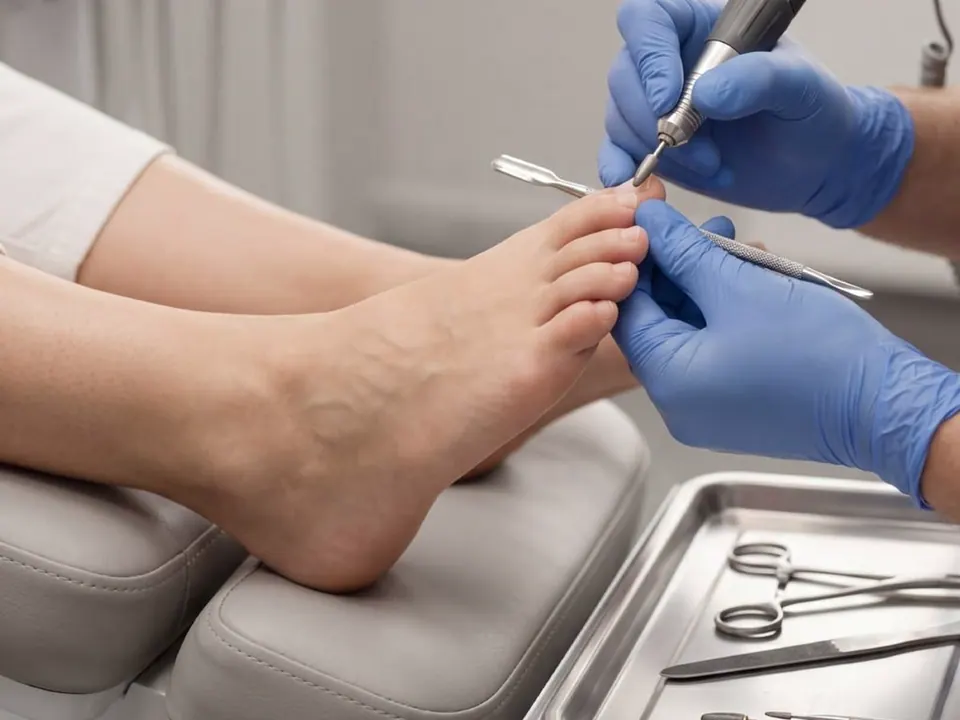
Cracked Heels: Causes, Home Care and Podiatrist Help
Cracked heels: why they appear, when they signal a disease, good home care (urea cream), podiatric treatment and warning signs. Podiatrists in Fergana and Kokand.
Read more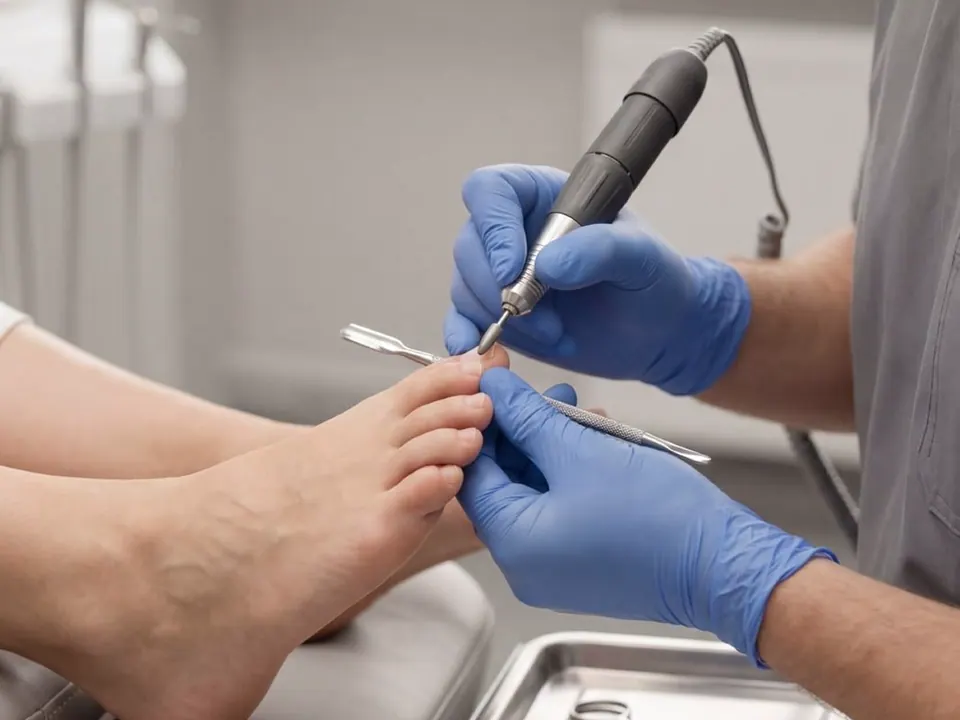
Calluses and Corns: Why They Form and How a Podiatrist Removes Them
Calluses and corns: why they form, how they differ from warts, painless removal by a podiatrist, and what to do and avoid at home. Podiatrists in Fergana and Kokand.
Read more
Fungal Skin Infections: Feet, Body and Groin — Signs, Testing and Treatment
Fungal skin infections: feet, body, groin, scalp, pityriasis versicolor and candida. Signs, the skin scraping test, the steroid cream mistake, treatment and prevention. Dermatologists in Fergana and Kokand.
Read more