
Pigment Spot Treatment: Why Autumn and Winter Are the Best Time
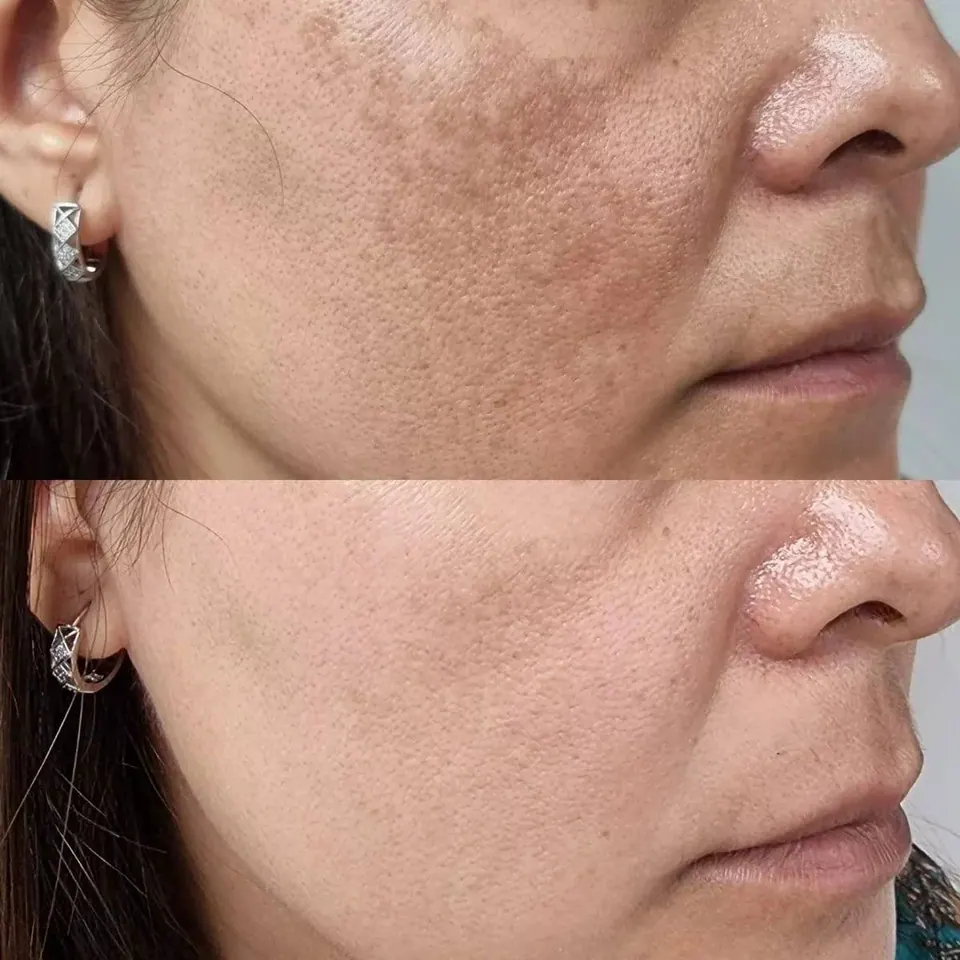
Why autumn and winter are the best time to treat pigment spots: sun spots, freckles, post-acne marks, dermoscopy first, IPL and laser, winter SPF. Cosmetologists in Fergana and Kokand.
Key takeaways
- Autumn and winter mean little sun and no tan — a lower risk of darkening after a session
- Sun spots, freckles and post-acne marks respond well; melasma needs its own careful plan
- Every spot is checked with dermoscopy before treatment — a changing spot can be melanoma
- The doctor chooses IPL, Q-switched or thulium laser by spot and skin type; several sessions are usual
- SPF every day all winter, no scrubs or tanning; lemon, peroxide and unknown whitening creams do harm
Pigment spots on the face and hands are one of the most common reasons people see a cosmetologist. They appear or darken in the summer sun and become most noticeable by autumn. And that is exactly the best time to start treating them: in autumn and winter there is little sun, no tan, and enough time to finish a course before spring. But before any spot is "lasered off", a doctor has to look at it.
What kinds of pigment spots are there?
- Sun spots (lentigines) — light or dark brown spots with clear edges. They build up over years of sun on the face, the backs of the hands, shoulders and chest, and are often called "age spots".
- Freckles — small light brown dots; they run in families, darken in summer and fade a little in winter.
- Post-acne marks — reddish or brown marks left where pimples or other inflammation used to be.
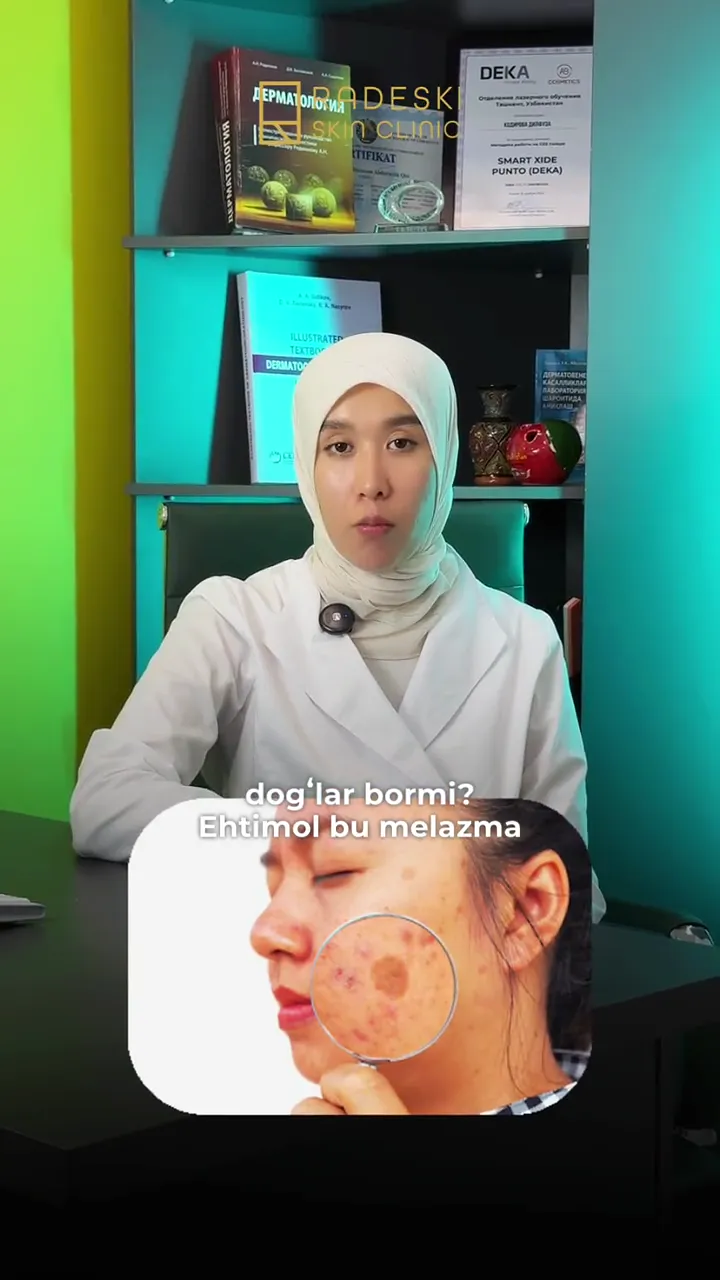
- Melasma — a separate story. It is linked to hormones and sun, causes broad, symmetrical patches on the cheeks and forehead, comes back easily and can darken after heat-based treatments. That is why melasma needs a careful, long-term plan — more: melasma.
Why autumn and winter?
- Less sun — UV levels are much lower than in summer and days are shorter.
- No tan — in tanned skin, laser and IPL energy is absorbed not only by the spot but by the surrounding skin too, raising the risk of burns and new spots.
- Lower risk of darkening after a session — after laser or IPL the skin stays sensitive for a while, and sun can trigger new pigmentation. In winter it is easier to avoid.
- Time for a full course — several sessions are usually needed; start in autumn and you can finish before the spring sun.
The same logic applies to laser hair removal: why start your course in autumn and winter.
First — dermoscopy
Before treating any pigment spot, the doctor examines it with a dermatoscope. The reason is simple: sometimes what looks like an "ordinary sun spot" turns out to be melanoma, a dangerous form of skin cancer. Lasering such a spot away hides the diagnosis and loses precious time.
See a doctor promptly if a spot:
- grows quickly or changes shape;
- has irregular edges and uneven colour (black, blue or red areas);
- becomes raised, itches, bleeds or forms a sore;
- looks clearly different from your other spots;
- has appeared for the first time in adulthood.
For warning signs and the ABCDE rule: moles and dermoscopy. A suspicious spot is checked not with a laser but by an oncodermatologist and, if needed, a biopsy.
How is it treated at the clinic?
The doctor chooses the method by the type and depth of the spot and your skin type:
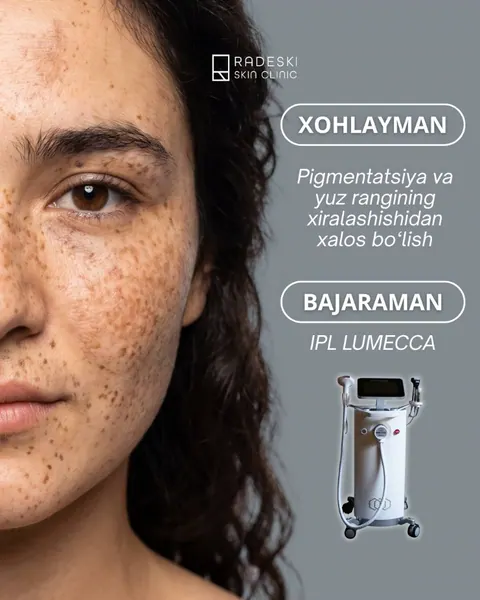
- IPL photorejuvenation — broad-spectrum light fades sun spots and freckles and evens out skin tone. More: treating pigmentation with IPL Lumecca.
- Q-switched laser (Hollywood Spectra) — ultra-short pulses break pigment into tiny particles that the body gradually clears. More: pigmentation and Hollywood Spectra.
- Thulium laser (LaseMD Ultra) — gently renews the top layer of the skin and helps with fine, scattered pigmentation and uneven tone. More: LaseMD Ultra thulium laser.
Several sessions are usually needed, and the doctor sets the intervals. After a session a spot may darken for a few days and then flake off as a fine crust — this is a normal part of the process. Results vary from person to person, and whether new spots appear depends largely on sun protection.
Care during the course
- SPF every day, all winter — snow reflects UV, and rays reach the skin even on cloudy days. Use a broad-spectrum SPF 50 and reapply when outdoors.
- No scrubs or harsh brushes — especially in the days after a session.
- No sunbeds or tanning — during the course and afterwards.
- Gentle cleansing and moisturising — with products your doctor recommends.
What not to do at home
- rub spots with lemon, vinegar or hydrogen peroxide — the skin burns and the spot gets darker;
- use "whitening" creams of unknown composition — they may contain substances that damage the skin;
- do aggressive acid peels at home;
- scrape, scratch or try to "remove" a spot with a needle;
- give yourself "laser sessions" with home devices.
Pigment spot treatment in Fergana and Kokand
At Radeski Skin Clinic a dermatologist-cosmetologist first examines your spots with a dermatoscope, then builds a course plan and picks the method that suits the type of spots and your skin.
- Pigmentation treatment in Fergana and in Kokand;
- Cosmetologist in Fergana and in Kokand;
- IPL (InMode), Hollywood Spectra and LaseMD Ultra.
A course started in autumn lets you greet spring with clearer skin — just do not forget your sunscreen.
When to see a doctor
- A spot grows quickly or changes shape
- A spot has irregular edges or uneven colour
- A spot becomes raised, itches, bleeds or forms a sore
- A new spot appears in adulthood
- After home remedies a spot darkens or the skin is burned or red
Frequently asked questions
Hashtags
#Pigmentspots#Sunspots#Freckles#IPL#HollywoodSpectra#Fergana#Kokand#RadeskiSkinClinic
Important note: This article is for general information only and does not replace a medical consultation.
Related clinic services
Videos on this topic
More helpful articles
Pigmentation Treatment with IPL Lumecca — Radeski Skin Clinic
How InMode IPL Lumecca treats pigmentation and dull skin tone: mechanism, clinic steps, session count, and the Radeski Skin Clinic approach.
Read more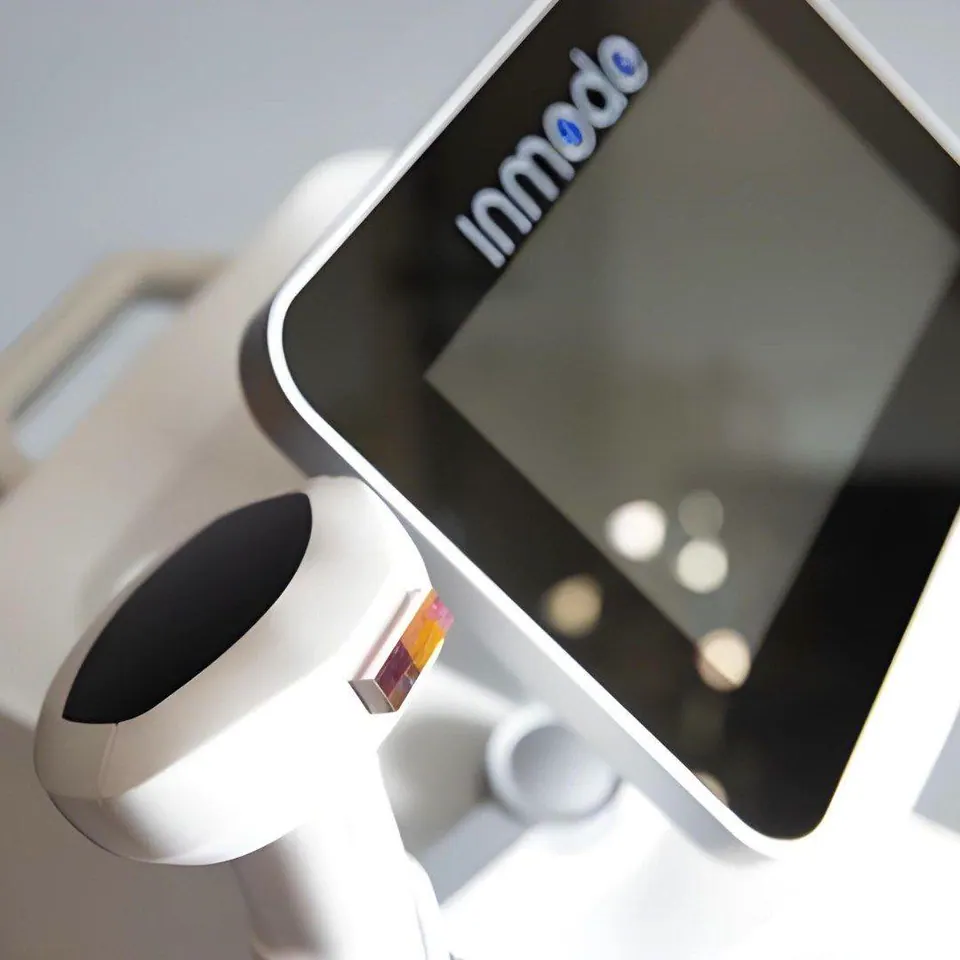
What Is IPL Therapy? A Modern Solution for Healthy, Beautiful Skin in Fergana
What IPL therapy is in Fergana and Kokand: how Radeski Skin Clinic uses intense pulsed light for redness, pigmentation, acne, and photoaging — steps, results, and safety.
Read more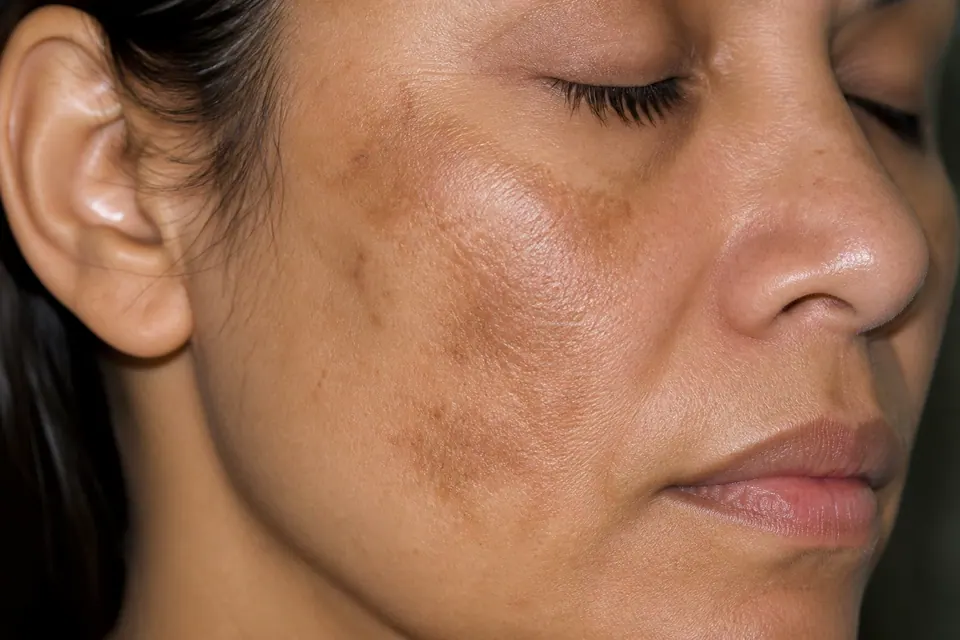
Melasma: Brown Patches on the Face — Causes and Modern Treatment
Melasma — brown patches on the face: causes (sun, hormones), how it differs from other spots, sun protection, creams, peels and laser toning. Dermatologists in Fergana and Kokand.
Read more