
Calluses and Corns: Why They Form and How a Podiatrist Removes Them
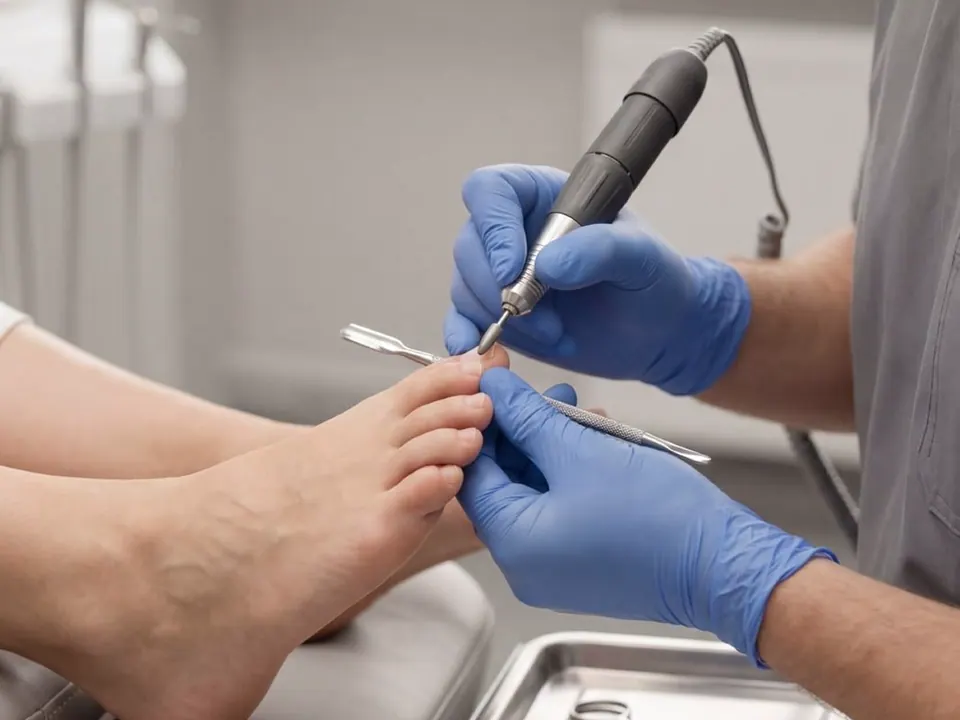
Calluses and corns: why they form, how they differ from warts, painless removal by a podiatrist, and what to do and avoid at home. Podiatrists in Fergana and Kokand.
Key takeaways
- Calluses and corns are skin thickening in response to constant pressure and friction
- A corn must be told apart from a plantar wart — they are treated differently
- A podiatrist removes them painlessly with a device and finds a way to relieve pressure
- Cutting and acid plasters risk wounds, burns and infection
- With diabetes, any callus should be treated by a specialist only
Calluses and corns are the skin's protective response to constant pressure and friction on the feet. The skin thickens into a hard layer. They are not dangerous, but they hurt when walking, can crack and let infection in, and in people with diabetes they can lead to serious complications. With the right care and a podiatrist's help they can be removed safely.
Callus, corn and plantar wart: what is the difference?
- Callus — a broad, yellowish, hard thickening on the heel, the ball of the foot or the side of the big toe. Usually only mildly painful.
- Corn — a small round lesion with a hard "core" in the middle, often on or between the toes. Pressing it causes sharp pain.
- Plantar wart — caused by a virus; tiny black dots on the surface, painful when squeezed from the sides. It looks like a corn but is treated differently.
That is why a "corn" should be shown to a podiatrist or dermatologist before treatment.
Why do they form?
- tight, stiff or high-heeled shoes;
- walking without socks or in wrinkled socks;
- standing for long periods, lots of walking, sport;
- changes in foot shape: flat feet, bunions, hammer toes;
- excess weight;
- thinning of the fat pad under the foot with age.
How does a podiatrist help?
- Device treatment — the podiatrist painlessly removes the thickened skin layer by layer with special burrs; the core of a corn is carefully taken out.
- Pressure relief — soft pads, toe separators and, when needed, orthotic insoles; without this, calluses come back.
- A care plan — softening creams for your skin type and home care.
Relief is usually immediate, and most people walk in their normal shoes the same day.
What you can and cannot do at home
You can:
- soak your feet in warm water for 10 minutes and gently use a pumice stone on a callus;
- apply a softening foot cream daily (not between the toes);
- wear comfortable, roomy shoes and cotton socks.
You should not:
- cut calluses or corns with a knife, razor or scissors — deep wounds and infection risk;
- put acid "corn plasters" on healthy skin — burns and ulcers;
- use any home methods if you have diabetes or poor circulation — see a specialist only.
Other foot skin problems: nail fungus, fungal skin infections.
When to see a specialist
- a callus or corn makes walking difficult or painful;
- redness, swelling, pus or blood appear;
- there are black dots in the "corn" — it may be a wart;
- you have diabetes — for any callus;
- home care has not helped in 2–3 weeks.
Podiatrist in Fergana and Kokand
At the Radeski Skin Clinic nail and foot clinic a dermatological podiatrist removes calluses and corns painlessly, finds the cause and advises how to keep them from coming back.
Removing a callus in time and choosing the right shoes is the simplest way to stop foot pain.
When to see a doctor
- A callus or corn makes walking difficult or painful
- Redness, swelling, pus or blood
- Black dots inside the corn
- Diabetes — for any callus
- Home care has not helped in 2–3 weeks
Frequently asked questions
Hashtags
#Calluses#Corns#Footcare#Podiatrist#Footclinic#Fergana#Kokand#RadeskiSkinClinic
Important note: This article is for general information only and does not replace a medical consultation.
Related clinic services
Videos on this topic

More helpful articles

Fungal Skin Infections: Feet, Body and Groin — Signs, Testing and Treatment
Fungal skin infections: feet, body, groin, scalp, pityriasis versicolor and candida. Signs, the skin scraping test, the steroid cream mistake, treatment and prevention. Dermatologists in Fergana and Kokand.
Read more
Nail Fungus (Onychomycosis): Signs, Causes and Treatment — Podiatrist Advice
Nail fungus (onychomycosis): yellow, thick, crumbling nails. Signs, lab confirmation, podiatric nail care and how long treatment takes. Podiatrists and dermatologists in Fergana and Kokand.
Read more
Ingrown Toenail (Onychocryptosis): Clinical Case — From Visit to Recovery
Real clinical case in Kokand: ingrown toenail (onychocryptosis) treatment journey — from first visit to 6-month outcome. Iroda Karimova, Radeski Skin Clinic.
Read more