About this service
Nail and foot problems: what is treated at Radeski Skin Clinic?
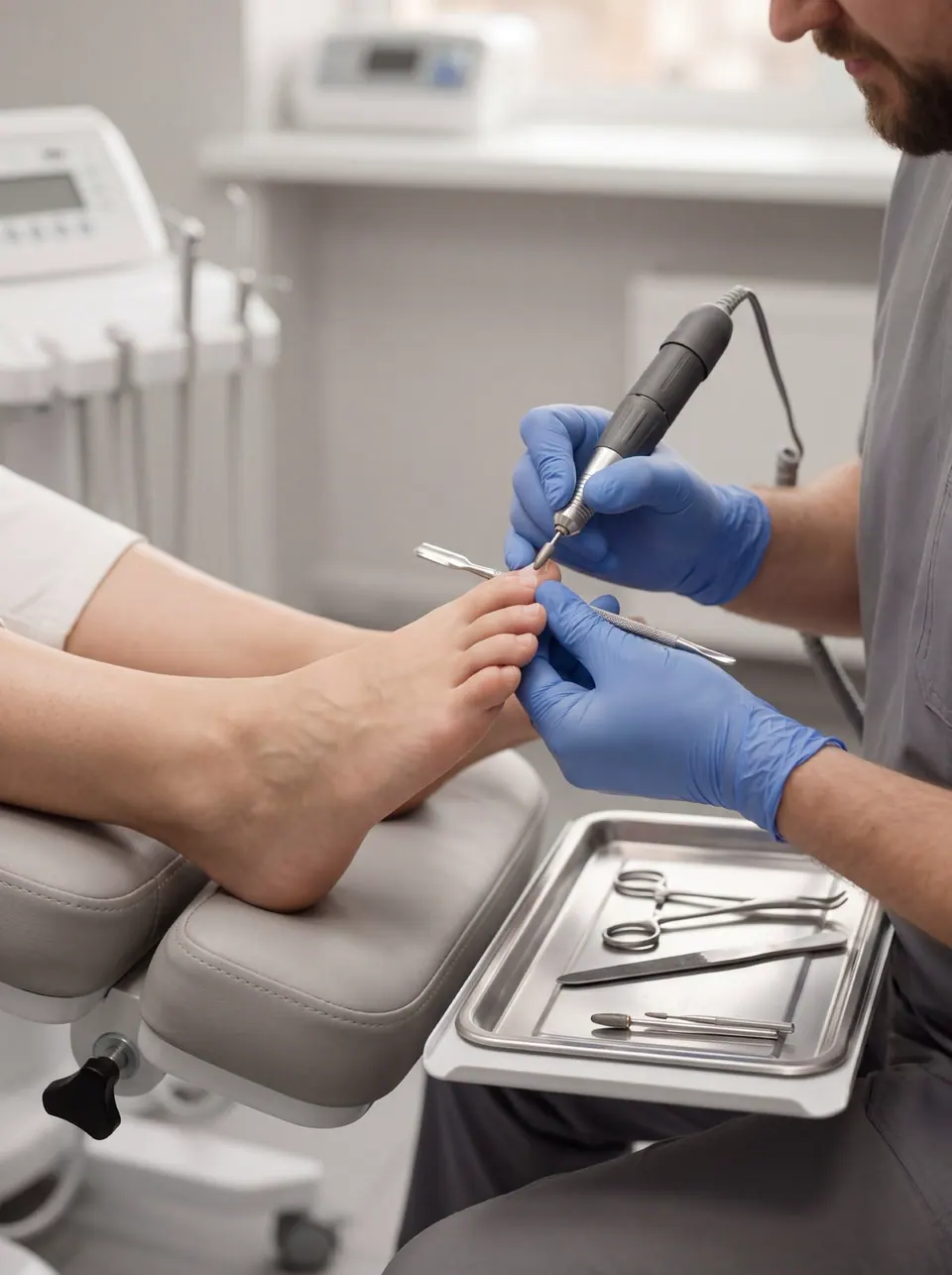
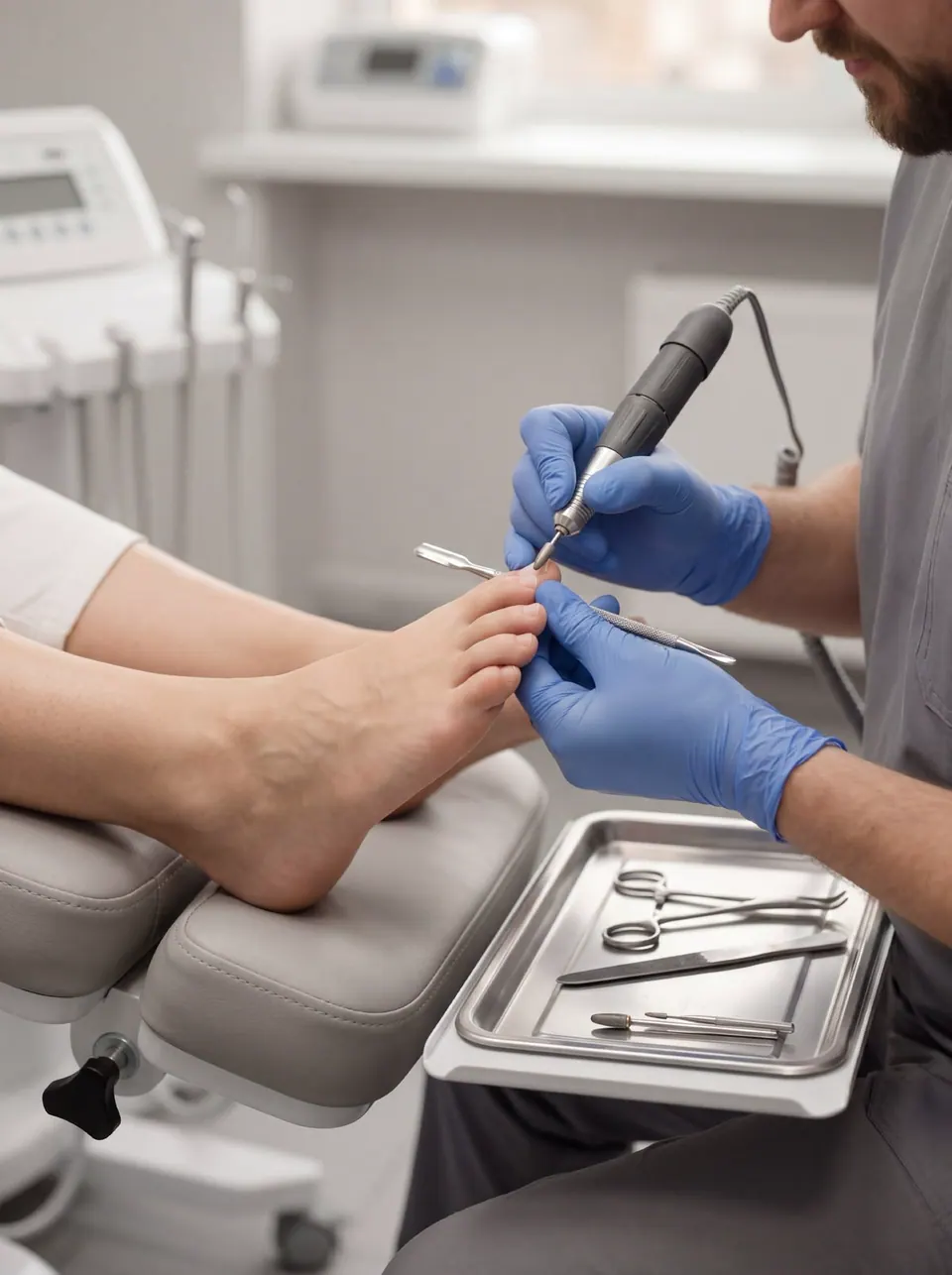
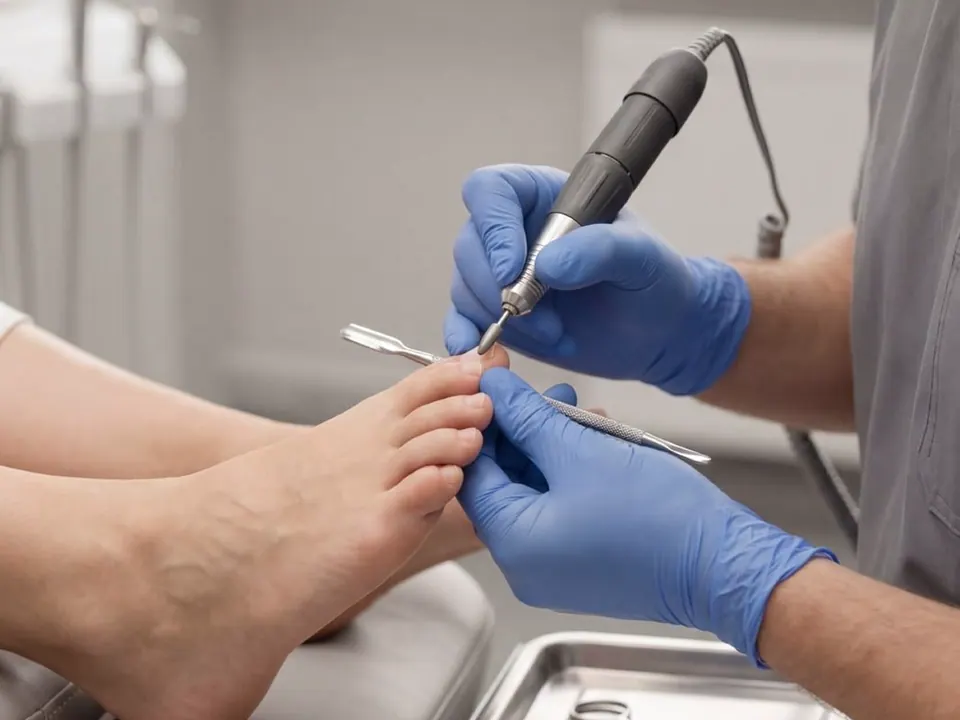
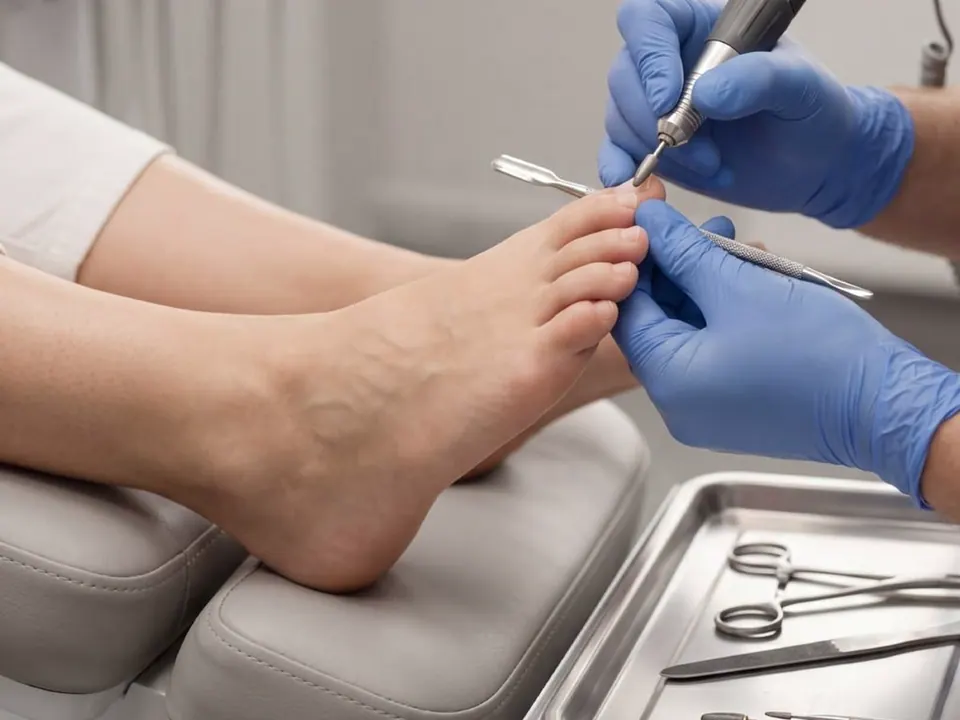
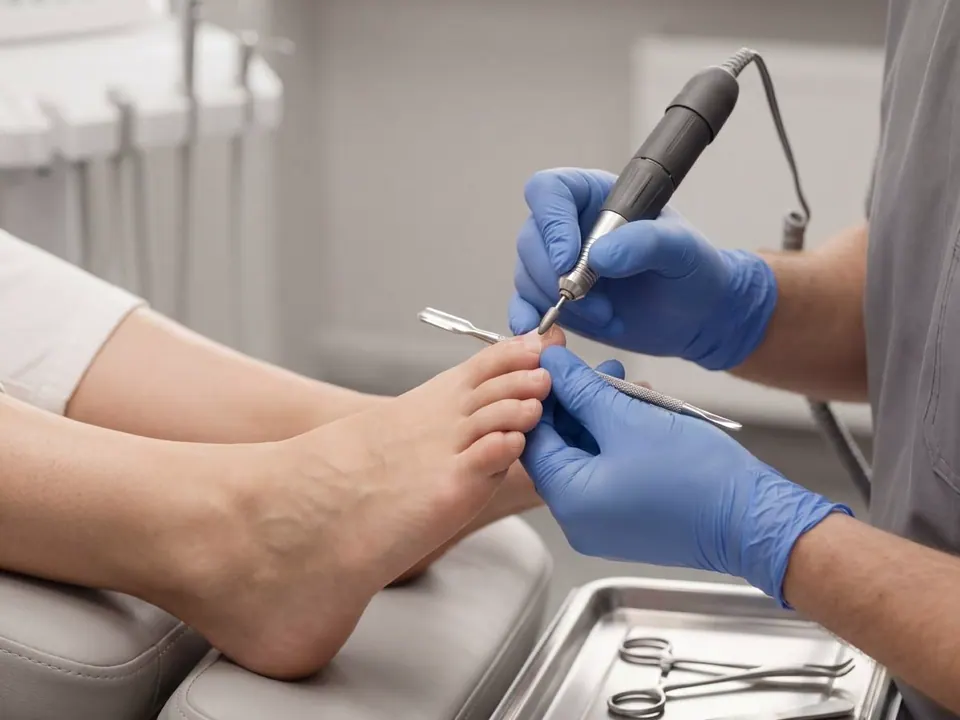
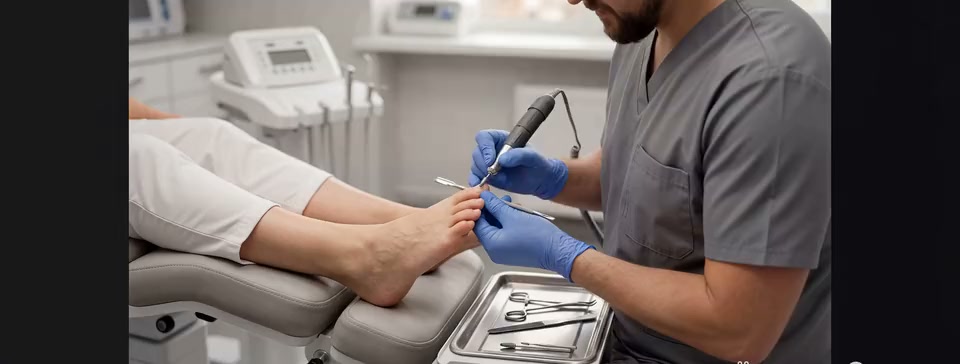
Nail and foot pathology is the medical treatment of foot, heel and nail conditions. At Radeski Skin Clinic patients are seen by a podiatrist and a dermatologist: procedures are done with a device and sterile instruments, and the diagnosis is confirmed by a lab test when needed. Adults and children are seen at the Fergana and Kokand branches.
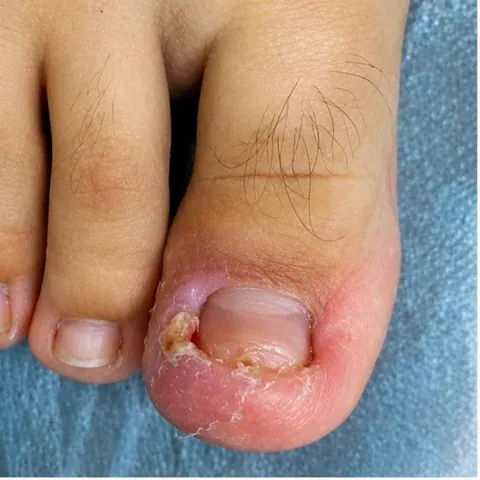
Ingrown toenail (onychocryptosis)
The nail edge grows into the skin of the toe, causing pain, redness, swelling and sometimes infection. The big toe is affected most often; causes include cutting nails too short or the corners too deep, tight shoes and injuries. The podiatrist removes the ingrown part under local anaesthesia and, when needed, fits a titanium wire that lifts the nail edges and gradually corrects the growth direction. In many cases the whole nail does not need removing, and when the problem returns after surgery, correction is what addresses the cause.
Read more (7)
Nail fungus (onychomycosis)
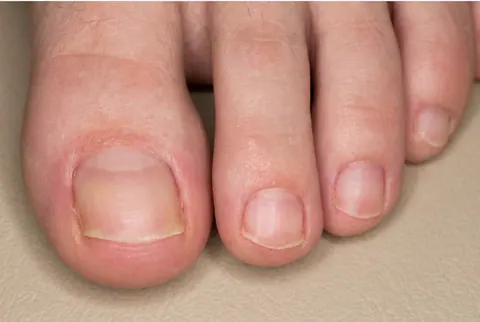
The nail turns yellow, thickens, crumbles and lifts. Fungus does not go away on its own and can spread to other nails and family members. The diagnosis is confirmed by a lab test; treatment combines device cleaning of the nail, laser therapy and medication. Follow-up continues until a healthy nail grows out: fingernails renew in 4–6 months, toenails in 9–12 months.
Thickened and deformed nails
Age, injury, fungus or shoe pressure can make a nail thick and curved, which is hard and painful to cut with ordinary scissors. The podiatrist thins the nail plate layer by layer with a special device and corrects its shape, relieving pain and pressure and making the nail easier to care for.
Calluses and corns
Uncomfortable shoes and uneven load on the foot thicken the skin. Calluses without a core are removed painlessly with a device; for a corn with a core, the core is removed too, otherwise it comes back. The doctor also explains the cause and advises on footwear, walking and home care.
Cracked heels and dry skin
Dry, thickened heel skin cracks, hurts when walking and lets infection in. Medical device treatment removes the thickened layer, and the cracks heal with care products. If cracks keep coming back, the skin is checked for fungus or another skin condition.
Diabetes and sensitive feet
With diabetes, the skin of the feet and the nails need extra care, because even a small wound can heal slowly. Medical pedicure and nail procedures for these patients are done gently, under a doctor’s supervision.
A dermatological approach
Changes in nails and heels are sometimes a sign of psoriasis, eczema or another skin disease. The podiatrist, dermatologist and lab work in one clinic, so diagnosis and treatment follow a single plan without referrals elsewhere.
Prevention: how to keep nails and feet healthy
Cut toenails straight across without trimming the corners deeply. Wear shoes that do not squeeze the toes and let the feet breathe, change socks daily and dry carefully between the toes after washing. Use your own slippers at pools, saunas and gyms, and do not share towels or shoes. Moisturise the heels regularly. If a nail changes colour or pain or redness appears, see a podiatrist before the problem gets deeper: early treatment is easier and faster.
Do not try to treat pain, redness or nail discoloration on your own — cutting an ingrown nail or treating fungus with a random cream can make things worse. A podiatrist visit finds the cause and picks the gentlest method.