
Lichen Planus: Symptoms, Causes and Treatment — Is It Contagious?
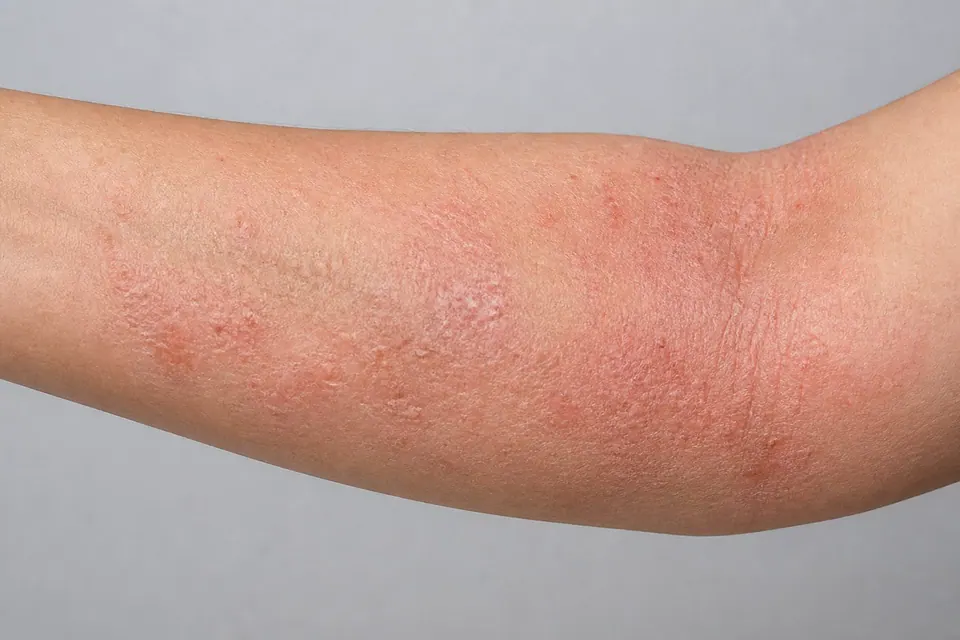
Lichen planus — itchy purple-red bumps that are neither contagious nor a fungus. Signs, mouth and scalp forms, diagnosis and treatment. Dermatologists in Fergana and Kokand.
Key takeaways
- Lichen planus is immune-related inflammation — not contagious and not a fungus
- The main sign is shiny, itchy purple-red bumps with fine white lines on top
- It can cause white lacy patches in the mouth, thin nails and scarring hair loss
- Diagnosis is by examination, dermoscopy and sometimes a biopsy; hepatitis C may be checked
- The doctor chooses treatment: local products, and phototherapy for widespread rash
Lichen planus is a long-lasting inflammatory condition that affects the skin, the inside of the mouth, the nails and sometimes the scalp. It mostly appears in adults and is often very itchy. Because its Uzbek and Russian names sound like "ringworm", many people assume it is a fungus and apply antifungal creams — a mistake. The sooner it is recognised correctly, the easier it is to treat and the lower the risk of complications.
What is lichen planus?
It is inflammation caused by the immune system mistakenly reacting against the body's own skin cells. The key facts:
- it is not contagious — it does not pass to family members through dishes, towels or touch;
- it is not a fungus or a bacterial infection — so antifungal products do not help;
- it is not cancer, but the mouth form needs regular check-ups with a doctor.
Causes and triggers
The exact cause is not fully understood. An immune reaction plays the main role, and it can be set off by:
- severe stress, exhaustion and lack of sleep;
- some medicines — the rash may be linked to a drug; do not stop it yourself, discuss it with the doctor who prescribed it;
- hepatitis C — in some patients lichen planus occurs together with this infection, so the doctor may order blood tests;
- in the mouth — constant irritation from sharp tooth edges, poorly fitting dentures or fillings.
Signs
On the skin — small, flat, shiny purple-red bumps. They most often appear on the wrists and inner forearms, the shins and the lower back, and can merge into larger patches. Other signs:
- itching — often strong, especially at night;
- fine white lines or a delicate net on the surface of the bumps — doctors call them Wickham striae;
- new bumps appearing in a line along a scratch or an injury.
In the mouth — white, lacy, net-like patches on the inside of the cheeks. They are usually painless, but sometimes redness and painful sores appear, and spicy or hot food stings.
On the nails — the nail thins, lengthwise ridges and splits appear, and in severe cases the nail can be lost.
On the scalp — red patches of hair loss. This form can leave scarring, after which hair no longer grows in that spot, so see a trichologist quickly.
On the genitals — bumps or white patches, sometimes painful sores. Do not feel embarrassed to see a dermatovenereologist.
For other causes of itching: itchy skin.
How long does it last?
The skin form usually lasts from a few months to a year or two and fades gradually. The mouth form lasts longer, sometimes for years — it needs regular check-ups, because long-standing mouth sores should be monitored. After healing, dark brown spots may remain on the skin; they fade slowly over months.
When to see a doctor promptly
- a mouth sore that does not heal, grows or feels hard;
- patchy hair loss on the scalp;
- a rash that spreads quickly over a large part of the body;
- painful sores on the genitals;
- a rash that started after a new medicine;
- itching that disturbs sleep or work.
What not to do at home
- Do not treat it yourself as "fungus" with antifungal creams — they will not help, and time is lost.
- Do not scratch: new bumps appear where the skin is scratched.
- Do not apply random ointments recommended by friends, steroid creams, alcohol or vinegar.
- With the mouth form, avoid spicy or very hot food and smoking.
How the clinic makes the diagnosis
The dermatologist examines the skin, mouth, nails and hair. Dermoscopy clearly shows the white lines and the structure of the bumps. If the diagnosis is uncertain or a mouth sore has lasted a long time, a small biopsy is taken — more: skin biopsy. If needed, the doctor orders a hepatitis C test and other blood tests.
Lichen planus has to be told apart from similar conditions:
- pityriasis rosea — oval pink patches on the body, usually starting with one larger "herald patch", and it clears within a few weeks; more: pityriasis rosea;
- psoriasis — plaques with silvery scale, most often on the elbows, knees and scalp; more: psoriasis.
Treatment
Only a doctor chooses the treatment, based on the form of the disease, how widespread it is and the patient's overall health:
- local anti-inflammatory treatment — creams or ointments prescribed by the doctor, special products for the mouth;
- phototherapy — for widespread rash, ultraviolet light treatment under a doctor's supervision; more: physiotherapy in dermatovenereology;
- other options — whole-body treatment the doctor selects for severe or long-lasting cases.
Itching usually eases once treatment starts. To help the remaining spots fade, the doctor will recommend sun protection.
Everyday care
- Wash with gentle products and use a moisturiser.
- Avoid rough clothing that rubs.
- Try to reduce stress and get enough sleep.
- With the mouth form, brush with a soft toothbrush and see a dentist regularly.
Lichen planus treatment in Fergana and Kokand
At Radeski Skin Clinic a dermatovenereologist confirms the diagnosis, tells it apart from look-alike conditions and draws up a treatment plan. If the scalp is affected, a trichologist examines it as well.
- Dermatologist in Fergana and in Kokand;
- Trichologist in Fergana and in Kokand;
- Dermatology and phototherapy.
Lichen planus is not contagious and can be treated — just do not treat it yourself as a fungus.
When to see a doctor
- A mouth sore does not heal or keeps growing
- Hair starts falling out in patches
- The rash spreads quickly over the body
- The rash appeared after starting a new medicine
- Itching disturbs sleep or work
Frequently asked questions
Hashtags
#Lichenplanus#Purplebumpsonskin#Itchyskin#Orallichenplanus#Phototherapy#Fergana#Kokand#RadeskiSkinClinic
Important note: This article is for general information only and does not replace a medical consultation.
Related clinic services
More helpful articles

Scabies: Night-Time Itching, How It Spreads and Treating the Whole Family
Scabies: itching that is worse at night, how it spreads, signs, dermoscopy, treating the whole household on one day and cleaning bedding. Dermatovenereologists in Fergana and Kokand.
Read more
Fungal Skin Infections: Feet, Body and Groin — Signs, Testing and Treatment
Fungal skin infections: feet, body, groin, scalp, pityriasis versicolor and candida. Signs, the skin scraping test, the steroid cream mistake, treatment and prevention. Dermatologists in Fergana and Kokand.
Read more
Skin Allergy and Hives: Symptoms, Causes and Treatment — When to Seek Urgent Help
Skin allergy and hives: itchy welts, redness and swelling. Causes, acute and chronic hives, when to call an ambulance and how it is treated. Dermatologists in Fergana and Kokand.
Read more