
Seborrheic Keratosis: Is It Dangerous and How Is It Removed?
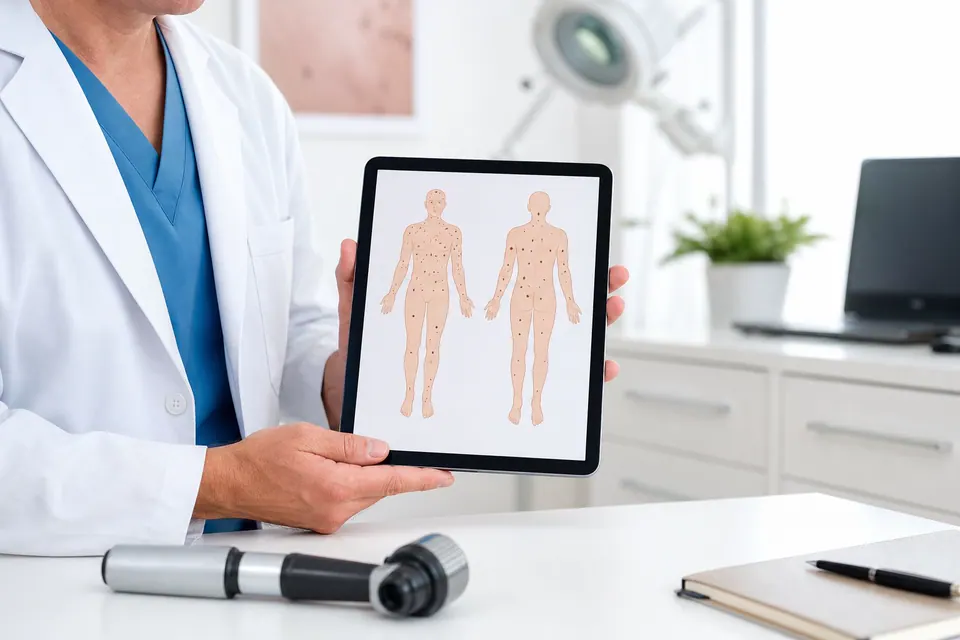
Seborrheic keratosis: brown "age warts" after 40. Harmless, but it can look like melanoma — dermoscopy, removal methods and aftercare. Dermatologists in Fergana and Kokand.
Key takeaways
- Seborrheic keratosis is benign, does not turn into cancer and is not contagious
- A dark, irregular keratosis can look like melanoma — dermoscopy is needed
- Removal is optional, but done when it is injured or bothersome
- CO₂ laser, radiowave, cryotherapy or surgery
- Cutting or burning at home risks scars and missing a dangerous tumour
Seborrheic keratosis (keratoma) is the most common benign skin growth. People often call it an "age wart" or "old-age mole". It usually appears after 40 and becomes more numerous with the years. It does not turn into cancer and is not contagious, but it can look like dangerous tumours — so it should be shown to a doctor.
What does seborrheic keratosis look like?
- a spot or bump from light brown to black;
- a rough, waxy surface that looks "stuck on" to the skin;
- from a few millimetres to 2–3 centimetres across;
- most often on the chest, back, neck, face and scalp;
- one or many.
A keratosis sometimes itches, gets red from rubbing clothes, or bleeds.
Why does it appear?
The exact cause is not fully known. The main factors:
- age — they multiply after 40;
- genetics — more common when relatives have many;
- sun exposure — more common on exposed skin.
Seborrheic keratosis has nothing to do with hygiene or viruses and does not spread to other people.
Why show it to a doctor?
A dark, irregular keratosis can resemble melanoma or basal cell carcinoma. A doctor tells them apart with dermoscopy: a keratosis has characteristic features. If there is any doubt, the growth is removed and sent for histology.
See a doctor promptly if:
- a spot grows quickly or changes colour;
- it bleeds or ulcerates;
- many new keratoses appear in a short time.
How are keratoses removed?
Removal is not required — but if a keratosis gets injured, itches, gets in the way or bothers you cosmetically, it can be removed. The doctor chooses the method:
- CO₂ laser — precisely vaporises the growth layer by layer; well suited to the face;
- radiowave method — cuts the growth and seals the vessels at the same time;
- cryotherapy — freezing, for small keratoses;
- curettage or surgery — for doubtful lesions, so the tissue can go for histology.
It is done under local anaesthetic. Never cut, tie off or burn a keratosis at home: it means scars, infection and, worst of all, the risk of missing a dangerous tumour.
After removal
- a crust forms and falls off in 7–14 days — do not pick it;
- treat it with the antiseptic your doctor recommends;
- use SPF 50 for 1–2 months so no mark is left;
- a removed keratosis does not come back, but new ones may appear elsewhere.
For similar but different growths: papilloma removal.
Keratosis removal in Fergana and Kokand
At Radeski Skin Clinic a dermatologist examines the growth with a dermatoscope, tells a keratosis apart from dangerous tumours and removes it safely in the surgical dermatology department.
Showing any new or changing spot to a dermatologist once a year is the simplest and most reliable protection.
When to see a doctor
- A spot grows quickly or changes colour
- It bleeds or ulcerates
- Many new keratoses appear in a short time
- Clothing keeps injuring it
- You are not sure whether it is a mole or a keratosis
Frequently asked questions
Hashtags
#Seborrheickeratosis#Keratoma#Agewarts#Growthremoval#Dermatologist#Fergana#Kokand#RadeskiSkinClinic
Important note: This article is for general information only and does not replace a medical consultation.
Related clinic services
More helpful articles
Basal Cell Carcinoma (Basalioma): Symptoms, Causes, and Treatment
Basal cell carcinoma (basalioma): how it looks, why it develops, when to see a doctor, and how it is treated — a practical guide from Radeski Skin Clinic.
Read more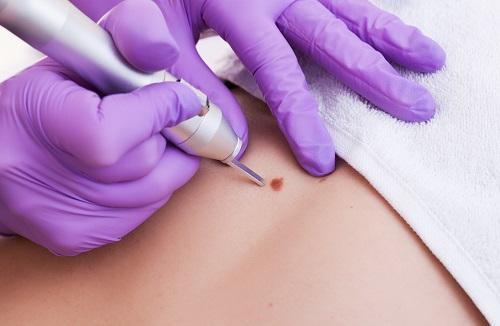
Skin Papillomas: Why They Appear and How to Remove Them Safely
Papillomas: types, how they differ from warts, why home removal is risky, removal with CO₂ laser and radiowave, aftercare. Dermatologists in Fergana and Kokand.
Read more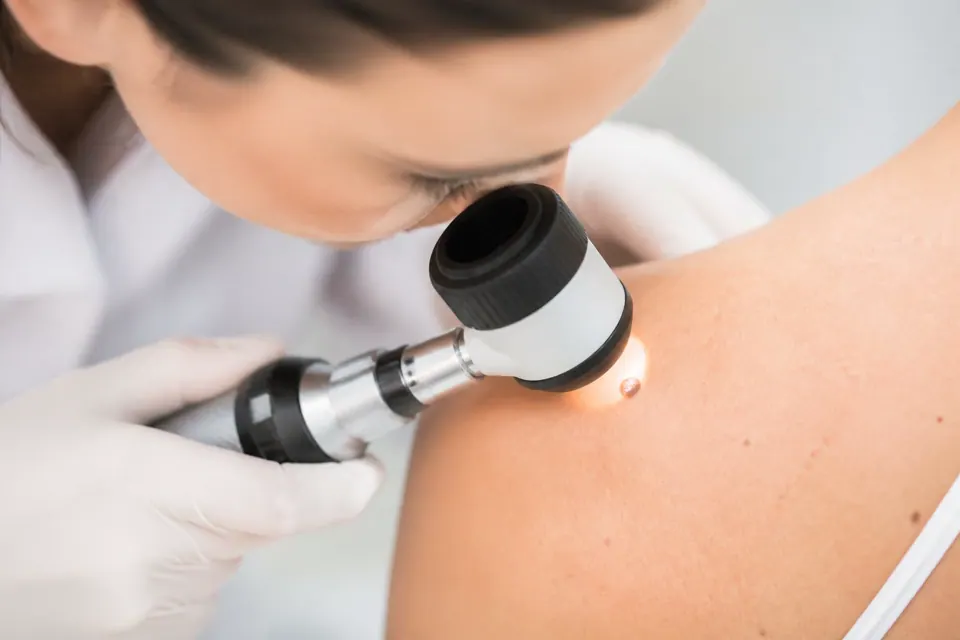
Moles and Dermoscopy: Which Mole Is Dangerous — the ABCDE Rule and Check-ups
When to check a mole: the ABCDE rule, risk groups, dermoscopy and mole mapping, removal and histology. Dermato-oncologists in Fergana and Kokand.
Read more