
Hair Transplant Side Effects and Complications: What Is Normal and What Is Not
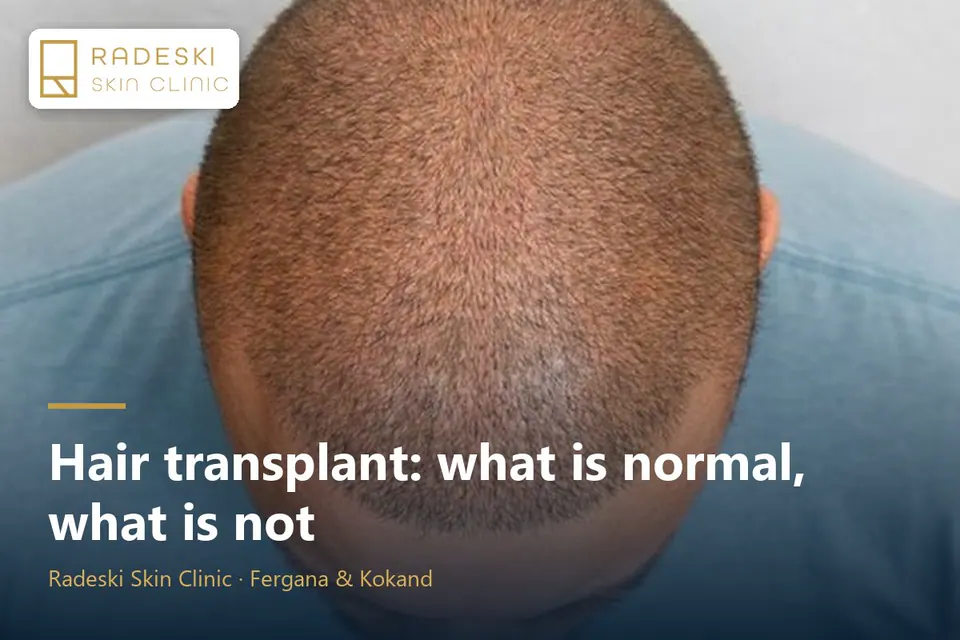
Hair transplant side effects and complications: when swelling, crusts, numbness and shock loss are normal, and when infection, folliculitis and scarring matter. How to reduce the risk and when to call the clinic.
Key takeaways
- Swelling, crusts, itching and numbness are a normal part of recovery
- Transplanted hairs falling out in weeks 2–8 is normal; new hair grows from month 3–4
- Real complications are rare: infection, folliculitis, a thinned donor area
- A trichologist assessment and careful planning reduce the risk
- Fever, pus or bleeding that will not stop — call right away
A hair transplant is a surgical procedure, so it has side effects and possible complications. Most are temporary and simply part of recovery. Real complications are uncommon and usually linked to poor patient selection, an inexperienced team or not following aftercare. Here is what the "risks of hair transplant" really are, what is normal and what is a reason to call your doctor.
Normal: part of recovery
| Effect | When | How long |
|---|---|---|
| Swelling of the forehead and around the eyes | day 2–3 | 3–5 days |
| Redness | first days | 1–4 weeks, longer in fair skin |
| Crusts | day 1–2 | fall off within 7–10 days |
| Itching | week 1–2 | a few days |
| Numbness | first weeks | several weeks, sometimes 2–3 months |
| "Shock loss" | week 2–8 | new hair grows from month 3–4 |
Shock loss worries many people: transplanted hairs fall out within 2–8 weeks. This is normal — the follicle stays in place and new hair starts growing from month 3–4. Sometimes the surrounding native hair thins temporarily too. The final result is judged at 9–12 months. More on the stages: After a hair transplant: day 1 to month 12.
Real complications
- Infection — increasing pain, swelling, pus, fever. Rare; antisepsis and aftercare reduce the risk.
- Folliculitis — small pus spots in the recipient area, usually in months 1–3 as new hair grows. It typically settles with local treatment.
- Bleeding — a little blood in the first days is normal; bleeding that does not stop is a reason to call. Blood thinners must be agreed with the doctor in advance.
- Over-harvested donor area — taking too many grafts from the back of the head leaves it looking thin. This is a planning error.
- Visible marks — FUE leaves tiny dot scars, usually invisible even under short hair; a very close shave may show them.
- Unnatural hairline — too straight, too low or not suited to the face. The hairline design is agreed with the doctor beforehand.
- Poor growth — fewer hairs survive if grafts were stored badly, placed too densely, or the patient smokes.
- Cysts — small bumps in the recipient area; they usually resolve or are removed with a simple procedure.
How the risk is reduced
- A trichologist assessment first. The type and cause of hair loss are established; in some cases (active alopecia areata, scalp disease) surgery is not done. More: When a hair transplant should not be done.
- Donor area assessment. The number of grafts is planned around what the donor area can give — "more" is not always "better".
- Tests and medicines. Tell the doctor everything about tests, chronic conditions and regular medicines.
- No smoking or alcohol — at least 1–2 weeks before and after surgery.
- Aftercare — follow the advice on washing in the first days, sleeping position, exercise, sauna and sun exactly.
On methods and what drives the result: Hair transplant with FUE and DHI.
When to call the clinic right away
- pain gets worse day by day or you have a fever;
- there is pus, a bad smell or spreading redness;
- bleeding does not stop with pressure;
- swelling has not eased after 5–7 days or an eye swells shut;
- after 6 months there is almost no growth in the transplanted area.
At Radeski, hair transplants are performed in Fergana, with a trichologist assessment before surgery and follow-up visits afterwards: Hair transplant in Fergana.
This article is for general information. Only a doctor can make a diagnosis and prescribe treatment.
When to see a doctor
- Pain gets worse or you develop a fever
- There is pus, a bad smell or spreading redness
- Bleeding does not stop with pressure
- Swelling has not eased after 5–7 days
- There is no growth after 6 months
Frequently asked questions
Hashtags
#Hairtransplant#Hairtransplantrisks#Complications#Shockloss#FUE#Trichologist#Fergana#RadeskiSkinClinic
Important note: This article is for general information only and does not replace a medical consultation.
Related clinic services
Videos on this topic

More helpful articles
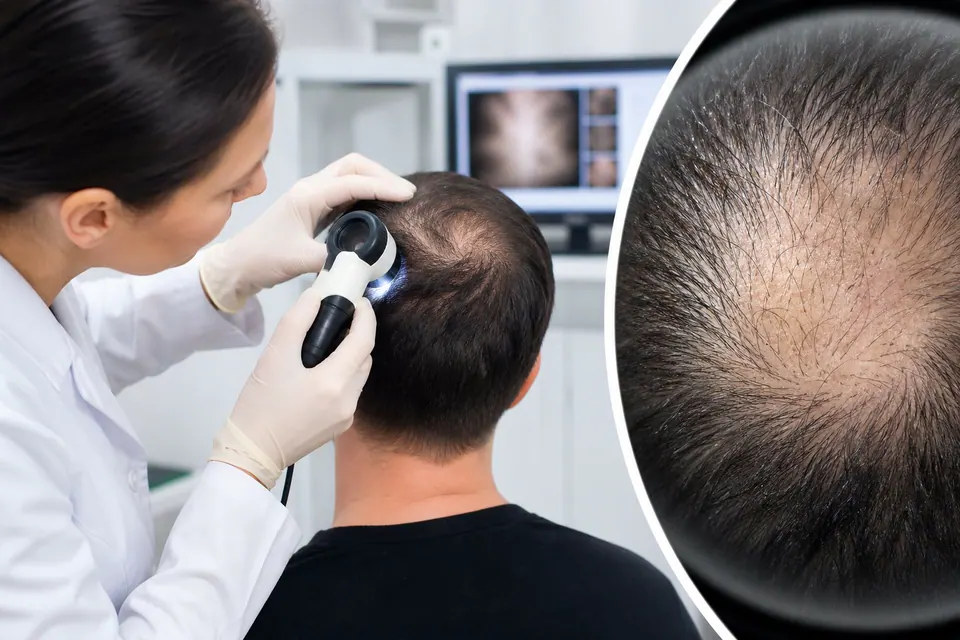
Hair Loss in Men: How to Stop Male Pattern Baldness
Hair loss in men: signs of male pattern baldness, other causes, trichoscopy, medicines, PRP, thulium laser and transplant. Trichologists in Fergana and Kokand.
Read more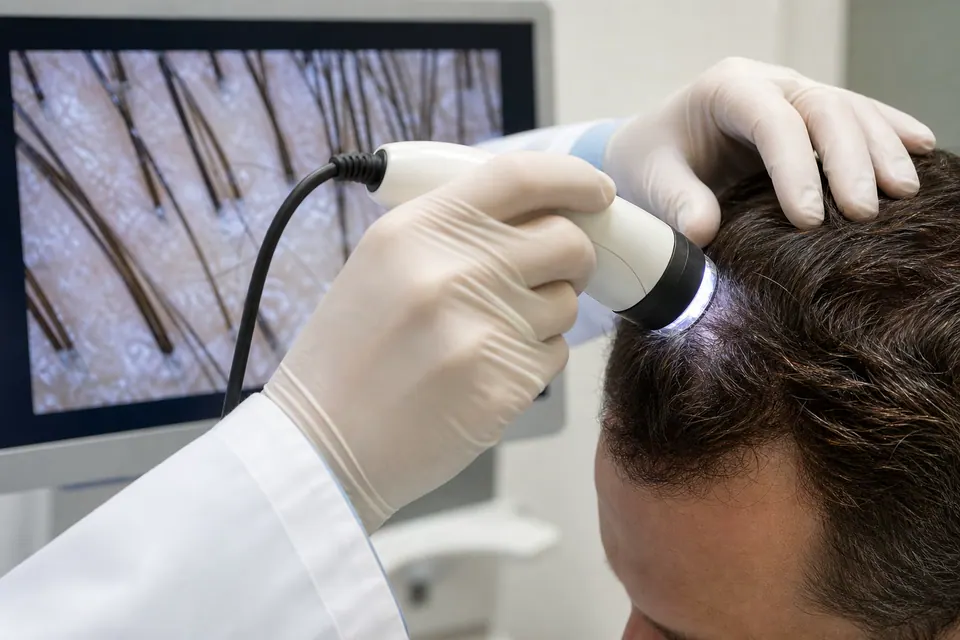
Hair Loss in Women: Causes, Tests and Treatment — Trichologist Advice
Hair loss in women: after childbirth and telogen effluvium, iron deficiency, thyroid, female pattern thinning. Trichoscopy, tests and treatment. Trichologists in Fergana and Kokand.
Read more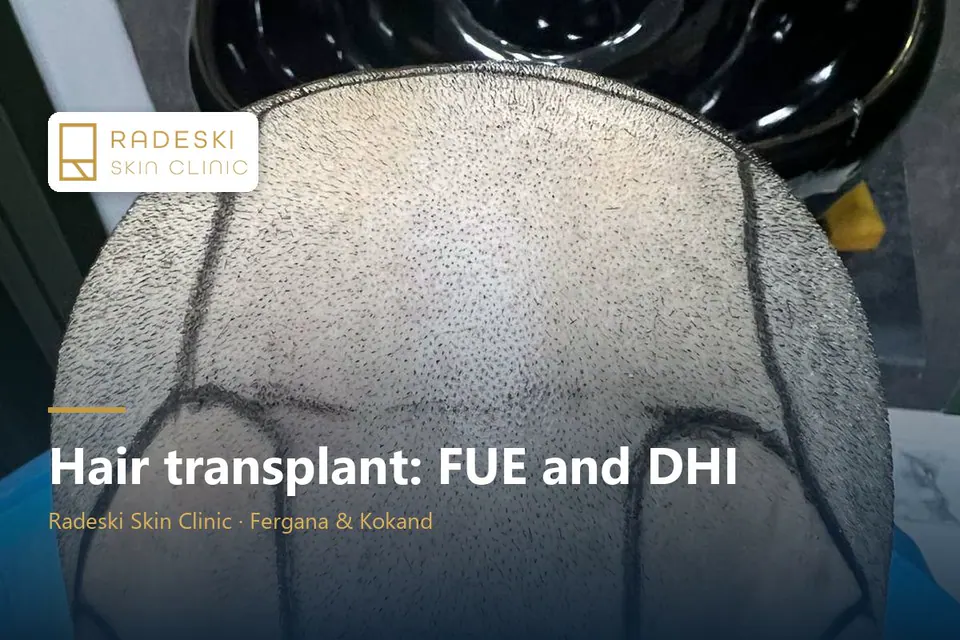
Hair Transplant with FUE and DHI: The Process, Results and What Affects the Price
Hair transplant with FUE and DHI: grafts and the donor area, the steps of the operation, what affects the result and price, and when you see results. Radeski — Fergana.
Read more