
Hair Transplant with FUE and DHI: The Process, Results and What Affects the Price
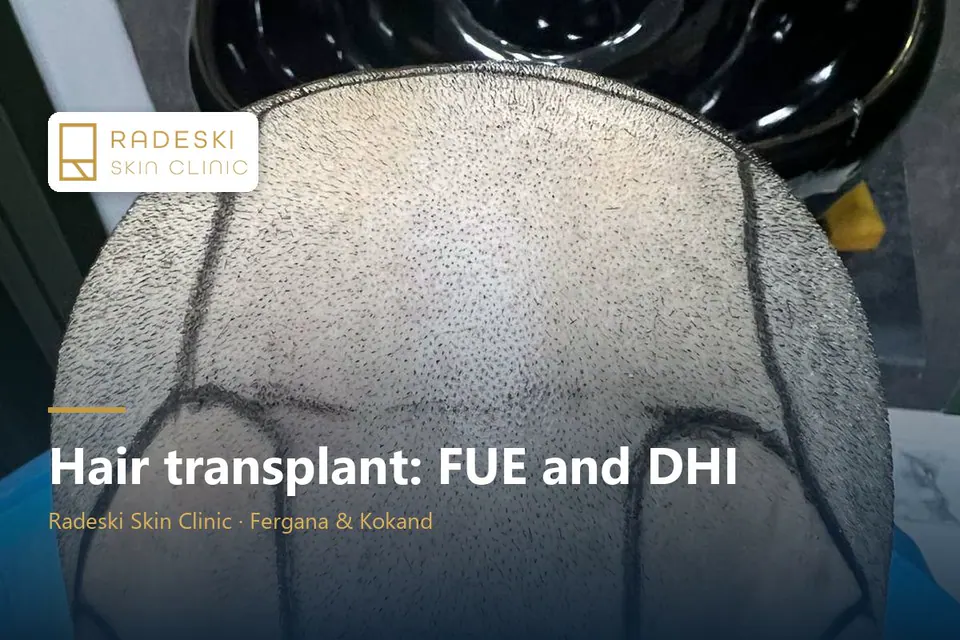
Hair transplant with FUE and DHI: grafts and the donor area, the steps of the operation, what affects the result and price, and when you see results. Radeski — Fergana.
Key takeaways
- FUE and DHI take grafts one by one and leave no linear scar
- DHI places grafts with an implanter — more precise at the hairline and for density
- The result depends on the cause of hair loss, the donor area and a well-drawn hairline
- The price depends on grafts, method and area and is given at the consultation
- New hair grows from 3–4 months; the final result is at 9–12 months
A hair transplant moves the patient’s own hair follicles into thinning or bald areas. The two most common methods today are FUE and DHI. Neither leaves a linear scar, but the technique, length of the procedure and best use differ. Here is how the operation goes and what affects the result and the price.
What is a graft and where is the donor area?
A graft is a natural group of 1–4 hairs. Grafts are taken from the donor area — usually the back and sides of the head. These hairs do not fall out in androgenetic alopecia and keep growing in their new place. The donor area is limited: how many grafts can be taken depends on hair density and scalp condition, so the plan is made after the doctor examines it.
How FUE works
FUE (Follicular Unit Extraction) takes grafts from the donor area one by one with a micro-instrument.
- The donor area is trimmed short and numbed with local anaesthesia.
- Grafts are extracted one by one and kept in a special solution.
- Micro-channels are made in the recipient area, angled like natural hair growth.
- The grafts are placed into the channels.
FUE suits larger areas that need many grafts.
How DHI differs
In DHI (Direct Hair Implantation) grafts are taken the same way, but they are placed with a special implanter that makes the channel and inserts the graft in one movement. This gives precision at the hairline, temples and when adding density between existing hairs. DHI usually takes more time and work.
A Long Hair transplant is done without shaving the hair short — an option for people who want the change to be less noticeable after surgery. The doctor chooses the method by hair type, area and target density.
What affects the result?
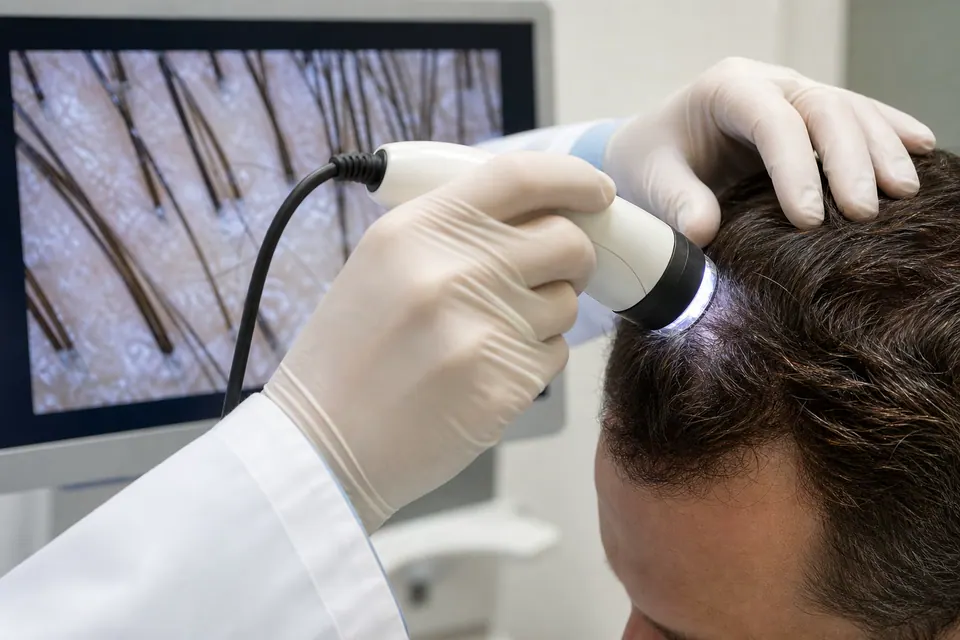
- The cause of hair loss. A trichologist first finds it with trichoscopy and, if needed, tests. Active diffuse shedding, alopecia areata or iron deficiency must be treated first.
- Donor quality — hair density and thickness.
- A well-drawn hairline — natural and suited to facial proportions and age.
- Keeping your own hair — trichology treatment (such as PRP) may be advised after surgery.
- Aftercare — following the doctor’s instructions in the first weeks.
What does the price depend on?
At Radeski a hair transplant starts at 7,000,000 UZS. The final price depends on:
- the number of grafts and size of the area;
- the method — FUE, DHI or Long Hair;
- the donor area and how complex the operation is.
The exact price is given at the consultation, after the hairline and donor area are assessed.
When will I see the result?
Transplanted hairs usually shed in the first weeks — this is normal, the follicle stays in the skin. New hair starts growing after about 3–4 months, and the final density forms by 9–12 months. Radeski follows patients up for 6–12 months after surgery.
Who performs it at Radeski?
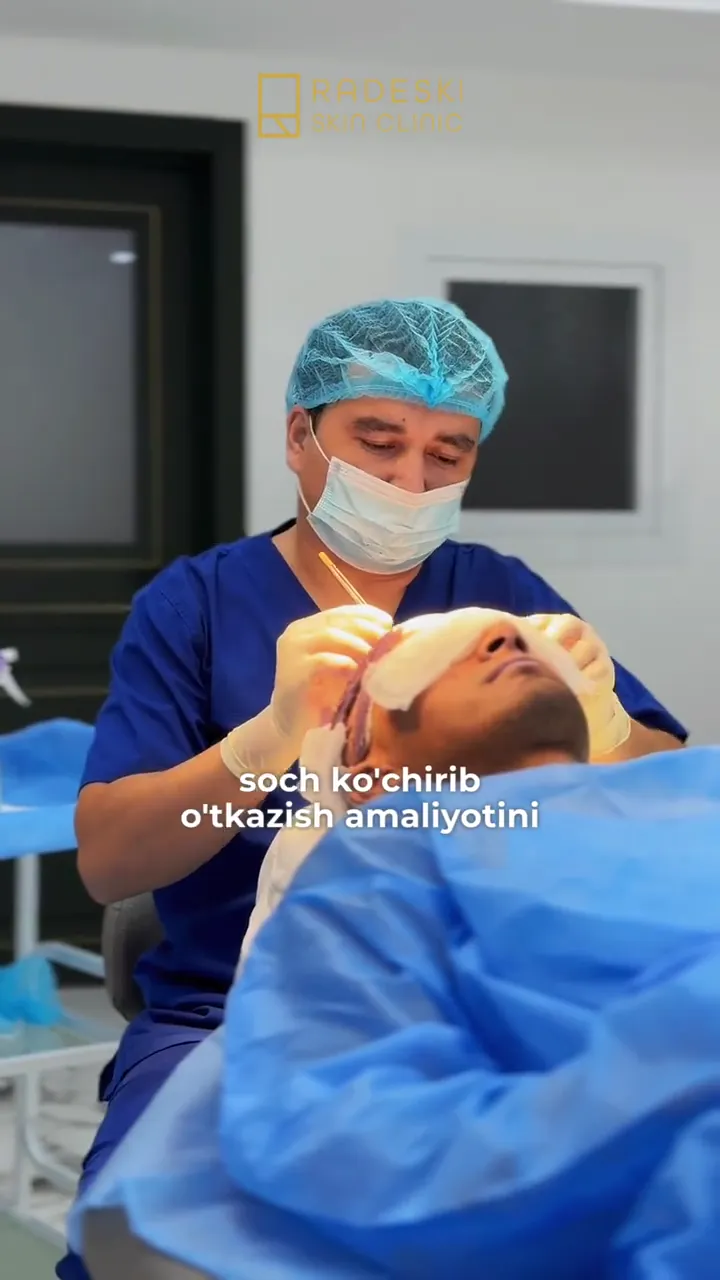
The operation is performed by dermatologist-trichologist Dr. Begali Sheraliyevich Abduvaliyev: 4 years in hair transplantation and more than 1,000 operations. It takes place in the clinic’s surgical suite.
Read more: Hair transplant in Fergana, When a hair transplant is not advised, Hair loss: normal or a problem, Trichologist and trichoscopy.
When to see a doctor
- Your hairline is receding or your crown is thinning
- Hair loss has lasted several months
- Treatment has not helped and you want to know about a transplant
- You are unhappy with a previous transplant
Frequently asked questions
Hashtags
#Hairtransplant#FUE#DHI#LongHair#Hairtransplantation#Trichologist#Fergana#RadeskiSkinClinic
Important note: This article is for general information only and does not replace a medical consultation.
Related clinic services
Videos on this topic
More helpful articles
Hair Loss in Women: Causes, Tests and Treatment — Trichologist Advice
Hair loss in women: after childbirth and telogen effluvium, iron deficiency, thyroid, female pattern thinning. Trichoscopy, tests and treatment. Trichologists in Fergana and Kokand.
Read more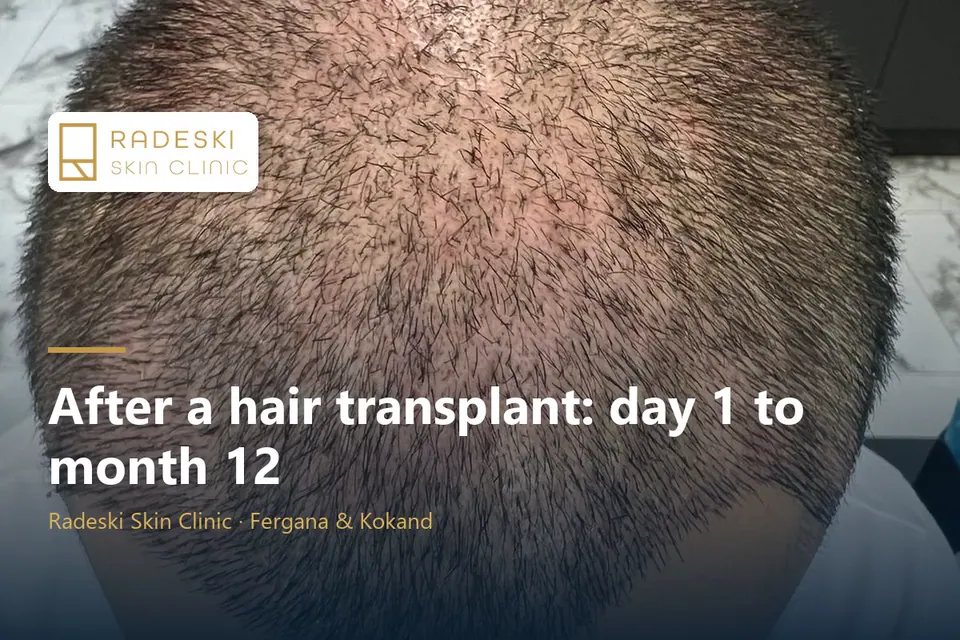
After a Hair Transplant: Aftercare from Day One to Month 12 and What Is Normal
Aftercare after a hair transplant: what is normal from day one to month 12, crusts, shock loss, what to avoid and when to call the doctor.
Read more
Beard and Moustache Transplant: Who It Suits, How It Works and When You See Results
Beard and moustache transplant: who it suits, when to wait, how the operation goes (FUE, DHI), recovery and when results show. Radeski — Fergana.
Read more