
Beard and Moustache Transplant: Who It Suits, How It Works and When You See Results
Beard and moustache transplant: who it suits, when to wait, how the operation goes (FUE, DHI), recovery and when results show. Radeski — Fergana.
Key takeaways
- A beard transplant is for sparse or patchy beards and scars
- Alopecia areata in the beard is treated first
- Grafts usually come from the back of the head with FUE and follow the growth direction
- A transplanted beard keeps growing — you can shave it
- New hair from 3–4 months; the final result at 9–12 months
Many men have an uneven beard: sparse on the cheeks, gaps on the chin, a moustache that does not join the beard. Others have no hair growth over a scar or burn. In these cases a beard and moustache transplant — moving your own follicles to the face — can help. But not every sparse beard needs surgery: the cause comes first.
Who is it for?
- Men whose beard is naturally sparse or patchy.
- Hairless areas after a scar, burn or injury.
- Anyone wanting to fill in the moustache line or the sideburn-to-beard connection.
When not to rush into surgery
- Alopecia areata — sudden round, smooth patches in the beard. It is an autoimmune condition that is treated first; while it is active, transplanted hair can fall out too.
- Age — beard growth often continues until about 25, so a doctor may advise waiting when you are young.
- Active inflammation of the facial skin, infection or uncontrolled chronic illness.
So the first step is a trichologist consultation: the facial skin, the donor area and how your hair grows are assessed.
How the operation goes
- Plan: the beard line, density and number of grafts.
- Harvesting: usually from the back of the head with FUE — one by one, no linear scar.
- Implanting: on the face direction and angle matter a lot — beard hair grows almost flat to the skin — so a DHI implanter or very small channels are used.
- Everything is done under local anaesthesia.
Recovery and results
- Mild swelling and small crusts are possible in the first days; they usually come off within 1–2 weeks.
- The doctor tells you when you can shave; avoid rubbing the area in the first weeks.
- Transplanted hairs usually shed in the first weeks — this is normal.
- New hair grows from 3–4 months; the final result is at about 9–12 months.
The transplanted hair comes from the scalp, so it keeps growing — you can shave and shape it like a normal beard.
At Radeski
Beard and moustache transplants are performed by dermatologist-trichologist Dr. Begali Sheraliyevich Abduvaliyev with FUE and DHI. The price depends on the number of grafts and the area and is given at the consultation.
Read more: Hair transplant in Fergana, Hair transplant with FUE and DHI, After a hair transplant, Alopecia areata: a clinical case.
When to see a doctor
- Round, smooth bald patches suddenly appear in your beard
- There is an itchy or pus-filled rash on your face
- Hair does not grow over a scar and you want to fix it
- There is strong redness or pain after a beard transplant
Frequently asked questions
Hashtags
#Beardtransplant#Moustachetransplant#Hairtransplant#FUE#DHI#Trichologist#Fergana#RadeskiSkinClinic
Important note: This article is for general information only and does not replace a medical consultation.
Related clinic services
Videos on this topic
More helpful articles
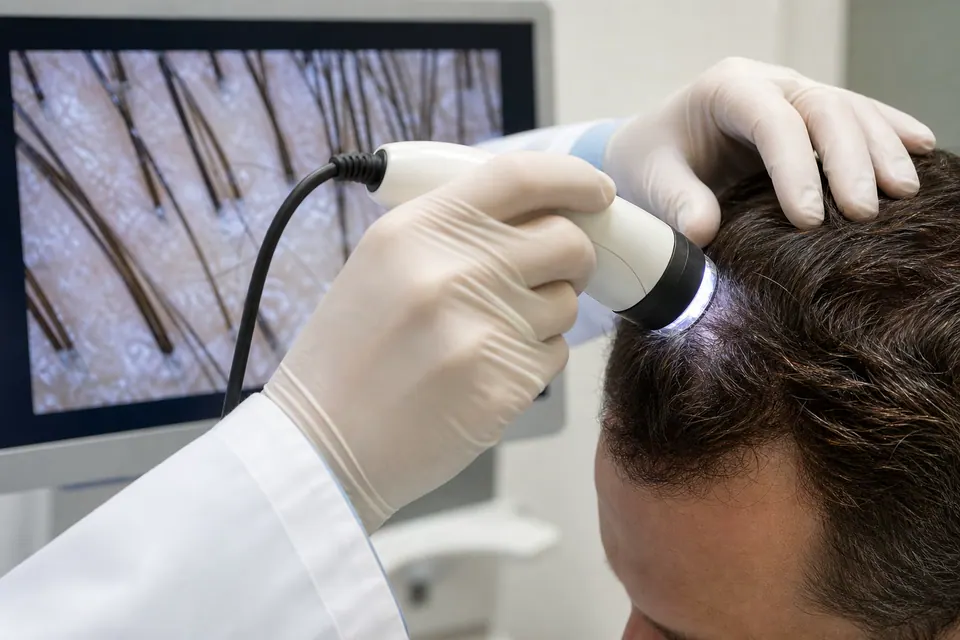
Hair Loss in Women: Causes, Tests and Treatment — Trichologist Advice
Hair loss in women: after childbirth and telogen effluvium, iron deficiency, thyroid, female pattern thinning. Trichoscopy, tests and treatment. Trichologists in Fergana and Kokand.
Read more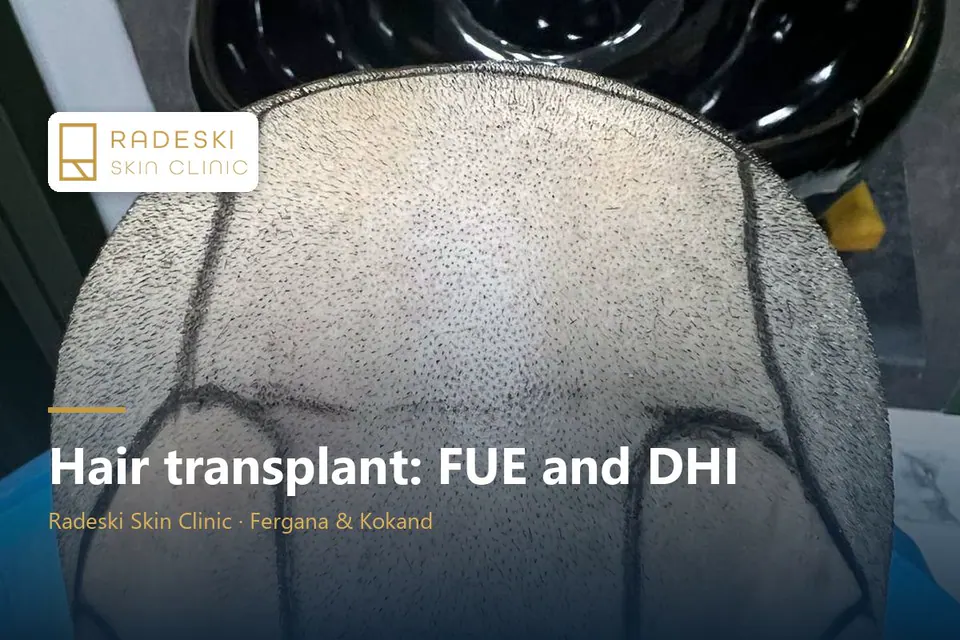
Hair Transplant with FUE and DHI: The Process, Results and What Affects the Price
Hair transplant with FUE and DHI: grafts and the donor area, the steps of the operation, what affects the result and price, and when you see results. Radeski — Fergana.
Read more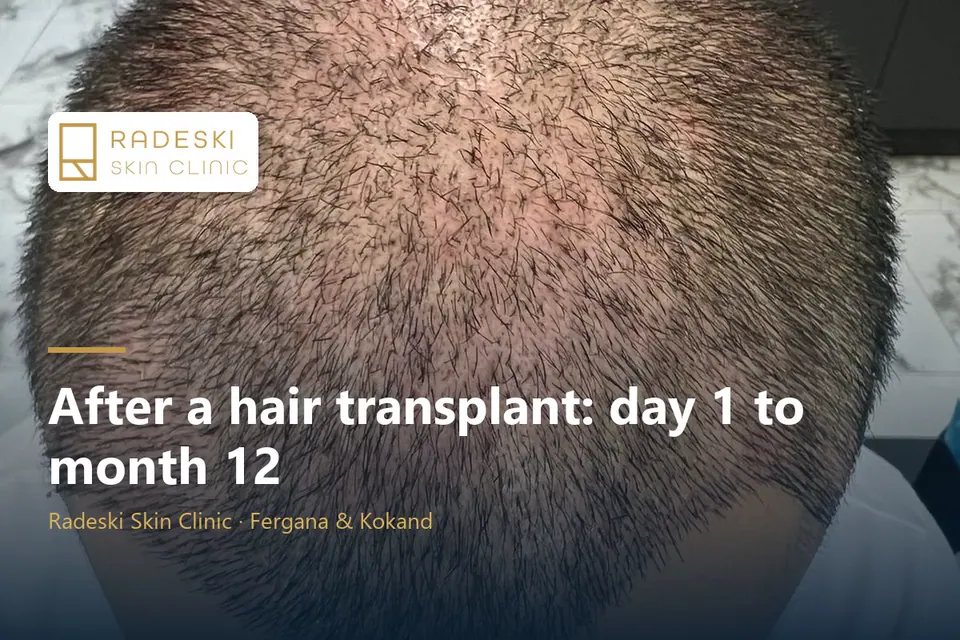
After a Hair Transplant: Aftercare from Day One to Month 12 and What Is Normal
Aftercare after a hair transplant: what is normal from day one to month 12, crusts, shock loss, what to avoid and when to call the doctor.
Read more