
Cracked Heels: Causes, Home Care and Podiatrist Help
Cracked heels: why they appear, when they signal a disease, good home care (urea cream), podiatric treatment and warning signs. Podiatrists in Fergana and Kokand.
Key takeaways
- Cracked heels are dry, thickened skin splitting; they are more common in winter
- A deep crack is a wound: it hurts, bleeds and can become infected
- Urea cream and cotton socks overnight are the most effective home care
- Cracks that do not heal with care can signal fungus, eczema or diabetes
- A podiatrist painlessly removes thick skin, after which cracks heal quickly
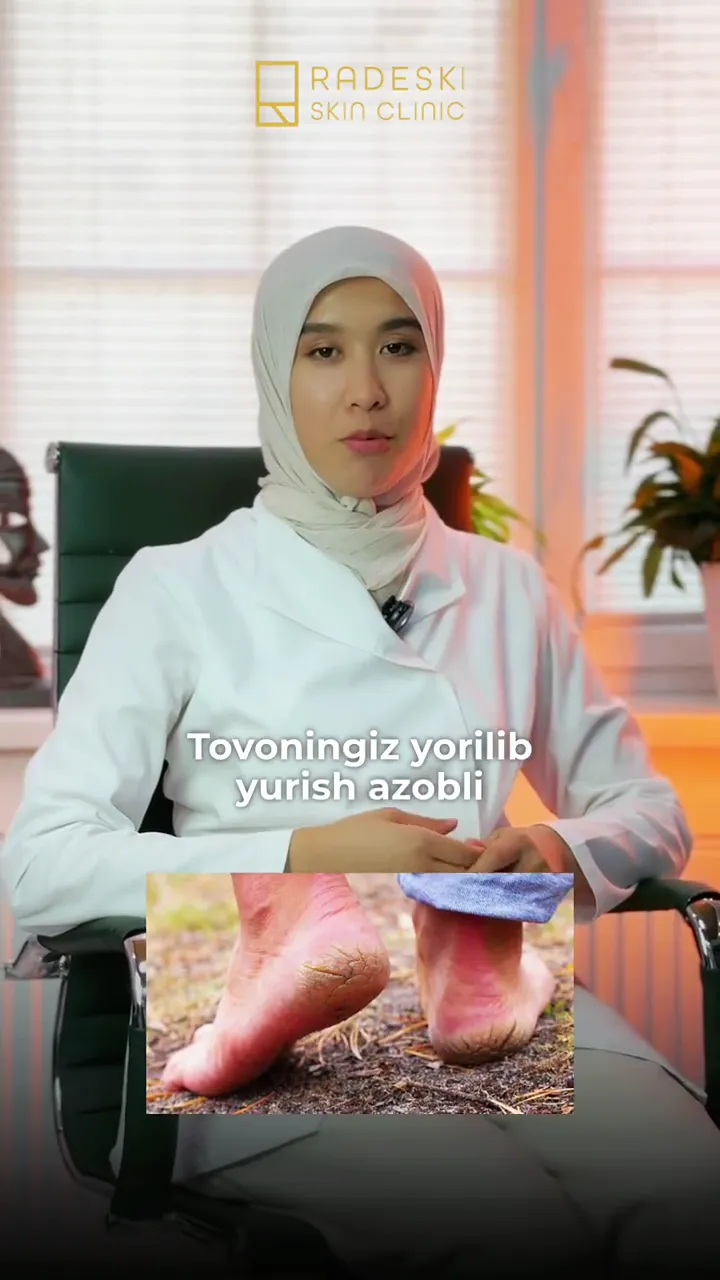
Cracked heels happen when the skin of the heels dries out, thickens and splits. Many people think of it as a cosmetic issue. But deep cracks hurt, bleed and become an open door for infection. In winter, when the air is dry, cracks become especially common.
Why do heels crack?
- Dry skin — cold air, heating, hot water and soap strip away moisture.
- Thickened skin — constant pressure makes the heel skin thick and inflexible; the thick layer splits under load.
- Open-back shoes and walking barefoot — the heel spreads sideways.
- Excess weight and long hours standing.
- Medical conditions — athlete's foot, eczema, psoriasis, diabetes, thyroid disease.
If cracks do not heal despite good care, or come with itching and flaking, the cause is often a condition such as a fungal infection or eczema.
Warning signs
- a crack is deep, bleeds or hurts;
- redness, swelling or pus around it;
- any crack in someone with diabetes — it can turn into an ulcer.
Good home care
- Soak your feet in warm (not hot) water for 10 minutes, then gently use a pumice stone — do not scrub hard.
- Apply a urea cream every evening — it softens thick skin and holds in moisture.
- Put on cotton socks overnight after the cream.
- Wear closed, comfortable shoes and avoid walking barefoot.
- Drink enough water.
With regular care, most people see a clear improvement in 2–3 weeks.
Do not: cut thick skin with a knife or razor, pour alcohol or iodine into cracks, or scrub a bleeding crack.
How does a podiatrist help?
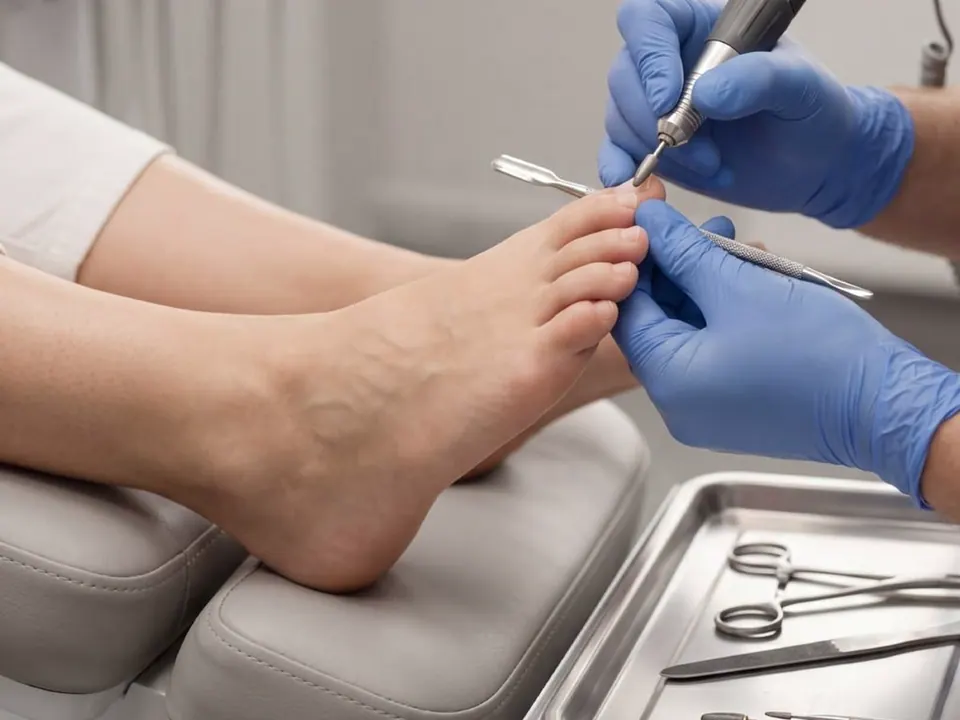
- Device treatment — thickened skin is removed painlessly and the edges of cracks smoothed, so they heal faster.
- Finding the cause — if fungus, eczema or another condition is suspected, the feet are examined together with a dermatologist.
- A care plan — advice on creams, shoes and insoles if needed.
If the thick skin on your heels is linked to calluses, see calluses and corns.
Cracked heel treatment in Fergana and Kokand
At the Radeski Skin Clinic nail and foot clinic a podiatrist treats the heels painlessly, finds the cause of the cracks and builds a care plan.
- Podiatrist in Fergana and in Kokand;
- winter care: winter skin care.
Cracked heels are easy to treat early: cream and care heal a small crack, while a deep one needs a specialist.
When to see a doctor
- A crack is deep, bleeds or hurts
- Redness, swelling or pus around it
- Diabetes — for any crack
- Care has not helped in 2–3 weeks
- Cracks come with itching and flaking
Frequently asked questions
Hashtags
#Crackedheels#Footcare#Dryskin#Podiatrist#Footclinic#Fergana#Kokand#RadeskiSkinClinic
Important note: This article is for general information only and does not replace a medical consultation.
Related clinic services
Videos on this topic

More helpful articles
Calluses and Corns: Why They Form and How a Podiatrist Removes Them
Calluses and corns: why they form, how they differ from warts, painless removal by a podiatrist, and what to do and avoid at home. Podiatrists in Fergana and Kokand.
Read more
Fungal Skin Infections: Feet, Body and Groin — Signs, Testing and Treatment
Fungal skin infections: feet, body, groin, scalp, pityriasis versicolor and candida. Signs, the skin scraping test, the steroid cream mistake, treatment and prevention. Dermatologists in Fergana and Kokand.
Read more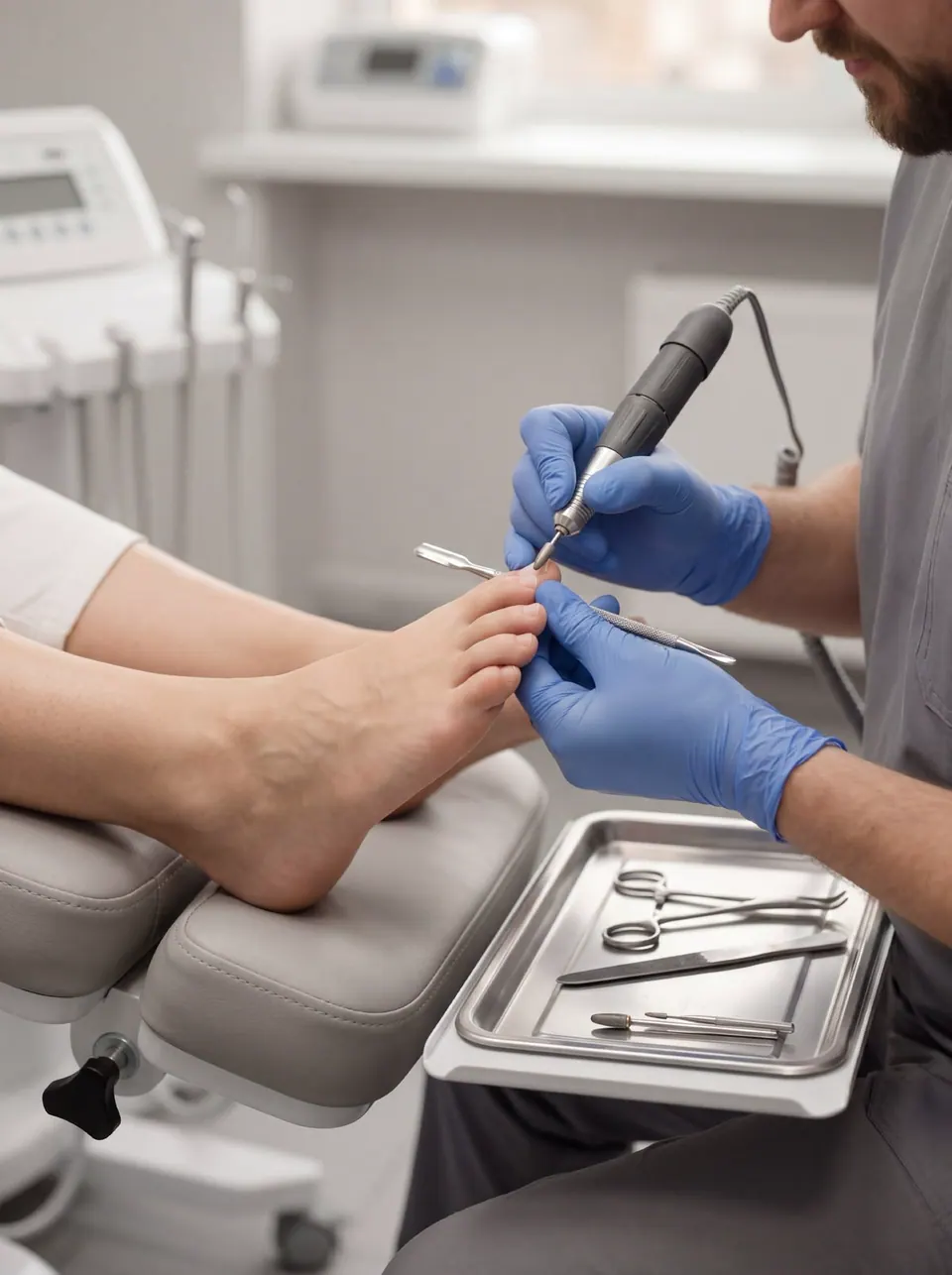
Nail Fungus (Onychomycosis): Signs, Causes and Treatment — Podiatrist Advice
Nail fungus (onychomycosis): yellow, thick, crumbling nails. Signs, lab confirmation, podiatric nail care and how long treatment takes. Podiatrists and dermatologists in Fergana and Kokand.
Read more