
Ingrown Toenail (Onychocryptosis): Causes, Stages and Treatment by a Podiatrist
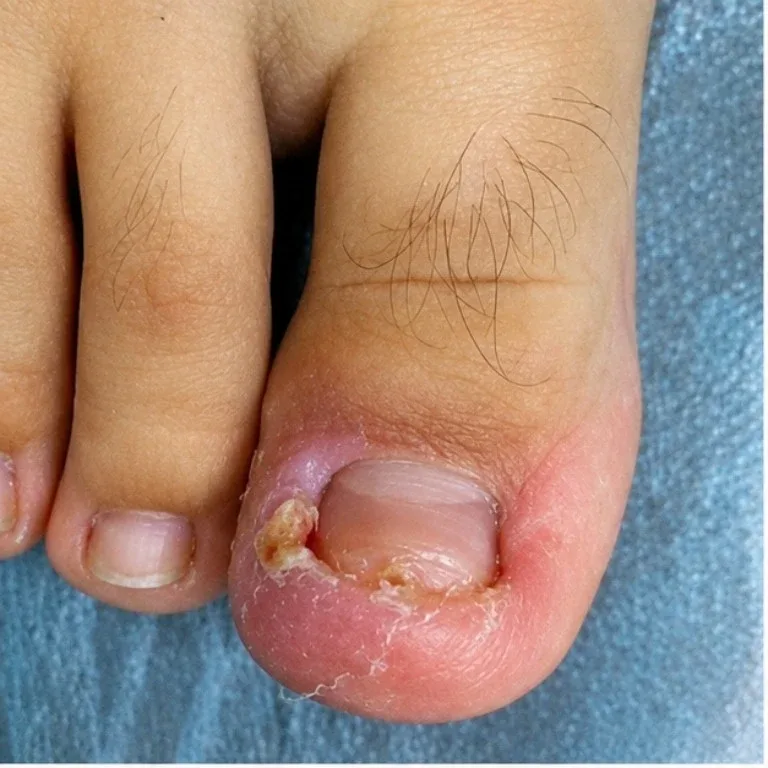
Ingrown toenail: causes, stages, what not to do at home, when you need urgent help and how the nail can be corrected without surgery. Podiatrists in Fergana and Kokand.
Key takeaways
- The commonest causes are rounded, too-short nail corners and tight shoes
- In the early stage it can often be helped without surgery — with processing and correcting systems
- Do not cut out the nail corner, dig under the nail or squeeze pus
- Pus, spreading redness, fever or diabetes — see a doctor urgently
- Cut nails straight across and wear shoes that do not squeeze the toes
An ingrown toenail (onychocryptosis) is when the side edge of a nail grows into the soft skin next to it. The big toe is affected most often. At first it seems like a minor nuisance: a little redness and pain in shoes. Over time, though, inflammation, pus and pain that makes walking difficult can develop. The good news: if you come early, it can often be helped without surgery. This article is a general guide; for a real case from a podiatrist's practice, read our clinical case.
What is an ingrown toenail?
A healthy nail plate grows straight forward along the nail bed. If its side edge or a sharp corner pushes into the skin, the skin treats it as a "foreign body": it swells, becomes inflamed and a small wound forms beside the nail. Because body weight presses on the toe with every step, the inflammation rarely settles on its own.
Why does a nail grow in?
- Cutting the nail wrongly — rounding the corners and cutting too short is the most common cause: the edge grows back into the skin.
- Tight, narrow shoes — pointed toes, high heels or too small a size squeeze the toes together.
- Injury — stubbing the toe or dropping something heavy on the foot.
- Heavy sweating — moist skin softens and the nail edge cuts into it more easily.
- Nail shape and heredity — some people naturally have wide nails or nails with edges that curve down; this can run in families.
- Sport and strain — football, running, dancing and long walks bring repeated knocks and pressure on the nail.
Fungus can also thicken a nail and change its shape — more: nail fungus.
Stages
- Early stage — redness beside the nail edge, pain when pressed and in shoes.
- Inflamed stage — swelling increases, the skin feels hot and pus may come from the nail edge.
- Chronic stage — red, easily bleeding "wild flesh" (granulation tissue) grows over the nail edge and the pain becomes constant.
The earlier you come, the simpler and shorter the treatment.
What not to do at home
- do not cut out the corner of the nail with scissors — next time it grows in even deeper;
- do not dig under the nail with a needle, scissor tips or anything else;
- do not squeeze out pus;
- do not do "surgery" yourself or let a non-medical salon do it — infection can spread deeper;
- do not apply random ointments or folk remedies.
What you can do at home: wash the foot in clean warm water, dry it well, wear open or roomy shoes that do not press on the toe, and book a podiatrist soon.
When to see a doctor urgently
- there is pus or the pain is quickly getting worse;
- redness spreads from the toe onto the foot;
- you have a fever or chills;
- you have diabetes or poor circulation in the legs — then even mild inflammation is dangerous; more: foot care with diabetes;
- it does not improve within a few days, or keeps coming back.
How does a podiatrist treat it?
First the doctor examines the toe, assesses the inflammation and the shape of the nail, and rules out fungus and other causes. The method is then chosen for the situation:
- Careful processing — the ingrown edge is freed with a sterile instrument, the nail and surrounding skin are cleaned, and thickened areas are thinned with a device. Often this alone noticeably reduces the pain.
- Correcting systems — a special brace, plate or wire is fitted to the nail. It gradually and gently straightens the nail and lifts its edge away from the skin. This is a step-by-step process lasting weeks or months; the system is checked and adjusted from time to time.
- Treating inflammation — local treatments prescribed by the doctor, if needed.
- A minor surgical procedure — in advanced or recurrent cases the doctor may remove the ingrown edge of the nail under local anaesthetic. The doctor decides which method is right.
Cutting nails correctly and choosing shoes
- cut the nail straight across without rounding the corners;
- do not cut too short — the edge should be roughly level with the tip of the toe;
- only lightly smooth sharp corners with a file;
- cut nails after washing, when they are softer;
- shoes should leave the toes room and have a wide toe box; try them on in the evening, when the feet are slightly swollen;
- for sport, wear shoes that fit and cotton socks, and keep your feet dry.
Hard skin on the toes and heels can also be a sign of pressure: calluses and corns.
Ingrown toenail treatment in Fergana and Kokand
At the Radeski Skin Clinic nail and foot clinic a dermatologist-podiatrist examines the ingrown nail, treats the inflammation and helps the nail grow correctly.
Do not cut out the nail corner yourself: seeing a podiatrist early shortens the pain and often spares you surgery.
When to see a doctor
- Redness and pain at the nail edge do not settle within a few days
- There is pus or the pain is quickly getting worse
- Redness spreads onto the foot or you have a fever
- You have diabetes or poor circulation in the legs
- "Wild flesh" grows at the nail edge or the problem keeps coming back
Frequently asked questions
Hashtags
#Ingrowntoenail#Onychocryptosis#Bigtoe#Podiatrist#Footclinic#Fergana#Kokand#RadeskiSkinClinic
Important note: This article is for general information only and does not replace a medical consultation.
Related clinic services
More helpful articles
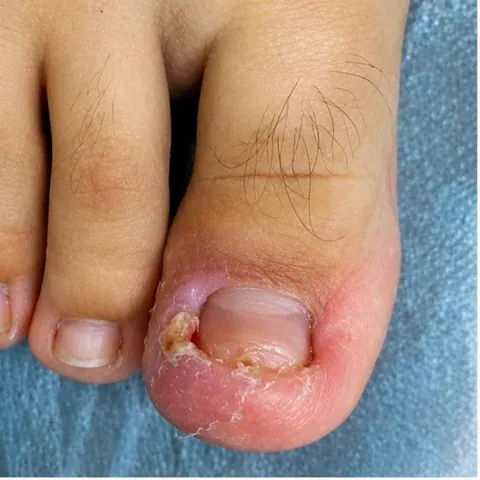
Ingrown Toenail (Onychocryptosis): Clinical Case — From Visit to Recovery
Real clinical case in Kokand: ingrown toenail (onychocryptosis) treatment journey — from first visit to 6-month outcome. Iroda Karimova, Radeski Skin Clinic.
Read more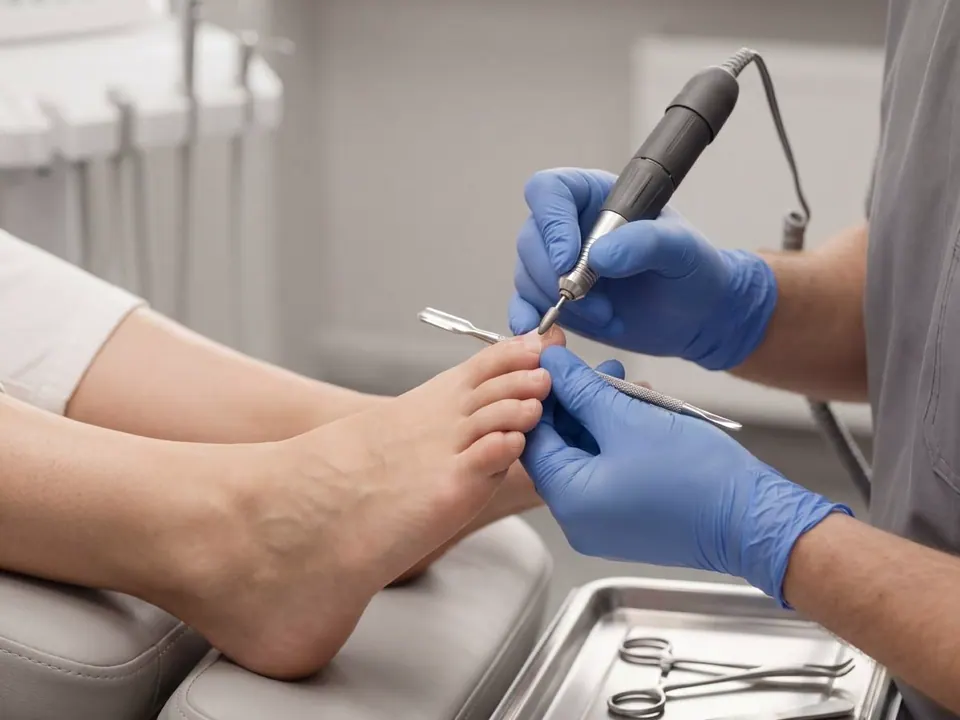
Foot Care with Diabetes: Warning Signs and Daily Rules
Foot care with diabetes: when to see a doctor the same day, why feet are at risk, daily care, what never to do and how a podiatrist helps. Fergana and Kokand.
Read more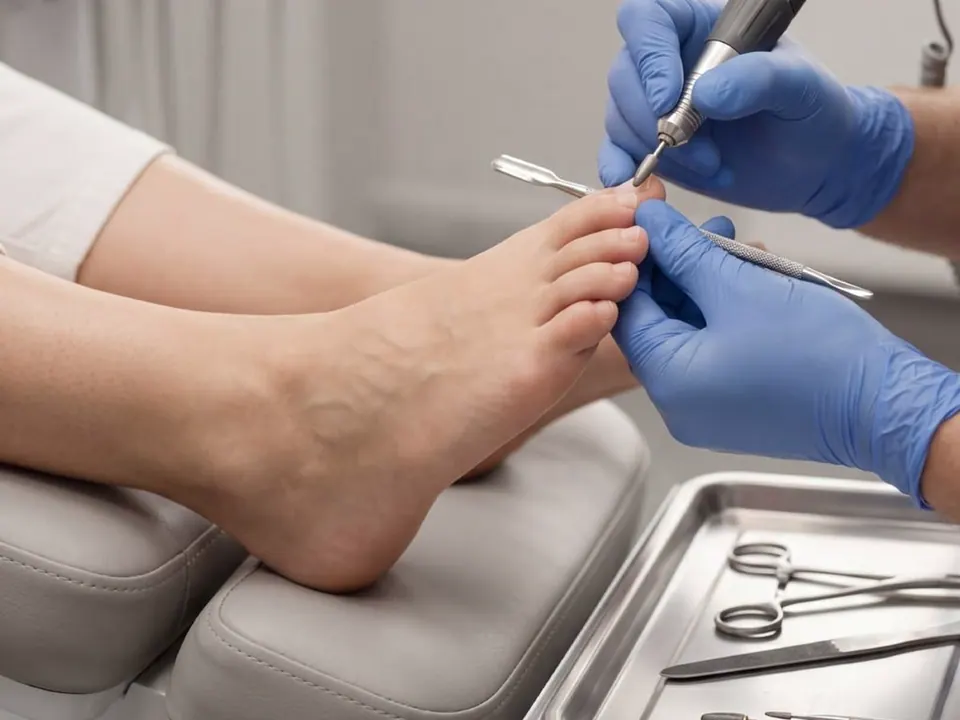
Cracked Heels: Causes, Home Care and Podiatrist Help
Cracked heels: why they appear, when they signal a disease, good home care (urea cream), podiatric treatment and warning signs. Podiatrists in Fergana and Kokand.
Read more