
Brittle and Splitting Nails: Causes, Warning Signs and the Right Care
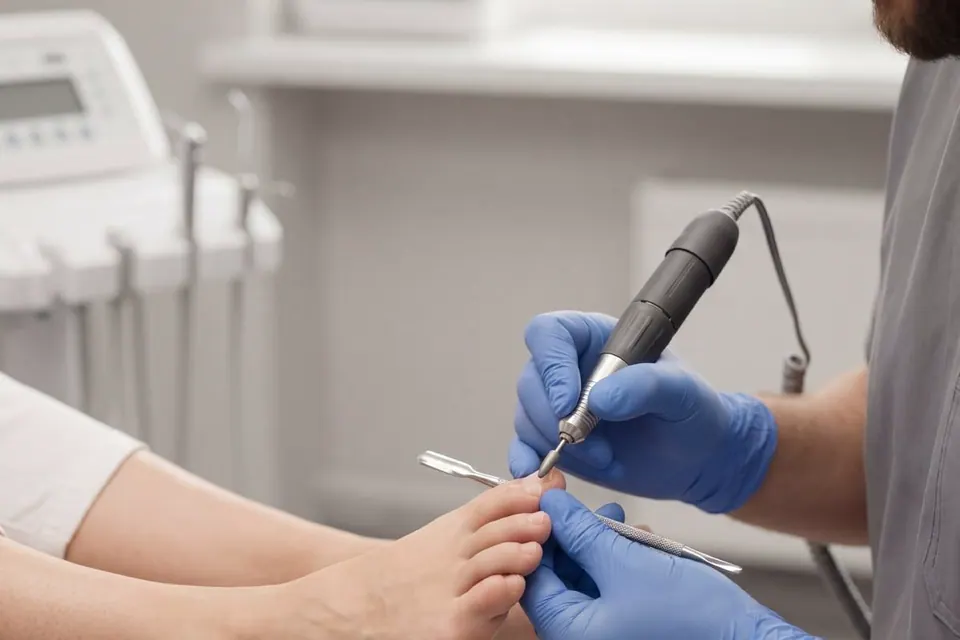
Brittle and splitting nails: water, winter air and gel polish, fungus and psoriasis, warning signs, clinic checks and care at home. Podologists in Fergana and Kokand.
Key takeaways
- The usual causes are water, detergents, dry winter air and gel polish
- Thickening, colour change, lifting or a change in a single nail needs a doctor
- Do not use antifungal products without a test
- An exam, nail dermatoscopy and a fungus test find the cause
- Nails grow slowly — improvement shows over months
Brittle and splitting nails are one of the most common nail complaints. The tip breaks, peels into layers, the edges crack and polish chips within a day or two. Most often the cause is external — water, detergents, dry air — and the right care makes a real difference. Sometimes, though, brittleness is the first sign of nail fungus, psoriasis or another condition. So it helps to know when a cream is enough and when to see a doctor.
What are brittle nails?
The nail plate is made of many thin layers of keratin. When the balance of moisture and lipids between them is lost, the nail loses its strength:
- brittleness — the tip breaks or cracks easily;
- splitting — the free edge separates into horizontal layers;
- lengthwise cracks — fine lines and splits along the nail.
It mostly affects fingernails, especially in women and during the winter months.
Why do nails become brittle?
- Water and detergents — washing dishes, laundry and cleaning without gloves make the nail swell and then dry out again and again. This is the most common cause.
- Cold, dry winter air — heating dries the air, and nails and cuticles lose moisture. On winter care: winter skin care.
- Frequent gel polish and harsh removal — filing, scraping and long acetone soaks thin the top layers.
- Nail injuries — knocks, using nails as tools, biting.
- Age — over the years nails grow more slowly and become drier.
- Iron deficiency and thyroid problems — can affect nail quality; the doctor decides which blood tests are needed.
- Nail fungus — the nail thickens, turns yellow and crumbles; more: nail fungus.
- Nail psoriasis — pinpoint pits, spots and lifting of the nail; more: psoriasis.
- Lichen planus — can cause lengthwise ridges and thinning of the nail; more: lichen planus.
Signs it may be more than cosmetic
With ordinary dryness several nails are usually brittle to a similar degree. See a doctor if:
- a nail thickens or crumbles;
- the colour changes — yellow, white, brown or black patches;
- the nail lifts from its bed, leaving a gap underneath;
- there are pinpoint pits or crosswise lines;
- only one nail has changed;
- there is pain, redness, swelling or pus.
A new dark lengthwise streak under a nail, especially one that is widening, should be shown to a doctor without delay. Severe pain, swelling and pus around a nail also need prompt care. More on nail colour: nail colour changes.
What not to do at home
- Biting nails or peeling off the loose layers.
- Cutting cuticles at home — they protect the nail, and a cut lets infection in.
- Frequently using "strengthening" polishes with formaldehyde — they can make nails even more brittle and irritate the skin.
- Treating yourself with antifungal products without a test — brittleness is not always fungus, and the wrong treatment makes diagnosis harder.
How the clinic checks
- Podologist or dermatologist exam — the nails, cuticles and the skin of the hands and feet are examined, and you are asked about habits and work.
- Nail dermatoscopy — pits, lines, spots and lifting are assessed under magnification.
- Fungus test — the clinic does a nail fungus analysis; it matters for choosing the right treatment.
- Blood tests — ordered by the doctor if needed.
How the clinic helps
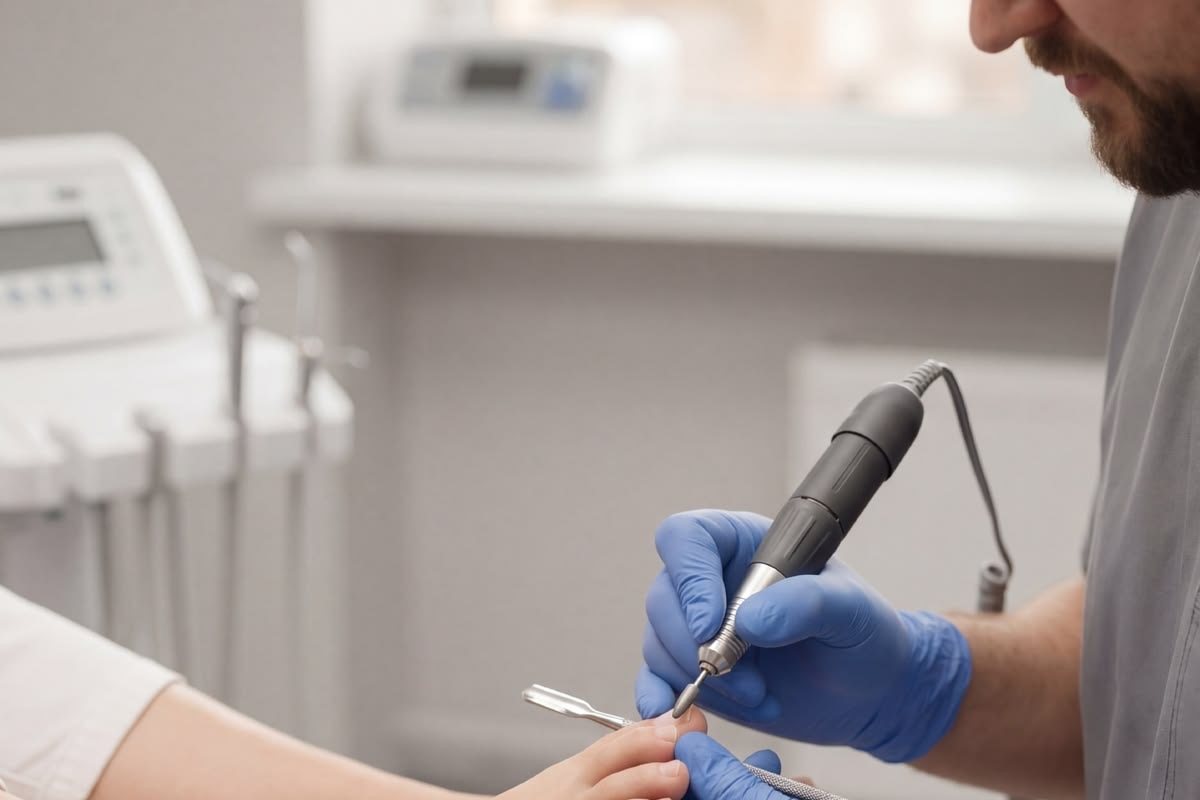
Treatment depends on the cause. In podology care the nail is gently worked with an apparatus: thickened and lifted parts are cleaned away, the edges are smoothed and the nail is given a shape that breaks less. If fungus, psoriasis or another condition is found, the cause itself is treated with what the doctor prescribes. If the cause is external, the main help is changing everyday care.
Care at home
- Wear rubber gloves with a cotton lining for housework — dishes, laundry, cleaning.
- Keep nails short and file them in one direction rather than sawing back and forth.
- In winter apply hand and cuticle cream after every wash and at night.
- Take breaks from gel polish and leave its removal to a professional.
- Remove ordinary polish gently with an acetone-free remover.
- Eat a balanced, varied diet. Vitamins cannot promise a quick fix — take them only after tests and on a doctor's advice.
Be patient: a fingernail usually takes about 4–6 months to grow out completely, a toenail even longer. So improvement shows over months, not weeks.
Brittle nail care in Fergana and Kokand
At Radeski Skin Clinic's nail pathology clinic a podologist and dermatologist find the cause of brittleness, run a fungus test if needed and treat the nails with an apparatus as part of dermatological podology.
Brittle nails usually respond well to care — the key is finding the cause early and correctly.
When to see a doctor
- A nail thickens, crumbles or lifts from its bed
- The nail changes colour or a dark streak appears under it
- There are pinpoint pits or lines on the nail
- Only one nail has changed
- Pain, swelling or pus around the nail
Frequently asked questions
Hashtags
#Brittlenails#Splittingnails#Nailcare#Podologist#Nailfungus#Fergana#Kokand#RadeskiSkinClinic
Important note: This article is for general information only and does not replace a medical consultation.
Related clinic services
More helpful articles
Nail Color Changes: What They Mean and When They Are Dangerous
Nail color changes: what yellow, white, green and black nails or a dark stripe mean, when melanoma must be ruled out and how nails are examined. Podiatrists in Fergana and Kokand.
Read more
Fungal Skin Infections: Feet, Body and Groin — Signs, Testing and Treatment
Fungal skin infections: feet, body, groin, scalp, pityriasis versicolor and candida. Signs, the skin scraping test, the steroid cream mistake, treatment and prevention. Dermatologists in Fergana and Kokand.
Read more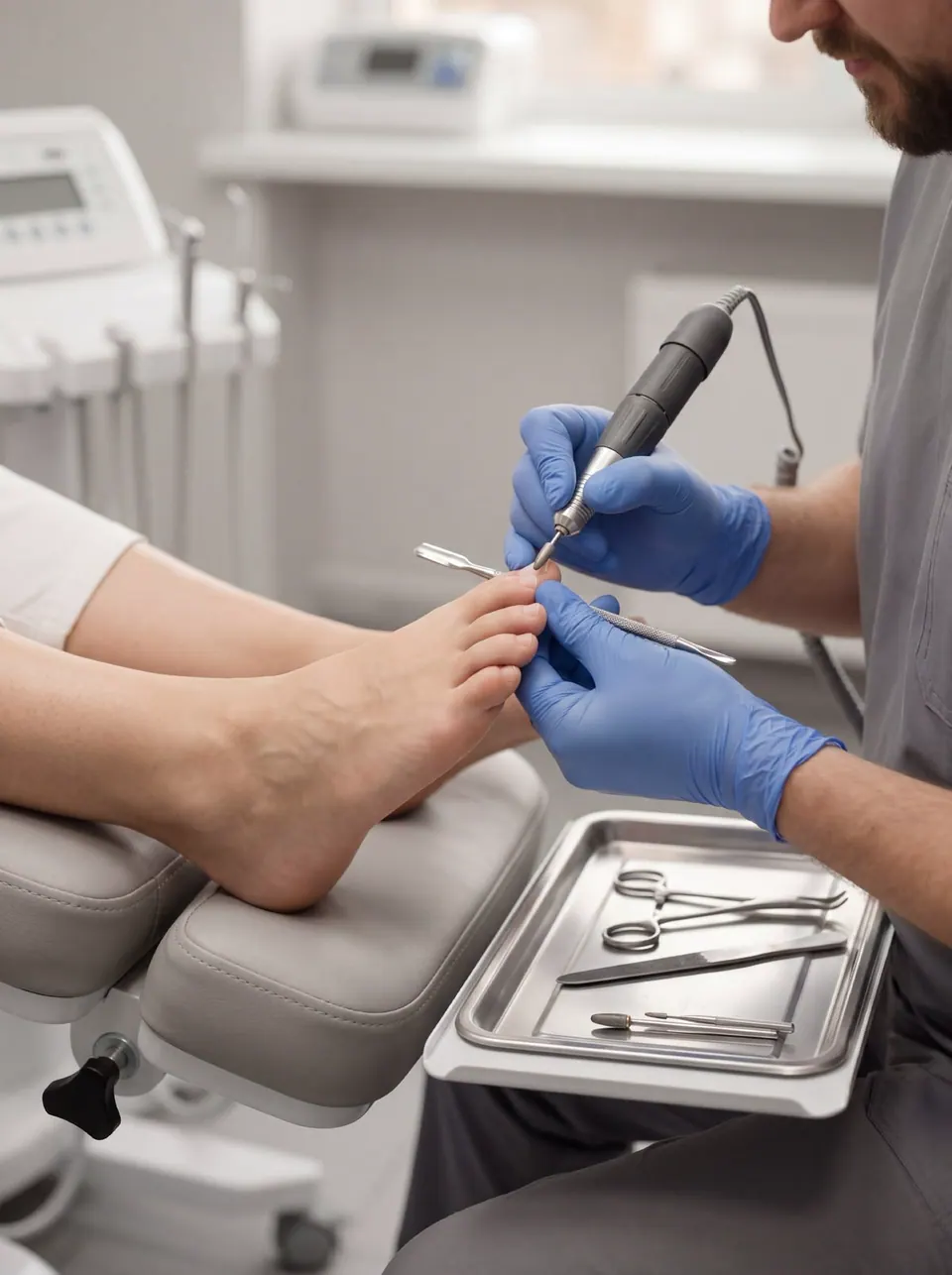
Nail Fungus (Onychomycosis): Signs, Causes and Treatment — Podiatrist Advice
Nail fungus (onychomycosis): yellow, thick, crumbling nails. Signs, lab confirmation, podiatric nail care and how long treatment takes. Podiatrists and dermatologists in Fergana and Kokand.
Read more