
Nail Color Changes: What They Mean and When They Are Dangerous
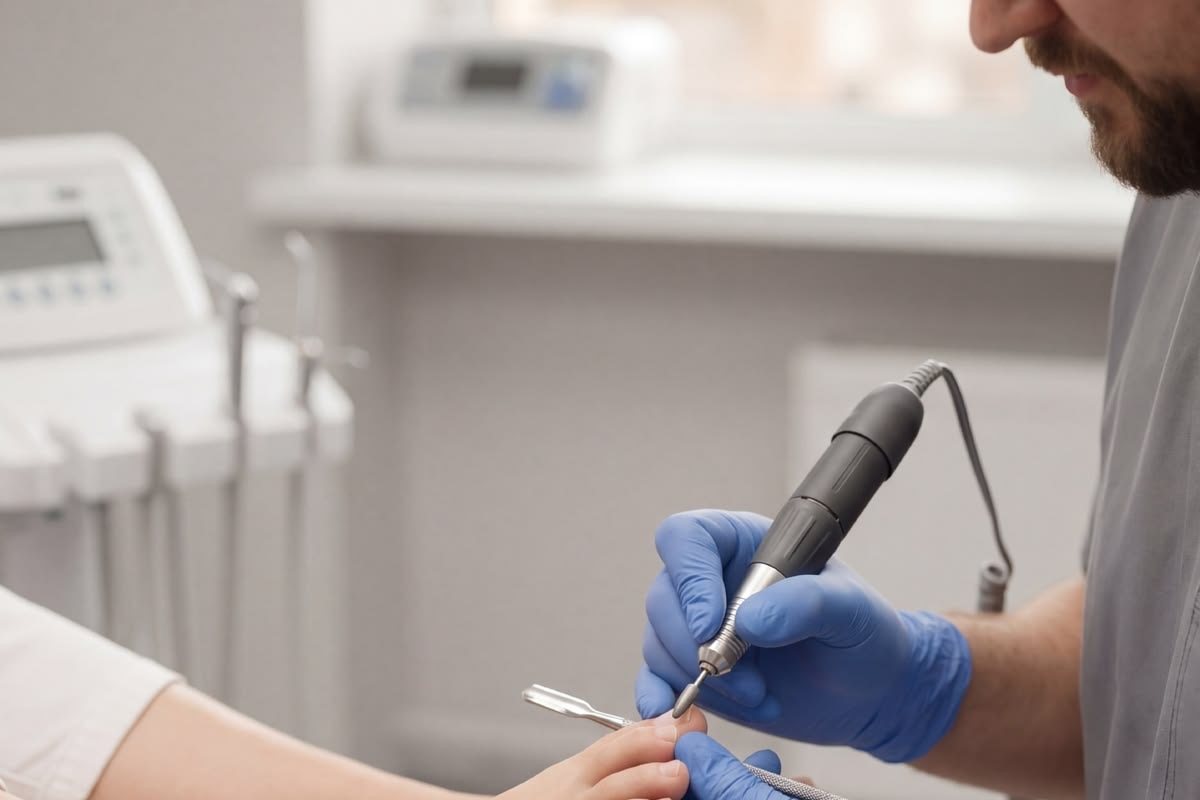
Nail color changes: what yellow, white, green and black nails or a dark stripe mean, when melanoma must be ruled out and how nails are examined. Podiatrists in Fergana and Kokand.
Key takeaways
- Yellow, thick nails are often fungus, but polish and smoking can cause them too — a test is needed
- Small white spots are marks of minor injuries, not a "lack of calcium"
- A fully or half-white nail can be linked to internal disease — see a doctor
- A new, widening or blurred dark stripe needs an urgent check to rule out melanoma
- The clinic uses examination, nail dermoscopy, microscopy and, if needed, a biopsy
A nail is a small "window" onto your health. A healthy nail is smooth, semi-transparent and pink from the skin beneath it. When the color changes, the cause is usually simple: nail polish, a minor knock or fungus. Sometimes, though, it is the first sign of an internal illness or even melanoma. Here is what each color can mean and when to see a doctor.
See a doctor promptly if:
- a new brown or black stripe appears on a nail and gets wider;
- the stripe has blurred edges, uneven color, or the pigment spreads onto the skin around the nail;
- a dark spot under the nail appears without any injury or does not move as the nail grows;
- the skin around the nail is red, swollen, painful or oozing pus;
- several or all nails change color at once.
Yellow, thickened nails
The most common cause is nail fungus (onychomycosis). The nail turns yellow, thickens and crumbles, usually starting at the free edge. More: nail fungus.
There are other causes too:
- dark polish worn for a long time without a base coat — the nail yellows evenly and recovers gradually after a break;
- smoking — fingernails take on a yellow-brown tint;
- age-related changes, psoriasis and sometimes internal diseases.
Fungus cannot be reliably told apart from other causes by looks alone — a test is needed.
White spots and white nails
Small white spots and lines are usually left by minor injuries to the nail's growth zone, such as a knock or a cuticle pushed back too hard. That they mean a "lack of calcium" is a myth. They grow out with the nail.
It is different when the whole nail turns white, or is half white and half pink-brown. This can be linked to liver, kidney or blood disorders. See a doctor, who will decide which tests are needed.
Green nails
A green or green-black color usually points to a bacterial infection. Bacteria multiply in the damp gap that forms when the nail plate lifts off its bed. It is common when hands are often in water and after artificial nails. The doctor chooses the treatment; keeping hands dry matters.
A black or blue-purple spot after a blow
After a finger is struck or a toe is squeezed by tight shoes, blood collects under the nail — a hematoma. The spot is red-purple at first, then dark blue or black. It moves forward with the nail and grows out, which takes months on a toenail. See a doctor if the pain is severe, most of the nail is dark or a bone may be injured. If a dark spot appeared without an injury and does not move, it may not be a hematoma.
A brown or black lengthwise stripe
A brown band running along the nail is melanonychia. In people with darker skin, similar thin stripes on several nails are usually harmless. But an urgent check to rule out nail melanoma is needed when:
- the stripe is new, especially in an adult and on a single nail;
- the stripe is getting wider or darker;
- its edges are blurred and it contains lines of different shades;
- the pigment has spread onto the cuticle and the skin around the nail;
- the nail plate has split or become deformed.
Like moles, nails are examined with a dermatoscope; more: moles and dermoscopy.
Pits and "oil-drop" spots
Tiny pits on the surface, as if the nail had been pricked with a needle, and yellowish-pink "oil-drop" patches under the plate are typical signs of psoriasis. They appear together with skin plaques and sometimes with joint pain. More: psoriasis.
Nail lifting (onycholysis)
The nail plate separates from its bed, starting at the tip, and the lifted part looks white or yellowish. Causes include injury, long nails, household chemicals, fungus, psoriasis, thyroid problems and some medicines. Infection develops easily under a lifted nail.
What not to do at home
- Do not hide a changed nail under polish or artificial nails — it delays the diagnosis.
- Do not treat "fungus" yourself without a test: if it is not fungus, time is lost; if it is, a later test may be distorted.
- Do not try to cut, scrape or pierce the dark area.
- Do not apply harsh products to the skin around the nail.
How the clinic examines nails
- Examination — the doctor looks at all nails, the skin and, if needed, the joints.
- Nail dermoscopy — magnifies the structure of a stripe, spot or pits.
- Microscopy and culture — nail scrapings are tested to confirm or rule out fungus.
- Biopsy — when a stripe looks suspicious; the tissue is examined histologically, more: dermatopathology.
- If needed, blood tests or another specialist's opinion.
Treatment depends on the cause: for fungus, products prescribed by the doctor plus podiatric care; for psoriasis, overall treatment; for a hematoma, observation. Nails grow slowly, so results show over months.
Everyday nail care
- Cut nails straight across and not too short; do not cut the cuticles.
- Wear gloves for housework and keep your hands dry.
- Use a base coat under polish and give your nails a "rest" from time to time.
- Wear roomy, comfortable shoes.
- Check your nails once a month and photograph any new stripe or spot.
Nail color changes checked in Fergana and Kokand
At Radeski Skin Clinic a dermatovenereologist-podiatrist examines the nail, performs dermoscopy and the necessary tests, and draws up a treatment plan.
- Podiatrist in Fergana and in Kokand;
- Nail fungus treatment in Fergana and in Kokand;
- Nail pathology clinic and dermatological podiatry service.
Do not wait for a new dark stripe on a nail to "go away" — an early check is the most reliable protection.
When to see a doctor
- A new brown or black stripe appears on a nail or gets wider
- Pigment spreads onto the skin around the nail
- A dark spot appears without an injury or does not move as the nail grows
- The skin around the nail is red, swollen, painful or has pus
- Several or all nails turn white or change color
Frequently asked questions
Hashtags
#Nailcolor#Nailfungus#Melanonychia#Nailpsoriasis#Podiatrist#Fergana#Kokand#RadeskiSkinClinic
Important note: This article is for general information only and does not replace a medical consultation.
Related clinic services
More helpful articles

Fungal Skin Infections: Feet, Body and Groin — Signs, Testing and Treatment
Fungal skin infections: feet, body, groin, scalp, pityriasis versicolor and candida. Signs, the skin scraping test, the steroid cream mistake, treatment and prevention. Dermatologists in Fergana and Kokand.
Read more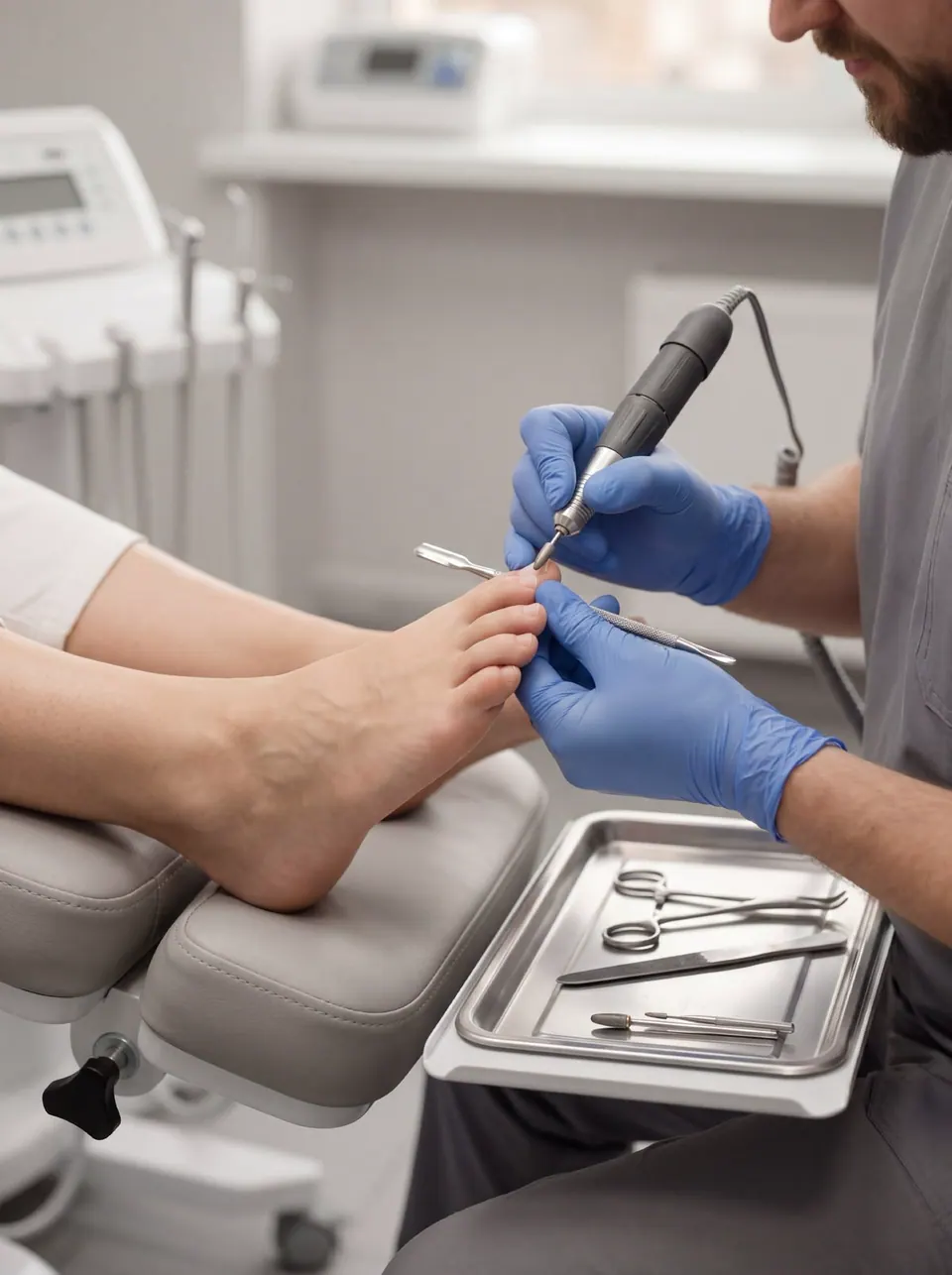
Nail Fungus (Onychomycosis): Signs, Causes and Treatment — Podiatrist Advice
Nail fungus (onychomycosis): yellow, thick, crumbling nails. Signs, lab confirmation, podiatric nail care and how long treatment takes. Podiatrists and dermatologists in Fergana and Kokand.
Read more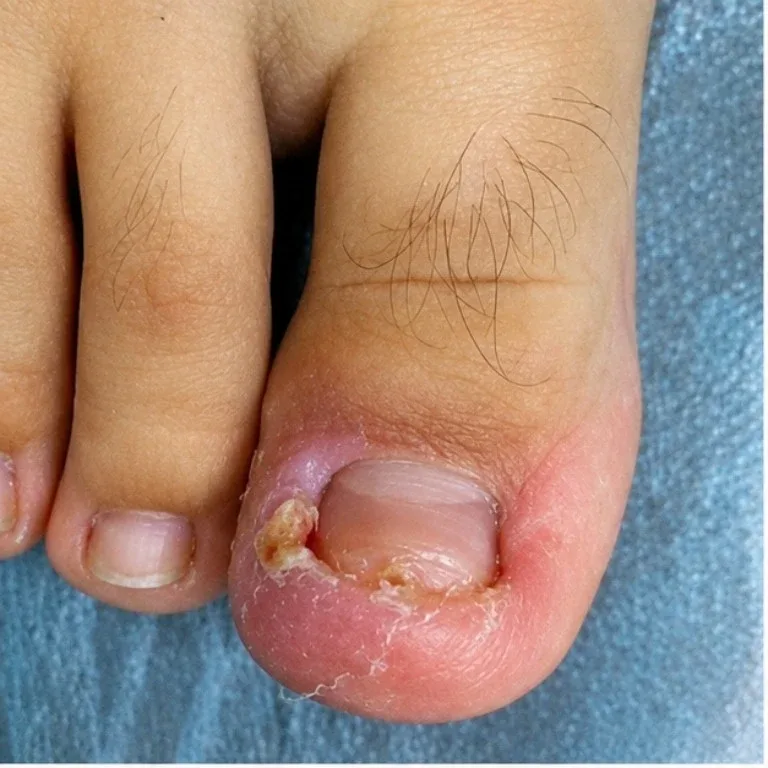
Ingrown Toenail (Onychocryptosis): Causes, Stages and Treatment by a Podiatrist
Ingrown toenail: causes, stages, what not to do at home, when you need urgent help and how the nail can be corrected without surgery. Podiatrists in Fergana and Kokand.
Read more