
Actinic Keratosis: Rough Sun Spots — Why They Matter and How They Are Treated
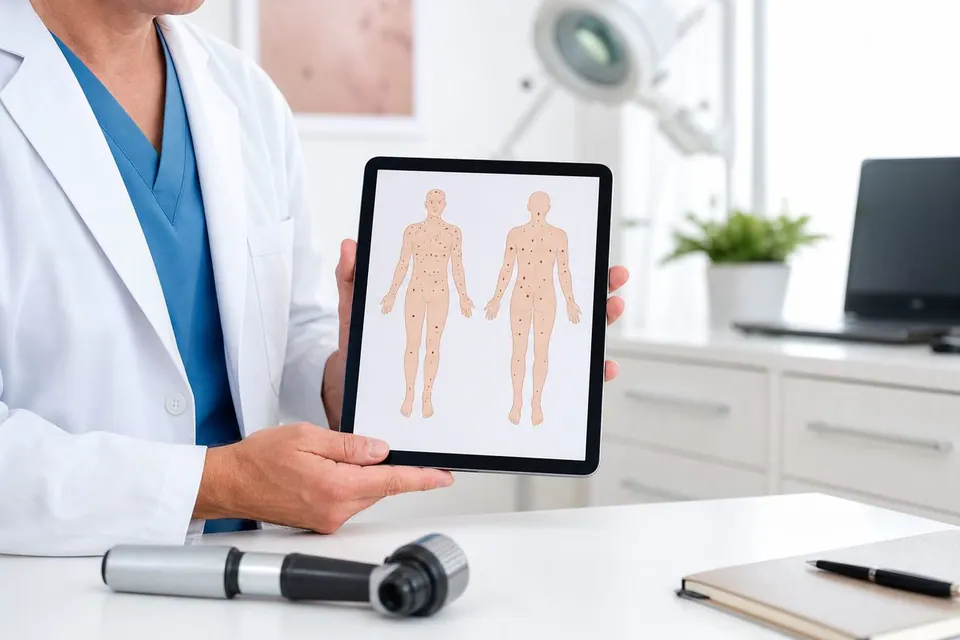
Actinic keratosis — rough, scaly spots on sun-damaged skin: why it is precancerous, how it differs from other spots, red flags, diagnosis and treatment. Oncodermatologists in Fergana and Kokand.
Key takeaways
- Actinic keratosis is a rough, sandpaper-like spot on skin damaged by years of sun
- It is a precancerous change: a small share may turn into squamous cell carcinoma
- It is most common on the face, scalp, ears, hands and lower lip
- Diagnosis is made by dermatoscopy and, if needed, a biopsy
- Daily SPF, a hat and a yearly skin check reduce new spots
Actinic keratosis is a rough, scaly spot on skin that gets a lot of sun. Run a finger over it and it feels like sandpaper — it is often easier to feel than to see. It usually appears after 40 in people who spent years working outdoors: in the fields, on building sites, at the market, behind the wheel. Years under the summer sun of the Fergana valley leave exactly this kind of mark on the skin. It is not just a cosmetic issue: it is a precancerous change, so it should be checked and treated.
What is actinic keratosis?
Actinic (solar) keratosis is a change in skin cells damaged by ultraviolet light over many years. Excess keratin builds up on the surface and forms a rough crust. The spots are usually small — from a few millimetres to 1–2 cm — and pink, reddish, skin-coloured or brown, often several at once.
Why it matters: a small share of actinic keratoses may turn into squamous cell carcinoma of the skin over time. Nobody can tell in advance which spot will take that path, so the doctor assesses each one.
Who gets it and where?
- People who have worked outdoors for years — farmers, builders, drivers, market sellers.
- People with fair skin that reddens easily, and those who often got sunburnt when young.
- People over 40 — the risk grows with age.
- People with weakened immunity, for example after an organ transplant.
The most common sites are the face (forehead, nose, cheeks), the scalp in balding men, the ears, the backs of the hands, the forearms and the lower lip. On the lower lip it is called actinic cheilitis: the lip becomes dry and scaly, its border blurs, and cracks are slow to heal.
Signs
- a rough, sandpaper-like spot — often felt before it is seen;
- a dry crust or scale that comes back after it falls off;
- pink, reddish or brown colour;
- sometimes mild burning, itching or tenderness when clothing rubs it;
- a spot may fade for a while and then return.
How it differs from other spots
- Seborrheic keratosis — raised and "stuck-on", often brown or black; it is benign. More: seborrheic keratosis.
- Age spots (lentigines) — flat, smooth brown spots with no roughness.
- Ordinary dry skin — covers a wide area and softens with moisturiser; actinic keratosis does not go away with cream.
Even when spots look alike, only a doctor can make the diagnosis. About different skin spots: skin spots.
When to see a doctor sooner
These signs may mean a spot is changing more deeply:
- it thickens, becomes a lump or hardens;
- it bleeds or hurts;
- it grows quickly;
- a sore that does not heal, or a crust that keeps re-forming, appears in its place;
- a crack or sore on the lip does not heal within a few weeks.
In these cases do not put off the visit. About another growth common on sun-damaged skin: basal cell carcinoma.
What not to do at home
- scratch the spot, pick off the crust, or scrape it with a knife or razor;
- have it "burned off" or "removed" at a salon without a diagnosis — the nature of the spot stays unknown and the tissue needed for testing is lost;
- apply vinegar, lemon, garlic or other folk acids — they cause burns and scars;
- choose pharmacy creams on your own.
Diagnosis at the clinic
The doctor examines the spots and performs dermatoscopy — looking at the skin's structure through a special magnifying instrument. This helps tell actinic keratosis apart from other growths. If a spot is thick, bleeds or looks suspicious, a biopsy is taken and sent for histology. More: skin biopsy.
Treatment
The doctor chooses the method based on the number, location and thickness of the spots:
- Cryodestruction — freezing the spot with liquid nitrogen; widely used for single spots.
- CO₂ laser — precise vaporisation of the changed layer; it can also be used on the face and lip.
- Removal with histology — for thick or suspicious spots; the tissue is sent for examination.
- Topical treatments prescribed by the doctor — when there are many spots over a wide area, the whole field is treated.
Redness and crusting for a few days after treatment are normal. New spots can appear, so come back for follow-up checks at the times your doctor sets.
Prevention
- SPF every day — on the face, ears, hands and scalp, in winter and on cloudy days too. About winter care: winter skin care.
- A wide-brimmed hat — especially for men with thinning hair.
- A lip balm with sun protection.
- Avoid the midday sun, and wear covering clothes when working in the fields.
- A skin check once a year — especially if you have had actinic keratosis before. More: moles and dermatoscopy.
Actinic keratosis check and treatment in Fergana and Kokand
At Radeski Skin Clinic an oncodermatologist examines the spots with a dermatoscope, takes a biopsy if needed and chooses the right treatment.
- Oncodermatologist in Fergana and in Kokand;
- Dermatoscopy in Fergana and in Kokand;
- Mole and spot check in Fergana and in Kokand;
- Dermato-oncology, DEKA CO₂ laser, Dermatopathology.
Do not ignore a rough spot: an early check often means a simple, short treatment is enough.
When to see a doctor
- A rough, scaly spot appears on sun-exposed skin
- A spot thickens, hardens or grows quickly
- A spot bleeds or hurts
- A sore that does not heal, or a crust that keeps re-forming
- Dryness, scaling or a crack that will not heal on the lower lip
Frequently asked questions
Hashtags
#Actinickeratosis#Solarkeratosis#Roughskinspots#Actiniccheilitis#Oncodermatologist#Fergana#Kokand#RadeskiSkinClinic
Important note: This article is for general information only and does not replace a medical consultation.
Related clinic services
More helpful articles
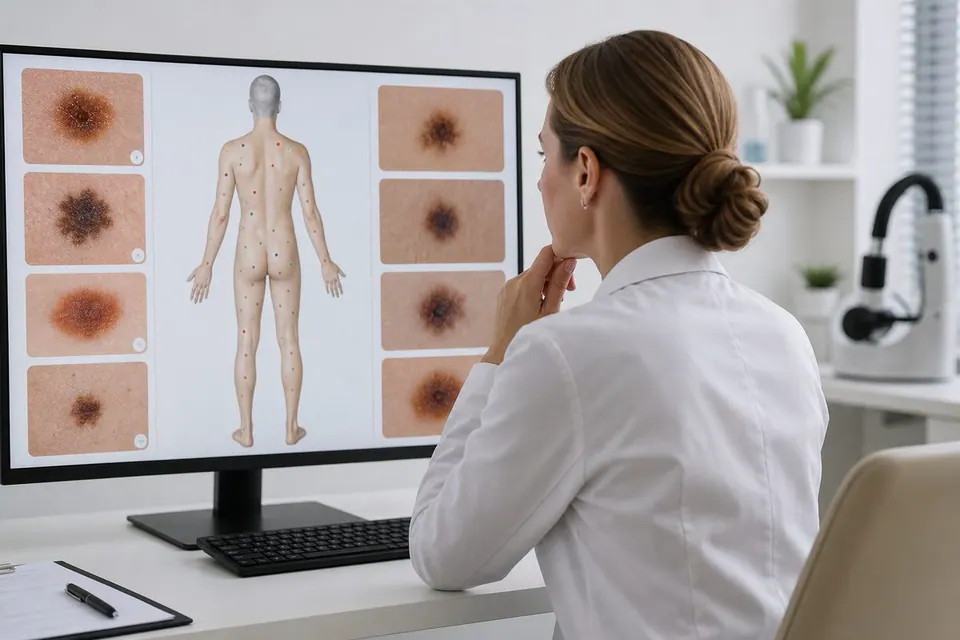
Melanoma: Early Signs, Risk Factors and Why You Should Not Wait
Melanoma — the most dangerous skin tumour: early signs, nail and sole melanoma, risk factors, what not to do and how it is diagnosed. Dermato-oncologists in Fergana and Kokand.
Read more
Basal Cell Carcinoma (Basalioma): Symptoms, Causes, and Treatment
Basal cell carcinoma (basalioma): how it looks, why it develops, when to see a doctor, and how it is treated — a practical guide from Radeski Skin Clinic.
Read more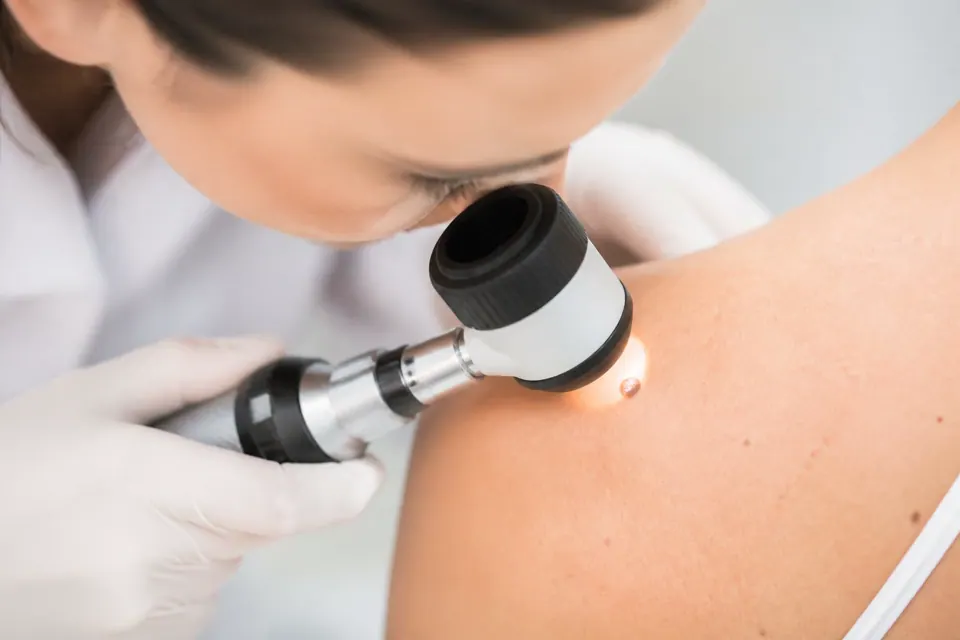
Moles and Dermoscopy: Which Mole Is Dangerous — the ABCDE Rule and Check-ups
When to check a mole: the ABCDE rule, risk groups, dermoscopy and mole mapping, removal and histology. Dermato-oncologists in Fergana and Kokand.
Read more