
Plantar Warts: How They Differ From Calluses, Warning Signs and Treatment
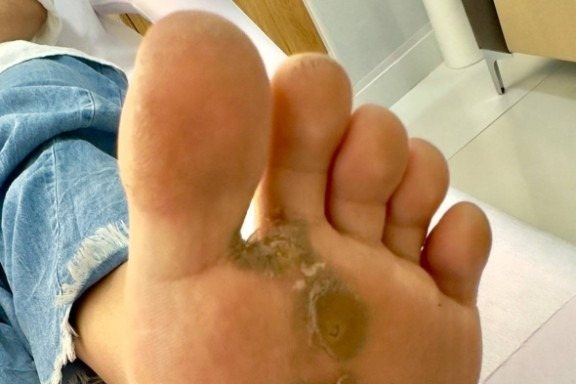
Plantar warts: how HPV spreads, how a wart differs from a callus, warning signs, what not to do at home and treatment with laser, cryo or radio waves. Podiatrists in Fergana and Kokand.
Key takeaways
- A plantar wart is a contagious growth caused by HPV, not a callus
- It spreads at pools, saunas, gyms and through shared slippers
- Pain on side pressure, black dots and broken skin lines point to a wart; a doctor confirms it with a dermatoscope
- With diabetes or poor circulation, never treat it at home
- The doctor chooses the method: CO₂ laser, cryodestruction or radio waves; several sessions are often needed and recurrence is possible
A plantar wart is a hard growth on the heel or ball of the foot that hurts when you walk. Many people take it for an ordinary callus or corn and spend months paring and soaking it, while the wart grows deeper and multiplies. In fact it is a viral infection and needs a different approach. This article is about adults; parents can read about warts in children here: warts in children.
What is a plantar wart?
Warts are caused by the human papillomavirus (HPV). The virus enters the top layer of the skin and makes its cells grow quickly. On the sole, body weight pushes the growth inwards, so a plantar wart barely rises above the skin, grows deeper instead and presses on nerve endings — hence the pain. The same family of viruses causes papillomas elsewhere on the body — more: papillomas.
How does it spread?
The virus survives well in warm, damp places. Most often it is picked up:
- at pools, saunas, bathhouses and showers — when walking barefoot;
- at gyms and changing rooms — wet floors, shared mats;
- through shared slippers, socks or shoes — within the family too;
- through tiny cracks in the skin — dry heels, friction and sweating open the way for the virus.
Not everyone gets infected: immunity, sweaty feet and damaged skin all play a part. Picking or cutting a wart spreads it to other parts of the foot and to the hands.
Signs
- a rough, hard, flat growth on the sole — usually on the heel or under the toes;
- pain is worse when squeezed from the sides than when pressed straight on;
- tiny black dots on the surface — small clotted blood vessels;
- the skin lines do not run across the wart but break off at its edge;
- new small warts appear around it (a "mosaic" wart).
How is it different from a callus?
Calluses and corns come from pressure and friction: the skin lines are preserved, there are no black dots, and pain is worse with direct pressure. A wart is viral, contagious and treated differently. You cannot reliably tell them apart at home — the doctor examines the growth with a dermatoscope and confirms the diagnosis. More about calluses: calluses and corns.
When you must see a doctor
- diabetes or poor circulation in the legs — do not treat it at home by any method; any small wound can turn into an ulcer, more: foot care in diabetes;
- the growth bleeds, changes colour or grows fast;
- there are many warts or they multiply quickly;
- your immunity is weakened (long-term medication, chronic illness);
- the wart is under or next to a nail;
- the pain makes walking hard, or there is redness, swelling or pus around it.
Any growth that bleeds or changes must be told apart from other tumours by a doctor.
What not to do at home
- do not cut it out with a blade or scissors — bleeding, infection and spreading the virus;
- do not burn it with acids, "celandine" or other folk remedies — healthy skin gets burned, leaving a deep wound and a scar;
- do not have it removed in a salon or pedicure room without a diagnosis;
- do not stick on plasters yourself that also cover healthy skin;
- do not pick the wart or use the same tool on other areas.
How is it treated at the clinic?
First the doctor performs dermatoscopy and assesses the number, depth and location of the warts. The doctor then chooses the method:
- CO₂ laser (DEKA SmartXide) — the laser vaporises the wart tissue layer by layer with little bleeding. Our clinic has shown a case of a plantar wart removed with the CO₂ laser;
- cryodestruction — the wart is frozen with liquid nitrogen;
- radio-wave method (Surgitron) — the growth is removed precisely with radio waves.
The procedure is usually done under local anaesthetic. Deep or multiple warts often need more than one session. The virus can stay in the skin, so recurrence is possible — which is why a follow-up visit matters.
Aftercare
- care for the wound as the doctor tells you and keep it dry;
- in the first days wear soft, roomy shoes and walk less;
- go back to pools and saunas only once the doctor allows it;
- if a new growth appears, do not treat it yourself — come in for a check.
Prevention
- wear your own slippers at pools, saunas and showers;
- keep your feet dry, dry well between the toes and change socks daily;
- do not share slippers, towels or shoes;
- moisturise your heels to prevent cracks;
- do not pick or pull at a wart — that keeps it from spreading.
Plantar wart treatment in Fergana and Kokand
At Radeski Skin Clinic a dermatologist and podiatrist tell a wart from a callus, perform dermatoscopy and choose the method that suits you.
- Wart removal in Fergana and in Kokand;
- Podiatrist in Fergana and in Kokand;
- Dermatologist in Fergana and in Kokand;
- DEKA CO₂ laser, Surgitron radio-wave, nail and foot pathology clinic.
Do not cut a painful "callus" on your sole — first make sure it is not a wart.
When to see a doctor
- Diabetes or poor circulation in the legs — with any wart
- The wart bleeds, changes colour or grows fast
- There are many warts or they multiply quickly
- The wart is under or next to a nail
- Redness, swelling or pus around it, or pain that makes walking hard
Frequently asked questions
Hashtags
#Plantarwarts#Wartonthesole#HPV#Podiatrist#CO₂laser#Fergana#Kokand#RadeskiSkinClinic
Important note: This article is for general information only and does not replace a medical consultation.
Related clinic services
More helpful articles
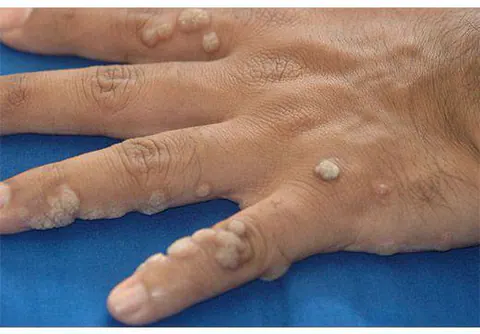
Laser Wart Removal in Children | Radeski Skin Clinic
Warts in children: causes, when removal is needed, and laser treatment at Radeski Skin Clinic. Dermatologist consultation and a personal plan.
Read more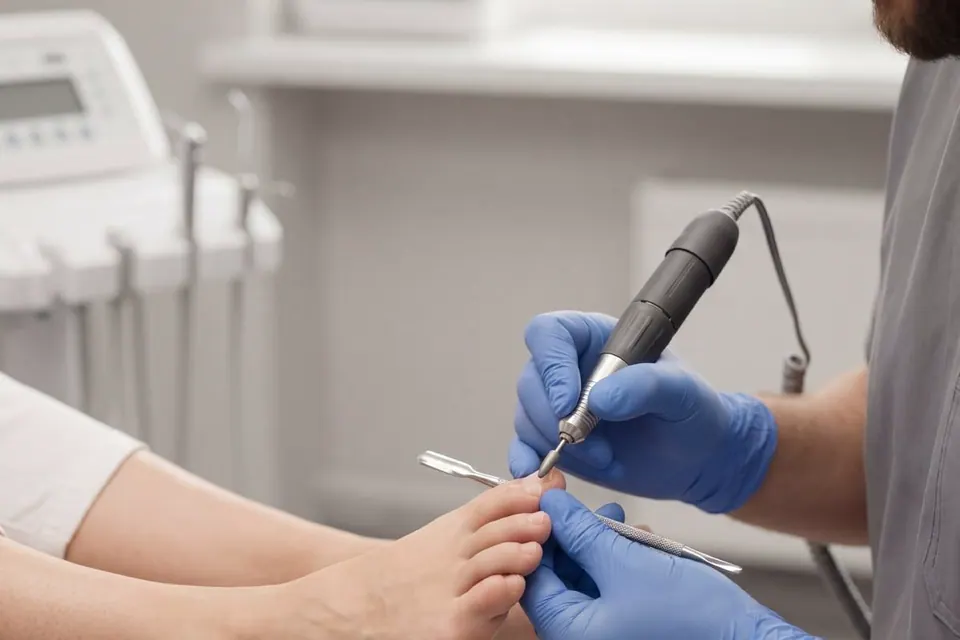
Brittle and Splitting Nails: Causes, Warning Signs and the Right Care
Brittle and splitting nails: water, winter air and gel polish, fungus and psoriasis, warning signs, clinic checks and care at home. Podologists in Fergana and Kokand.
Read more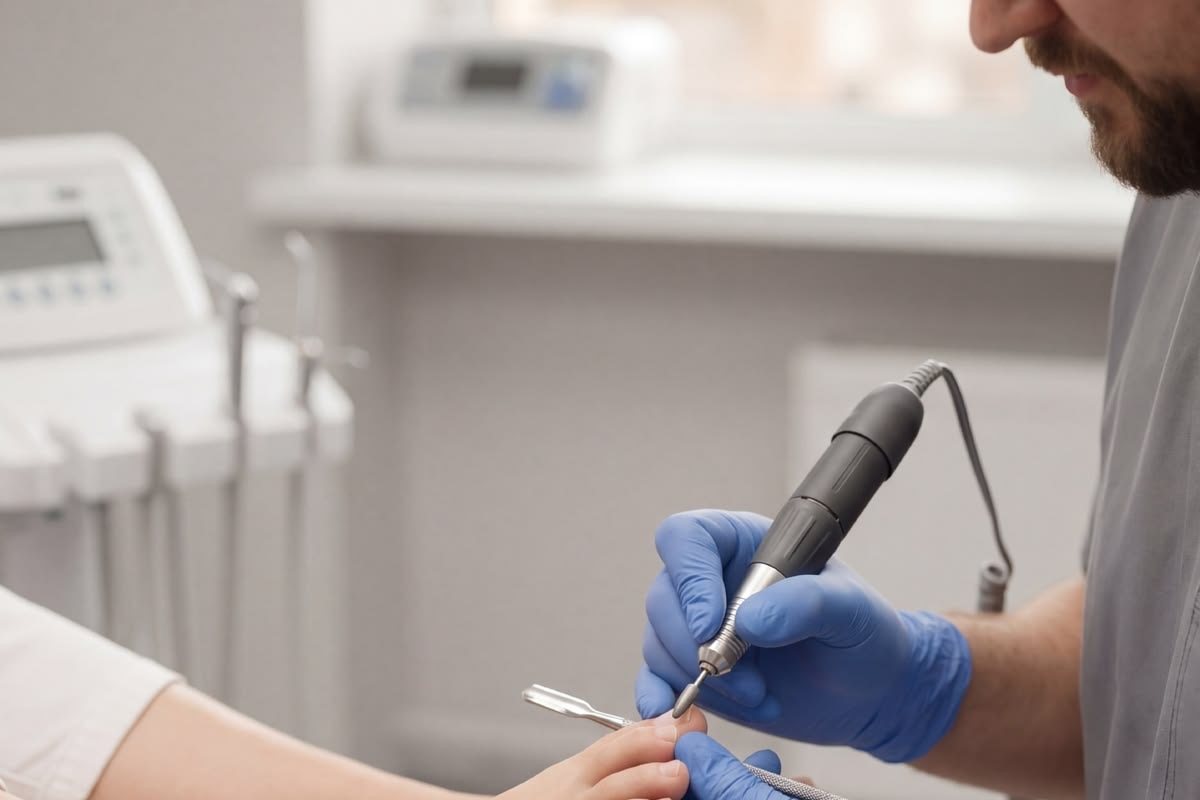
Nail Color Changes: What They Mean and When They Are Dangerous
Nail color changes: what yellow, white, green and black nails or a dark stripe mean, when melanoma must be ruled out and how nails are examined. Podiatrists in Fergana and Kokand.
Read more